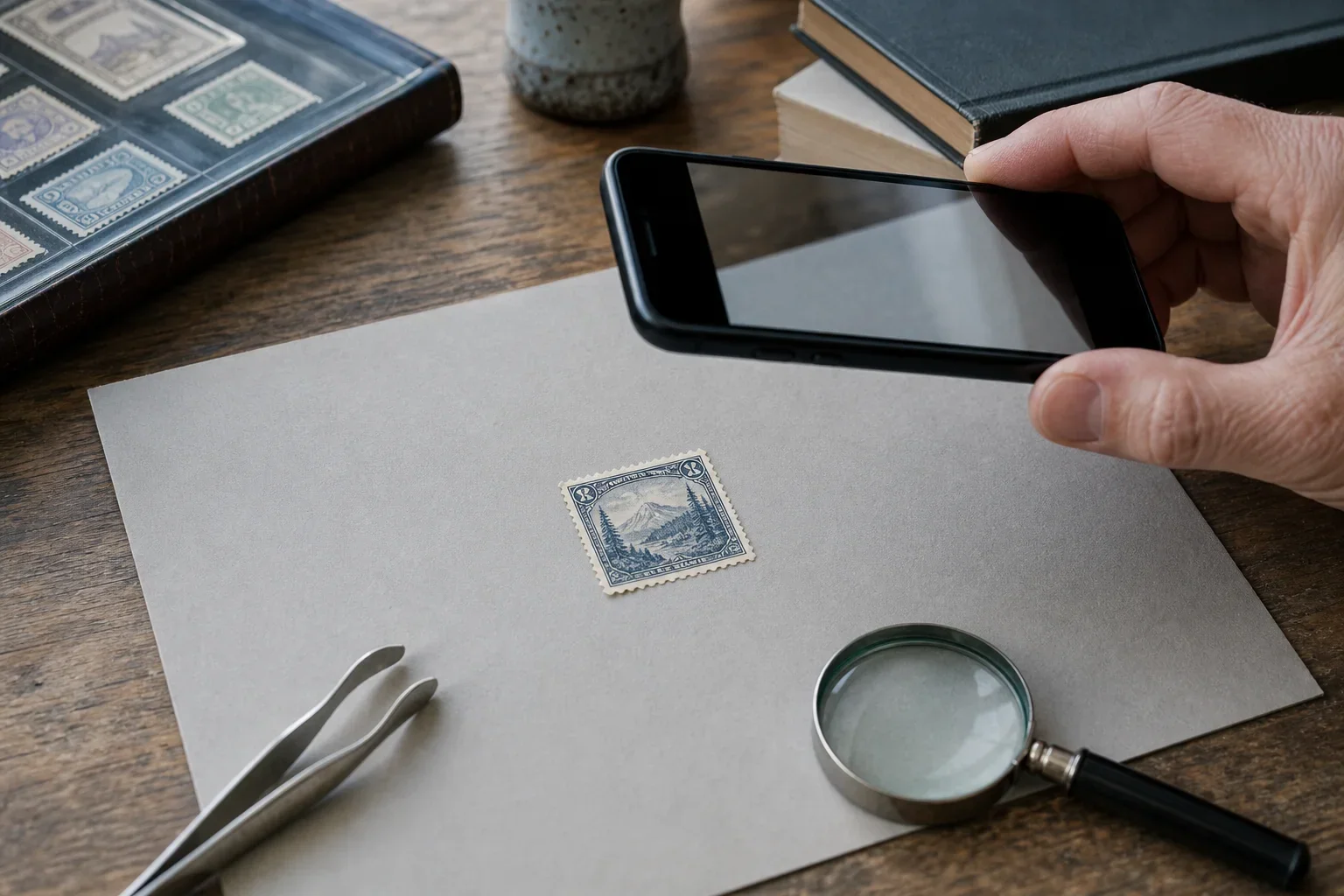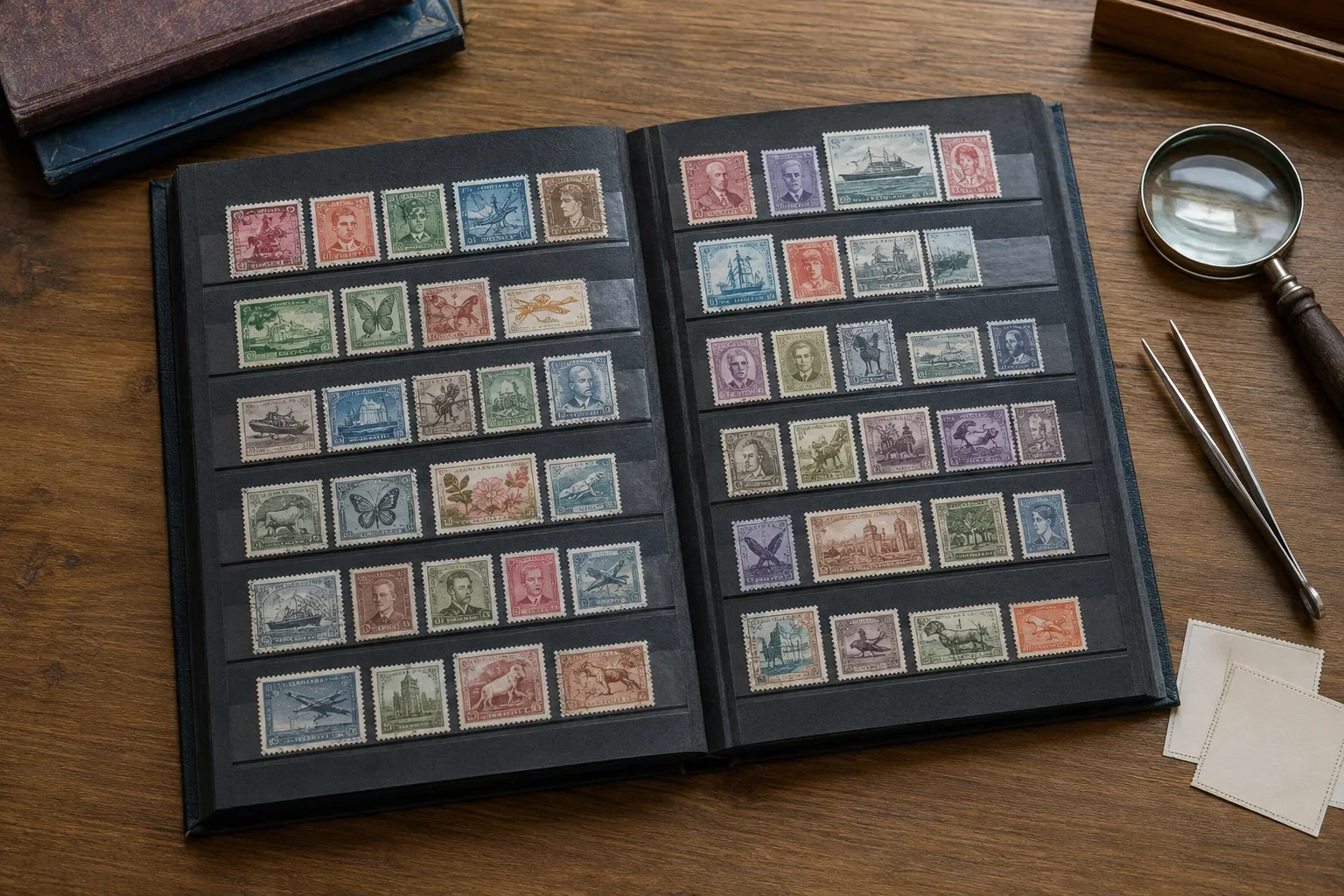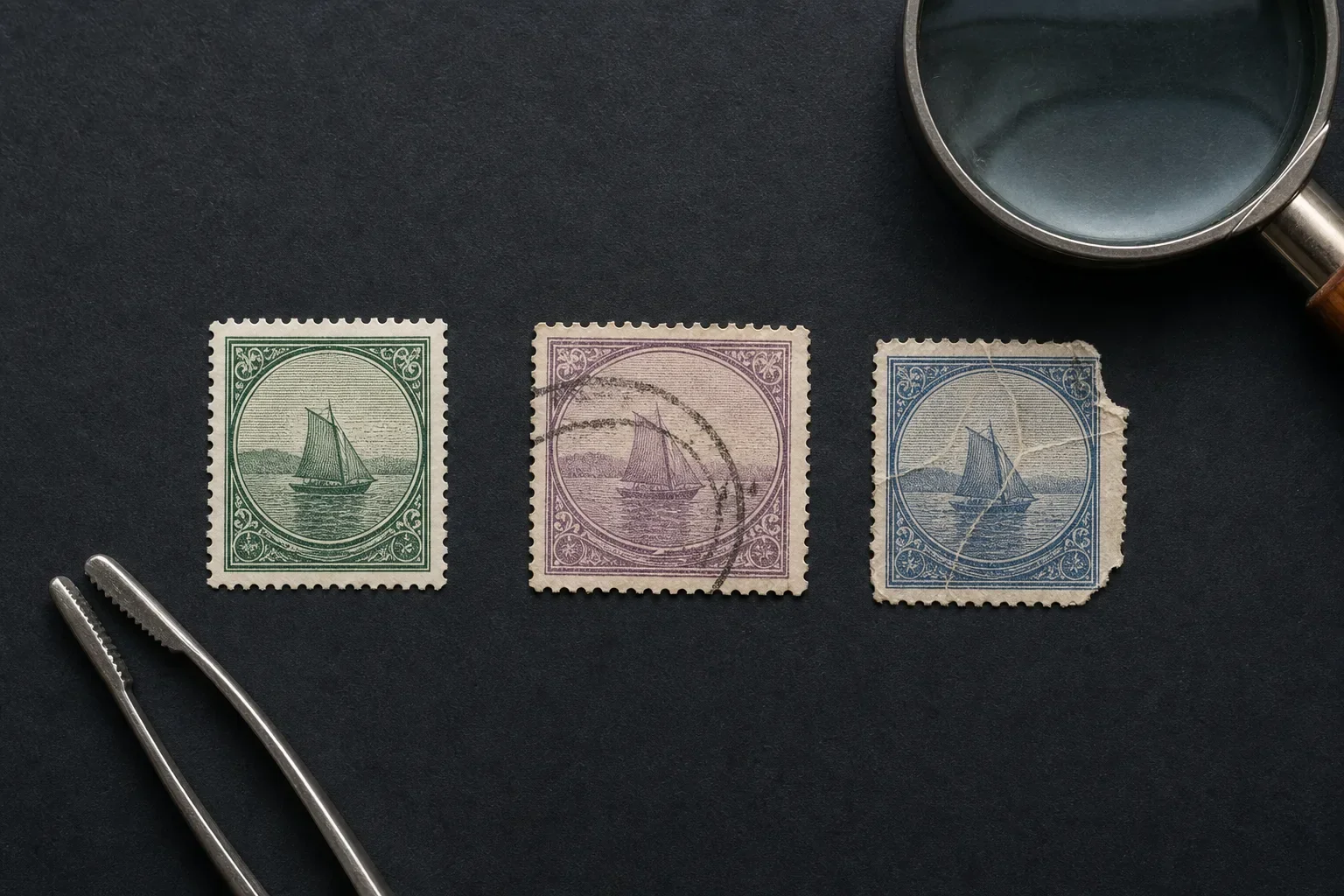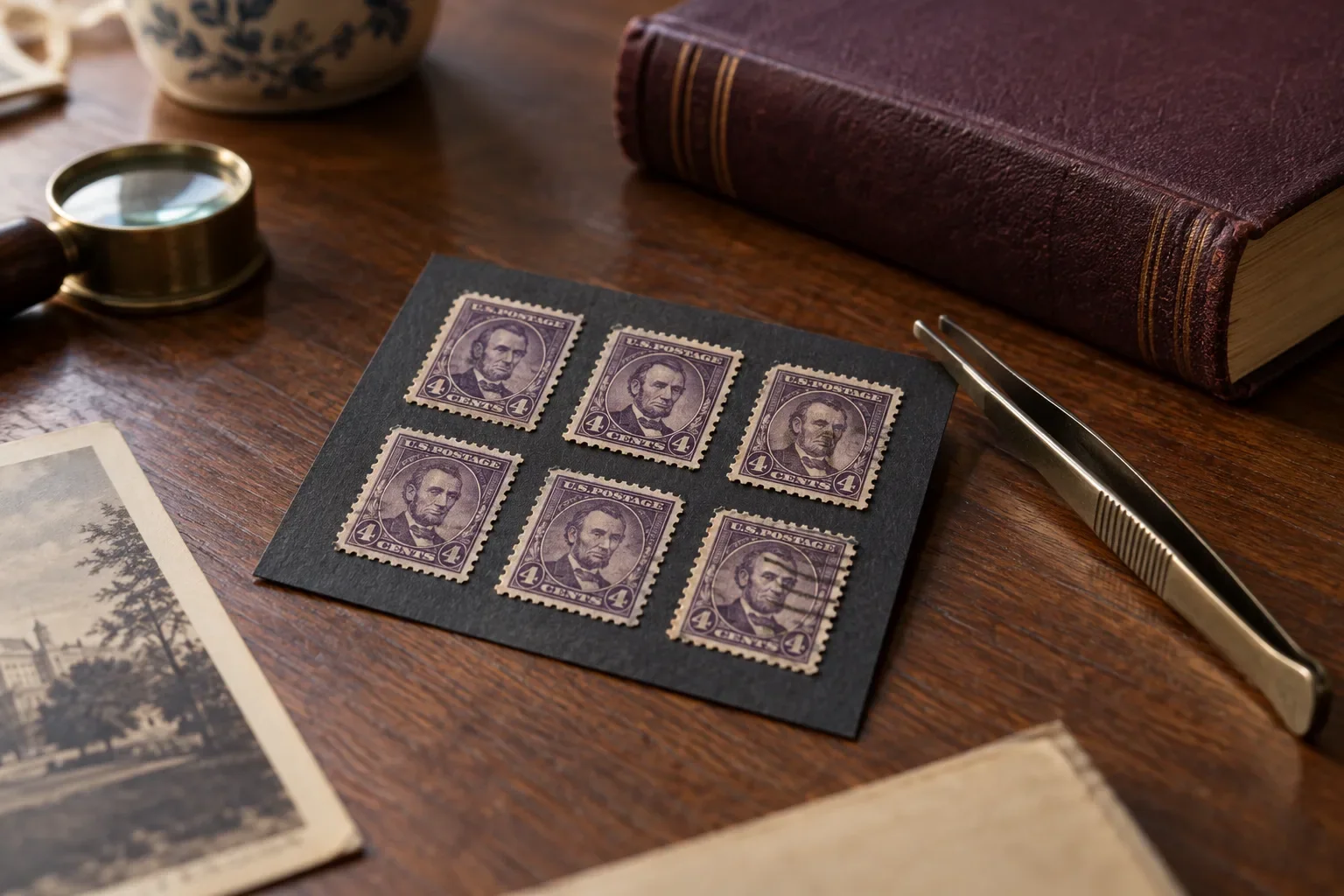
Quick answer
Wilding stamp value depends on denomination, watermark, treatment and condition. On 5 October 2026, BB Stamps offered the Tudor Crown 3d SG 520 at GBP 0.15 good used or GBP 0.40 unmounted mint. Its inverted-watermark 2d SG 518wi, with good perforations, was GBP 7.00 good used. These are dealer asking prices for different entries, not guaranteed sale values.[2]
Recognize the portrait before choosing a price
This guide covers the national low-value Wilding definitives of Great Britain, not every stamp with an early Elizabeth II portrait. The family takes its name from Dorothy Wilding's photographic studio.[1] Frank Walton's exhibit hosted by the Royal Philatelic Society London records the first 1½d and 2½d stamps on 5 December 1952, with the Machin replacement beginning in 1967.[1]
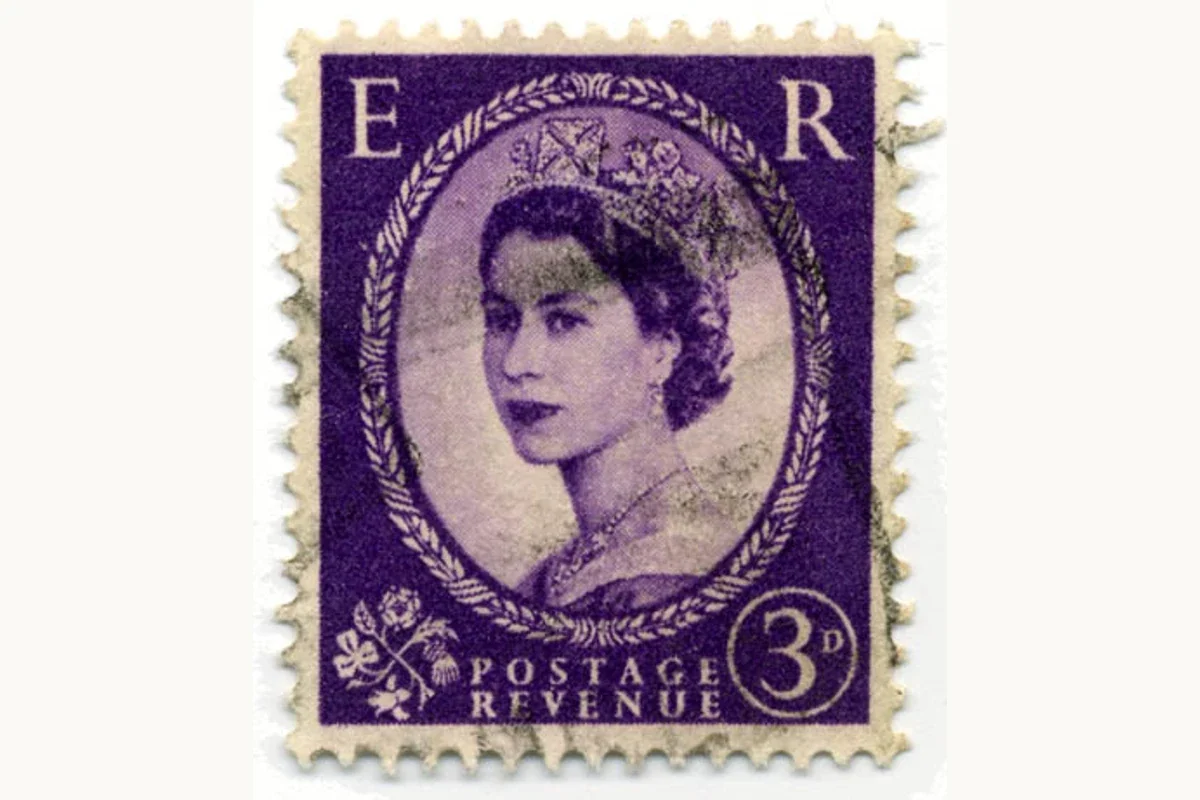
The genuine used 3d scan below shows a crowned photographic portrait, an oval surround, E and R at the upper corners and POSTAGE REVENUE below. Those observations identify the design you can see, not its hidden paper variety. Compare the whole frame and denomination. A purple stamp with the Queen's face is an incomplete description, particularly when album pages mix different reigns and series.
Read the small d beside the numeral. It means pre-decimal pence, not modern decimal p. A 3d Wilding and a 3p stamp do not have the same denomination. Our Machin value guide covers the later sculpted-profile design separately. Keep high-value Castle designs, regional issues and later decimal Wildings outside the single-price comparisons here. Albany lists those as separate collecting groups.[3]
Dated prices for ordinary and inverted-watermark singles
BB Stamps' specialized pre-decimal page provides the following offers. Each row is one stamp, priced in British pounds and checked on 5 October 2026. UM means unmounted mint; GU means good used. The first two rows concern the same upright Tudor Crown 3d entry, while the third changes denomination and watermark orientation. The amounts are dealer asking prices, not completed sales.[2]
The ordinary 3d example is the useful starting point for a familiar purple stamp. The inverted 2d is a comparison only after that watermark is confirmed. Do not give an ordinary 2d or an unidentified 3d the last row's price. Nor should an inverted-watermark label make you disregard missing teeth, a thin or a heavy cancellation.
The source is a stock-category offer rather than an individually certified specimen. No unique stock ID, certificate or sale date accompanies these rows. Retain the full SG reference, condition wording and page URL. Postage charges and what a dealer would pay to buy your stamp are separate questions. The old stamps price list explains broader asking-price comparisons.
| Issue and reference | Offered condition | Dealer asking price |
|---|---|---|
| 3d deep lilac, Tudor Crown upright, SG 520 / S67 | Good used, GU | GBP 0.15 |
| 3d deep lilac, Tudor Crown upright, SG 520 / S67 | Unmounted mint, UM | GBP 0.40 |
| 2d red brown, Tudor Crown inverted, SG 518wi / S36a | Good used, good perforations | GBP 7.00 |
An inverted watermark is not an upside-down portrait
The BB Stamps page lists upright, sideways and inverted watermark groups separately.[2] Turning the stamp over changes your viewpoint, not its variety. Before using an orientation label, establish which way the printed design is upright and which side of the stamp you are viewing. A phone that automatically rotates a picture can hide that reference point.
Save a normal front photograph alongside the reverse observation. Use the catalog's stated viewing convention and keep your notes consistent with it. If a diagram is drawn as seen from the front, do not compare it with a reverse view without allowing for that difference. Ask a specialist to interpret a fragment if the full pattern cannot be followed.
The inverted 2d in the price table is a practical reason to make this distinction, not a promise that every inversion is valuable. Record Tudor Crown and the orientation together before considering SG 518wi. If either remains uncertain, keep the ordinary and inverted entries as candidates instead of selecting whichever carries the larger amount. An album annotation is a lead, not a physical test.
Separate phosphor, graphite and paper questions
Walton's introduction places graphite lines, fluorescent paper and different phosphor inks within the Wilding period's mail-handling experiments.[1] Albany also separates graphites, phosphor graphites and phosphors in its catalog navigation.[3] These descriptions concern different production features. A darker patch on the front should not be named graphite or phosphor merely because it looks unusual in a phone photograph.
Examine the back as well as the face and record precisely where a visible line occurs. For any ultraviolet examination, use equipment and viewing instructions appropriate to philately. Do not shine a lamp toward your eyes or infer a negative result from an unsuitable lamp. State the lamp used and what response was observed so someone else can assess the evidence.
Keep band position, apparent width, paper response and ordinary ink shade as separate notes. Do not count a crease, album reflection or cancellation bar as a sorting band. If you cannot establish a treatment, leave it unresolved and compare only with entries whose description you can support. The front-image checker cannot certify a phosphor subtype from an ordinary color photograph.
A booklet pane or coil join is a different object
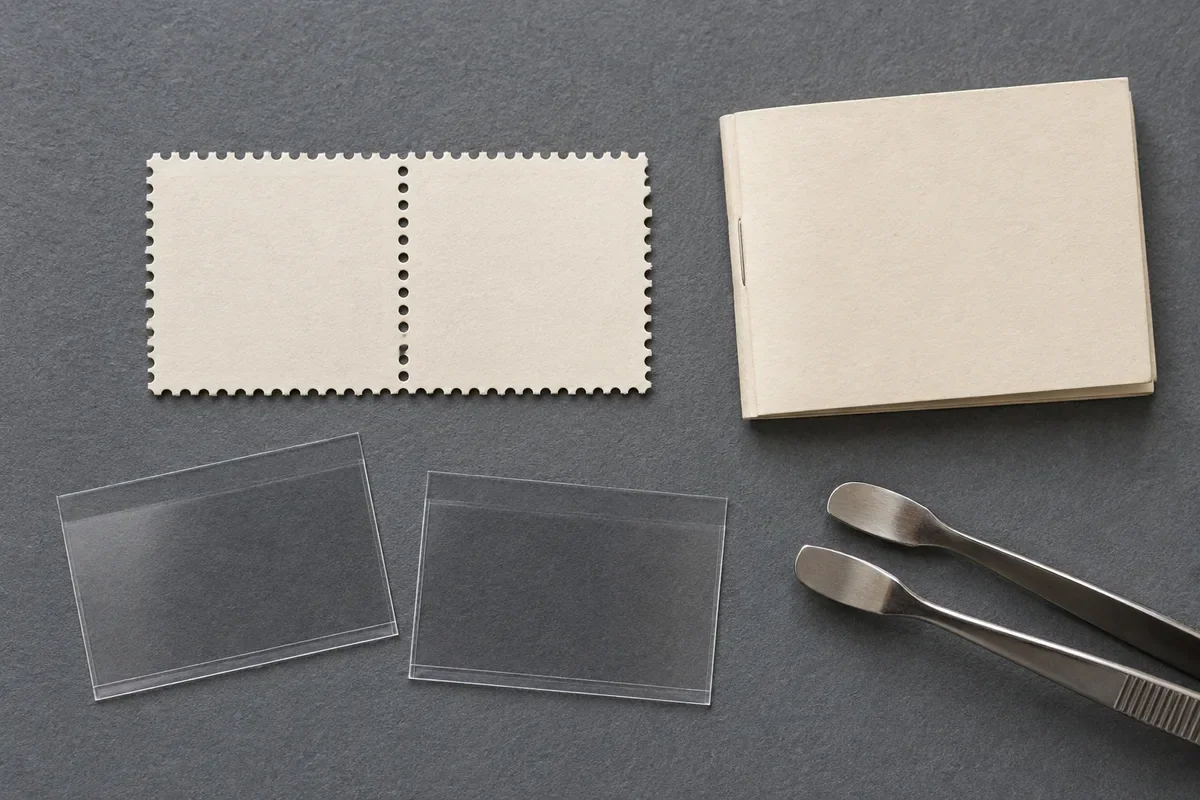
BB Stamps separates booklet panes, coil strips and coil joins from ordinary singles on its specialist page.[2] Those formats need an intact-object description. Count the attached stamps, note the arrangement and photograph any label or margin. A joined pair should not be separated merely to fit the ordinary single's album space or to take a cleaner photograph.
For a purported coil join, photograph the reverse connection without pulling it apart. Record what is visible rather than assuming every joined pair is a coil item. An old repair or mounting strip can also raise a question about the back. An isolated stamp may have lost evidence needed to establish its original format, so its smooth edge alone should not settle the issue.
Treat trimmed teeth as a condition observation, not proof of a scarce production error. The perforation measurement guide helps you record intact sides. Keep a complete booklet cover with its pane while researching it. Labels, margins and the pattern of attached stamps can make the useful comparison quite different from a loose 3d.
Describe gum and faults before using the mint price
The UM and GU columns in the price table describe different collecting conditions. A stamp without a visible cancellation is not automatically unmounted mint. Inspect its reverse for gum, a hinge mark, residue, creases or a thin. If a mount prevents examination, record the back as unseen rather than selecting the more expensive mint column.
On the Wilding face, inspect the complete frame, the portrait and every corner. Keep centering separate from soundness. A well-centered stamp can have a tear, and a lightly cancelled stamp can have missing teeth. Describe the location of a fault so that another collector can find it in the image. Avoid a numerical grade that you cannot justify.
Do not erase a mark, remove a stubborn hinge or flatten a crease to make the stamp resemble the offer. Photograph its present condition and use the condition guide for the terminology. With ordinary low-price material, identification and sorting can be worthwhile without paying for a certificate on every duplicate. A costly variety claim needs a proportionate, focused physical examination.
Do not date a stamp from the portrait alone
The first issue date belongs to the series, not to every later printing. Walton records 18 denominations and a replacement beginning in 1967, then withdrawal of remaining values on 27 February 1970 and demonetization on 1 March 1972.[1] The national pre-decimal low values discussed here are therefore collector material, not unused stamps to apply to today's mail.
For an individual stamp, keep issue period, printing identification and cancellation date in different fields. A legible later postmark is evidence of that marking, not a new issue date. If you are researching a first-day cover, check the exact denomination's date rather than assuming every Wilding first appeared together in December 1952.
Albany's later decimal Wildings category is separate from the pre-decimal groups.[3] Read the denomination on the actual stamp when a sheet reproduces a familiar portrait. A modern presentation or reissue should not inherit an early stamp's catalog number. Preserve the complete cover when postal use is the question, because the loose-stamp asking prices do not describe its route or accompanying markings.
Choose a comparable that answers your actual question
For a cancelled purple single, the next job is watermark identification and condition description, not a search for the biggest Wilding sale. For an intact pane, the next job is format research. For a claimed inversion, the next job is an orientation check. The most useful action follows the evidence missing from your particular item.
Keep current dealer offers separate from auction estimates, hammer prices and totals including premiums. If you later add a completed sale, record its actual date, currency, condition and lot contents. A sale containing several stamps or a specialized collection does not provide a direct value for one ordinary single. Do not average incompatible results to manufacture a convenient range.
Before contacting a buyer, send the complete front and back, the denomination, observed watermark and any unresolved question. State whether the item is a single, pair, pane or cover. A clear packet lets the buyer explain what they are comparing and prevents a broad request for Wilding value from hiding the feature that actually needs investigation.
Frequently asked questions
Is a purple 3d Wilding automatically valuable?
No. BB Stamps' upright Tudor Crown SG 520 offer was GBP 0.15 good used or GBP 0.40 unmounted mint on 5 October 2026.[2] Those entries do not value every purple Wilding. Identify the watermark and condition before choosing a comparison.
Does SG 518wi mean the portrait is printed upside down?
No. In the cited offer it is the Tudor Crown watermark orientation that is inverted.[2] Establish the normal printed orientation and the catalog's viewing convention before assigning that suffix. Turning a photograph is not evidence of an inverted watermark.
Can the front photo prove a phosphor variety?
An ordinary front photo does not reliably establish every phosphor treatment. Keep visible design identification separate from lamp observations and paper checks. Record an unresolved treatment instead of converting a reflection or cancellation into a specialist subtype.
Can I still use unused pre-decimal Wildings for postage?
The national pre-decimal series discussed here was demonetized on 1 March 1972 according to Walton's exhibit.[1] Collector asking prices are not postal-use values. Later decimal issues belong to a different group and need their own identification.
Should I split a Wilding pane to value each stamp?
Research the complete pane first. Its labels, margins, attached stamps and reverse may establish a format no longer provable after separation. Compare an intact pane with an intact-pane listing, not a loose single multiplied by the number of stamps.
Sources and further reading
Primary references and specialist resources used to prepare this guide.