Quick answer
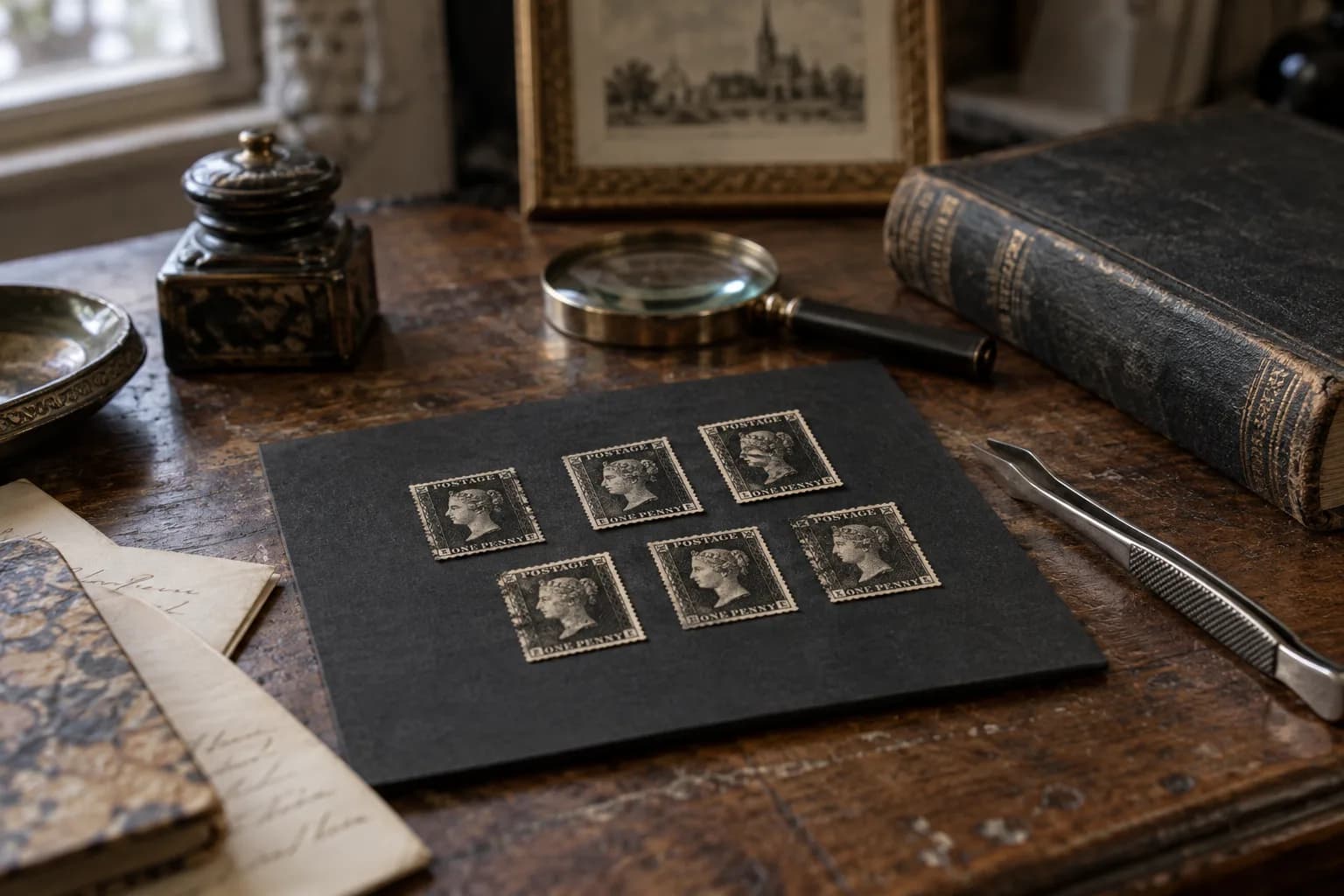
Penny Black stamp value depends on margins, condition, plate and cancellation. Identified used examples in the dealer offers below are priced at £350–£450, with different prices for scarce plates and covers. Read ONE PENNY, inspect all four edges and establish the plate before choosing a comparable.
What the current examples tell you
A Penny Black is collectible, but its famous name does not give every specimen the same price. The ordinary used offers below are a starting point for comparison: each has an identified plate, letter combination or condition description. Stanley Gibbons lists them as individual stock items. Keep that description with the price rather than turning the three amounts into a universal value range.
Warwick & Warwick’s broad price bands explicitly refer to 2019. They can explain why margins matter, but they should not be relabeled as today’s market. Start with the currently visible offers, then seek completed transactions for a matching stamp. A damaged copy or an intact letter needs a different search.
| Identified example | Asking price | Stock reference |
|---|---|---|
| SG2, plate 7, used single | £350 | P223009563 |
| SG2, plate 8, very fine used, black Maltese Cross, GI | £375 | P223015261 |
| SG2, plate 1b, very fine used, red Maltese Cross, TD | £450 | P223000839 |
Check the design before assigning 1840
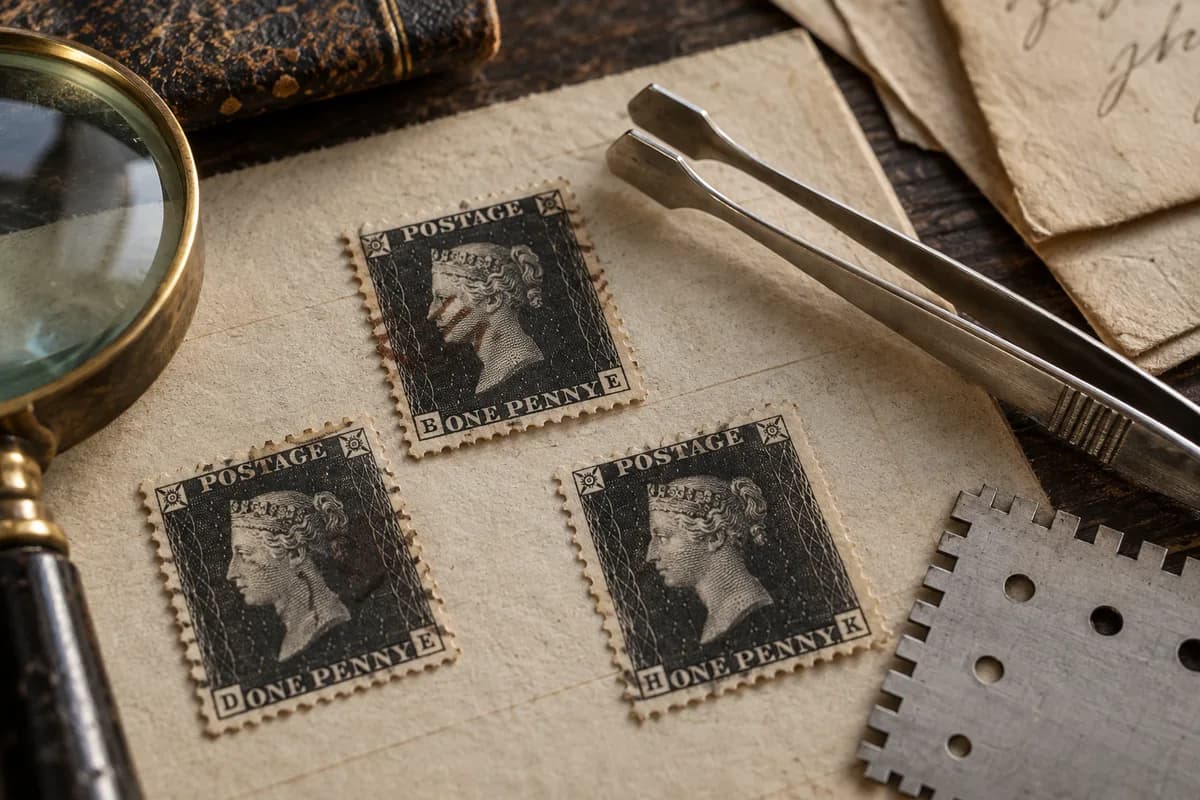
The original issue shows Queen Victoria, POSTAGE at the top and ONE PENNY at the bottom. It has ornaments in the two upper corners and check letters in the lower corners. Its edges were cut from a sheet, not separated by perforation teeth. A later commemorative reproduction may include the same portrait inside a larger design or have a different denomination.
Photograph the entire item, including anything around the black design. If it is still on a letter, include the date and all postal markings in a second photograph. The Postal Museum records sale in London on 1 May 1840 and postal validity from 6 May. A postmark from 1841 can be consistent with later use; it does not alone prove a different issue.
Count four margins, then look for faults
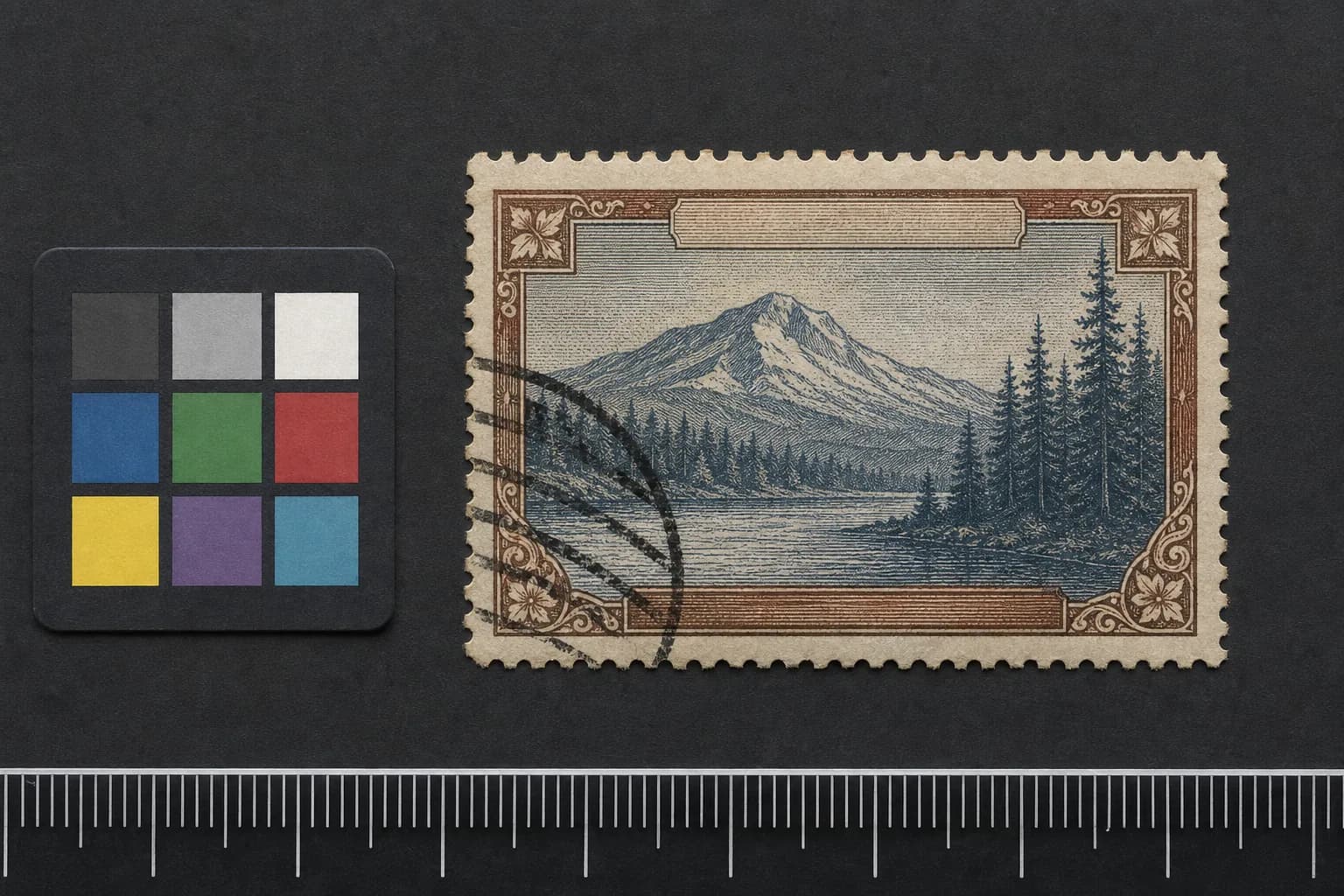
Treat the narrow white paper around the printed frame as four separate observations. Record whether the top, right, bottom and left each clear the design. One wide side does not compensate for another cut into the frame. Photograph against a contrasting background so the paper edge and printed border remain distinct.
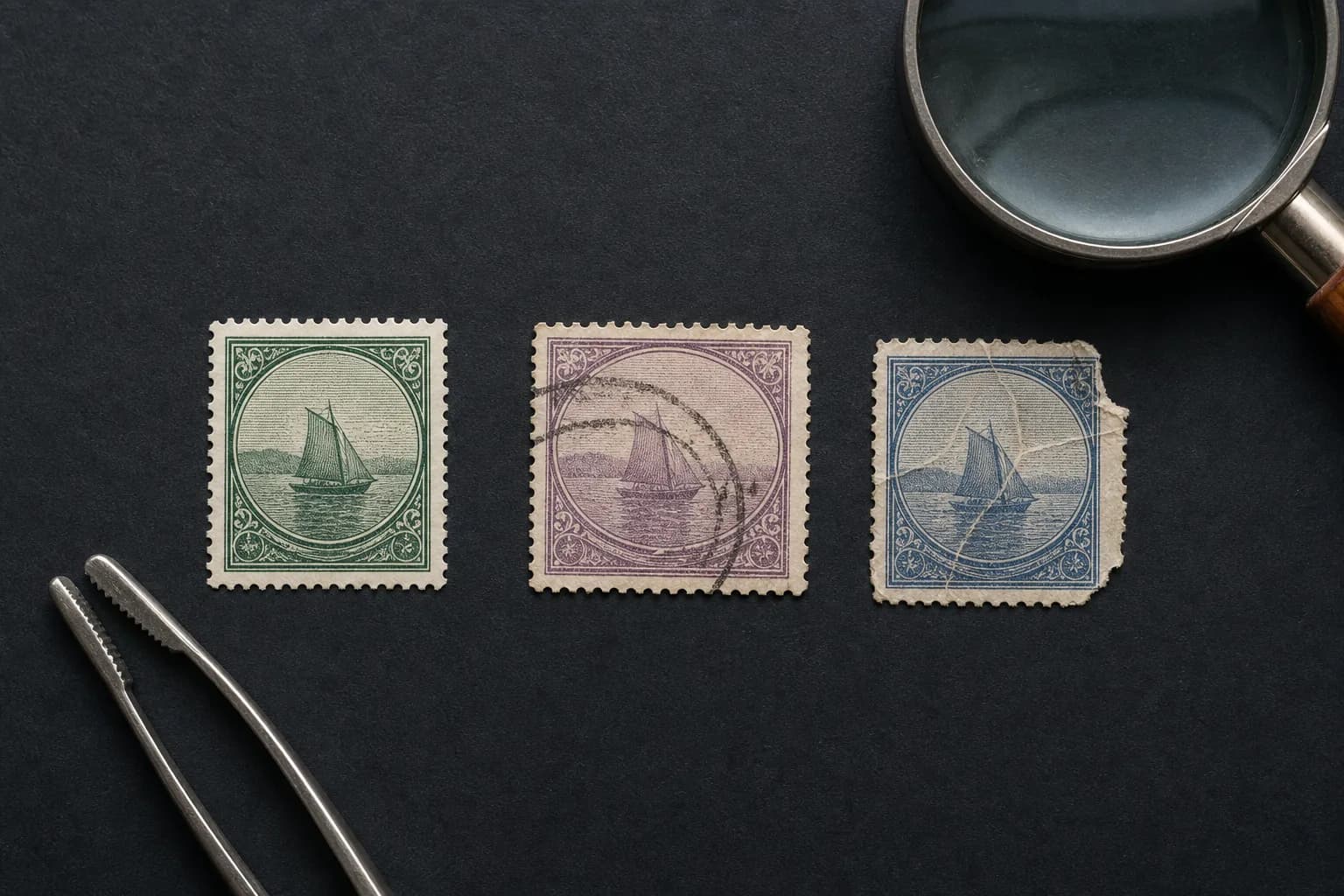
Next inspect the reverse for thinning, repairs or a crease that barely shows on the front. A sharp-looking portrait can coexist with damaged paper. For a prospective purchase, ask for an unfiltered reverse image before comparing it with a fine used offer. Our condition guide helps describe the fault rather than giving an unsupported grade.
Corner letters locate a position, not a plate number
The sheets contained 240 positions. The lower letters record row and column, with AA at the beginning and TL at the end. They are not the owner’s initials or a printed plate number. Collectors can choose a letter combination for personal interest, but the letters alone do not establish a scarce plate.
Stanley Gibbons explains that plating uses the precise position of those letters within their squares together with other small features. Eleven plates were used, with specialists distinguishing the original and repaired states of plate 1 as 1a and 1b. Compare the complete evidence with a plating reference; do not identify plate 11 from an isolated blur or a handwritten album label.
Keep cancellation and cover evidence together
The Maltese Cross is part of the identification record. Note its color, how much it obscures and whether a specialist has already assigned a distinctive form. A striking red cancellation is not automatically unusual. Ask what makes the particular strike different, and retain the supporting reference with the stamp.
For a letter, the cancellation ties the stamp to a postal use. A clear date, destination, rate or redirected address can change the comparison substantially. Resist removing the stamp to get a cleaner scan. Photograph the full front, reverse and folded portions safely. The cancellation guide explains why a postal marking can be evidence as well as an obstruction.
Use a plate claim to decide your next step
For an ordinary used single, first finish the margin and condition record. If the price difference you are considering depends on plate 11, unusual gum, a distinctive cancellation or a first-day use, obtain a specialist opinion about that specific feature before treating the premium as established. Existing certificates should identify the same letter combination and item.
Keep black and red stamps separated in your notes. The Penny Red guide covers later design groups and visible plate numbers; it is not a shortcut for plating the Penny Black. When you have several Victorian examples, use the old stamps price list as a broader hub and retain each issue’s own comparisons.
Compare a like-for-like price
Use the catalog identity, format and condition together when looking for a comparable. A single, pair, booklet pane and complete cover belong in different searches. A catalog number without its suffix can leave out the very feature that explains the price. Keep the catalog publisher and edition in your notes so another collector can reproduce the identification.
Our old stamps price list gives a broader set of dealer offers to compare after identification. Make two lists: currently offered examples and completed sales. In the first, record the asking price and whether postage is extra; in the second, record the date, currency, lot contents and any buyer’s premium. Keep the original currency until you have made the comparison.
An expensive listing can be an optimistic seller, a different variety or a much better specimen. Read the description and examine the photographs before adding it to your comparison. If three apparent matches disagree widely, investigate their differences rather than averaging their prices. A small bundle of ordinary stamps also needs a bundle comparison, because selling costs can exceed the value of a single.
Inspect the front, back and edges
Begin with the item as you found it. Photograph the front and reverse under neutral light and keep every edge visible. Look for tears, thin spots, creases, missing perforation teeth, staining and repairs. Describe a fault by its location, such as a short tooth at the upper right, so it can be checked against the image.
For an unused stamp, record whether gum is present and whether a hinge mark or residue remains. For a cancelled stamp, note how much of the design is covered and whether a place or date can be read. The stamp condition guide explains the vocabulary for a useful description. Do this before comparing a sharp, centered dealer example with your own copy.
Keep a stamp on its complete envelope or card while researching it. The address, date, rate and other postal markings can explain how it was used. A loose-stamp price will not describe that combination. Avoid cleaning the paper, tracing a faint mark or trimming an edge to make the item look tidier; each would change evidence you are trying to read.
Check your stamp from a photo
Place one stamp on a plain background and photograph it straight on. Include the full outline and focus on the printed design, not the album page behind it. Use the free checker below for a first identification and value estimate, then compare its suggested issue with the specific features in this guide.
Add collector notes with observations that the picture does not show clearly: a measured perforation, a legible inscription, original gum, an attached envelope or a catalog reference already written in the album. Write observations rather than the rare variety you hope to find. Save the original photograph so you can compare it with a later close-up.
See the photo identification workflow for lighting and focus. If several stamps are attached as a pair or block, keep them connected and describe that format in your notes. For a whole album, take individual photographs of representative issues before working through duplicates.
Drop a stamp photo here
Show the full stamp, every perforation, and as much front detail as possible in even light.
Keep your Victorian stamp research together
Install Stamp Value Identifier & Scan for free on iOS or Android. Scan your stamps one by one, save their results together and return to the issues you want to research next.
Build a useful collection record
Assign the item a simple reference and keep its photographs, candidate catalog number, measurements, condition notes and price comparisons together. Separate what you have observed from what still needs checking. For example, a visible numeral is an observation; a catalog identity that depends on a watermark is a candidate until that watermark is established.
When asking a specialist for help, send the full front and back, a close-up of the disputed feature, the measurements you took and the reference you used. Ask one concrete question: which issue fits these features, is the plate reading correct, or does this format match the catalog description? That makes a response easier to assess than a photograph accompanied only by a large price.
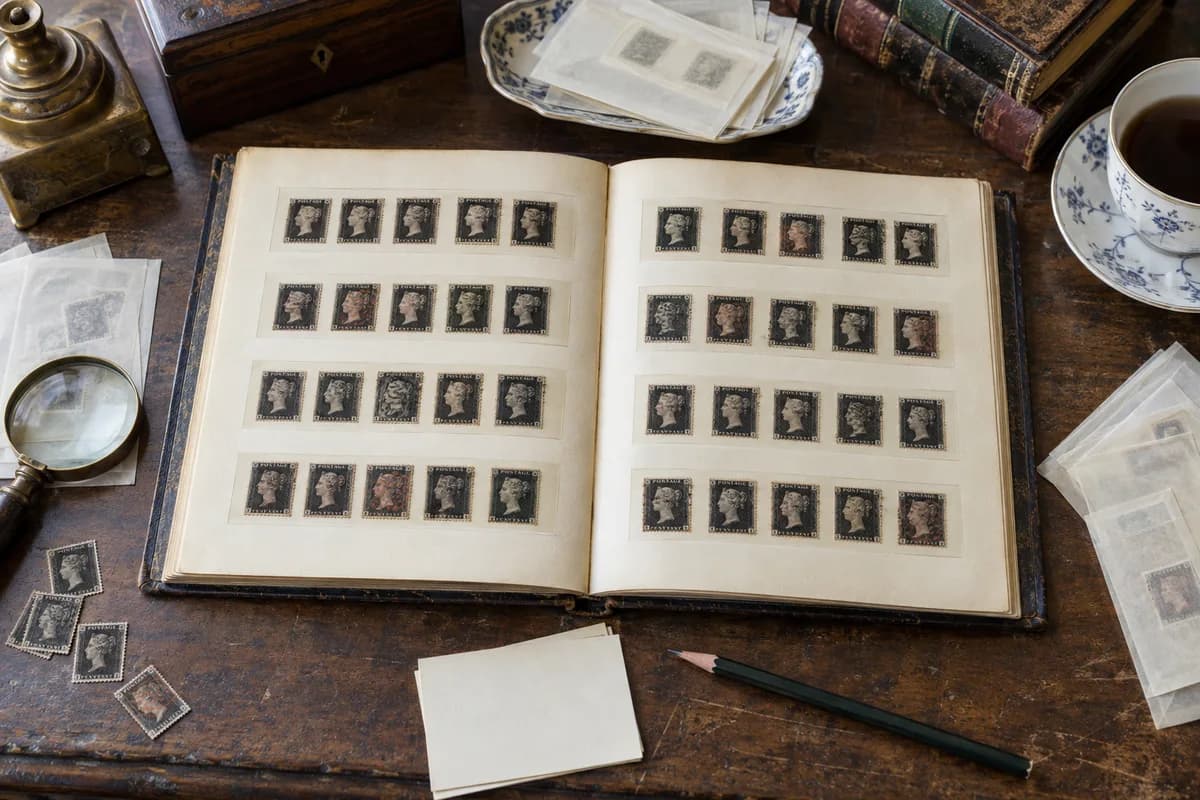
If you have several similar stamps, keep the ordinary examples for comparison. Differences are easier to see when the specimens are side by side under the same light. Store each securely without adhesive touching its surface, and keep any certificate with the corresponding item. Revisit the record when you obtain better evidence rather than giving every duplicate the most expensive identity.
Frequently asked questions
Is every Penny Black rare?
No. More than 68 million were printed. Scarcity depends on the plate, format, cancellation and condition of the particular item.
What do the bottom letters mean?
They locate the stamp’s row and column in the original sheet. They do not directly give its plate number.
Does a red Maltese Cross mean a high value?
Not by itself. Identify the cancellation and compare its clarity, position and type with matching examples.
Is a four-margin Penny Black always expensive?
Four clear margins improve the comparison, but faults, repairs and other identifying features still matter.
Should I detach it from a letter?
Keep the letter intact while researching it. The date, rate, destination and postal markings belong to the same collectible item.
Sources and further reading
Primary references and specialist resources used to prepare this guide.