Quick answer
Penny Red stamp value depends on the issue, plate and condition. Common used plate-number stamps are inexpensive, while earlier issues and scarce plates need closer identification. Start with the edges and corner symbols, read both side numbers where present, then compare a matching specimen rather than a famous Plate 77 sale.
What is a Penny Red worth?
A common Penny Red is usually a modest-value Victorian stamp. Its red color and Queen Victoria portrait identify a family of issues, not one fixed price. Warwick & Warwick gives the following broad price context for ordinary used examples. Read the type description before selecting a row: an imperforate stamp and a later plate-number stamp require different comparisons.
The same auction house describes most Penny Reds as worth no more than a few pounds. A beautifully preserved example, a distinctive cancellation or a scarce plate can move outside that ordinary group. For additional offered specimens from other countries and periods, use the old stamps price list after you have narrowed the issue.
| Used type | Published price context | Feature to establish |
|---|---|---|
| Imperforate Penny Red | £0.50–£5 | Margins and exact issue |
| Penny Red Stars | £0.30–£10 | Watermark and perforation |
| Common Penny Red Plates | £0.10–£0.30 | Plate number and condition |
Separate the three main designs
The earliest Penny Reds were cut from sheets, leaving straight margins instead of perforation teeth. The next broad group has perforations but retains stars in the upper corners and letters in the lower corners. The later plate-number design has letters in all four corners and tiny numbers within the decorative bands at the sides.
These features are better starting points than shade. Red-brown ink can look different under warm lighting, and aging changes the appearance of the paper. Count the corner letters and examine the edge structure first. A straight edge on a damaged later stamp does not make it an early imperforate issue.
Put your first observation in plain terms: no perforations and two lower letters, perforated with upper stars, or perforated with four letters. Use that description to choose the relevant catalog section. Our catalog-number guide explains how to keep catalog systems and issue variants separate.
Read the plate number without losing a digit
On the later Penny Red Plates design, turn the stamp or rotate a saved photograph to examine each side band. Look for the complete number, including any faint leading digit. Compare the readings on the left and right rather than choosing whichever looks more interesting. If the cancellation covers one side, note the obstruction and keep the other reading separate.
Plate 177 is a particularly important lookalike to investigate before considering Plate 77. An obscured initial 1 can turn a routine reading into an apparent rarity. Do not enhance the photograph until the missing digit seems to appear; retain the original image alongside any adjusted copy.
Earlier Penny Reds can also be assigned to printing plates, but their plates are not simply a number visible in the design. Specialists use combinations of lettering and printing features. Absence of a visible number therefore means you need a different identification method, not that the stamp came from an unrecorded plate.
Why Plate 77 has a different price history
Stanley Gibbons records a £495,000 transaction for a Plate 77 Penny Red in 2016. Spink records a different example changing hands for £550,000 in 2012. These are dated transactions for identified individual specimens. They explain why the plate attracts attention, but they are not present-day offers for an unidentified red stamp.
A plausible number reading is only the first question. A serious Plate 77 candidate needs a specialist examination of the stamp, the plate characteristics and any existing certificate or provenance. Keep the piece intact, including attached paper, and photograph the full item before sending a detailed enquiry.
The most useful outcome of a first inspection is often ruling out a missing digit or confirming an ordinary plate. That gives you a workable comparable and lets you concentrate on condition. Our valuable stamps by country guide places exceptional specimens in their wider collecting context.
Margins, watermarks and cancellations change the comparison
For an imperforate example, inspect all four margins. A cut that enters the printed design belongs in a different comparison from an example with clear surrounding paper. With a perforated stamp, check for clipped or missing teeth and whether the design is centered within the edge.
Small-crown and large-crown watermarks occur within the Penny Red family, and different perforations help distinguish issues. Record the measurements before assigning a catalog number. The watermark identification guide explains how to examine the reverse while preserving the stamp.
A cancellation can be a collecting feature rather than just an obstruction. Read what is actually visible and record its position, clarity and type. Keep an intact cover intact: a Penny Red on a dated letter preserves evidence that a loose example has lost. If gum remains on an unused copy, photograph it before handling or mounting.
The history helps narrow your search
The Smithsonian dates the introduction of the Penny Red to 10 February 1841. The change followed experiments with stamp and cancellation inks, aiming to make reuse harder and cancellation easier to detect. It replaced the Penny Black while retaining the familiar Queen Victoria profile and one-penny denomination.
That long-lived design is why two similar red stamps can belong to different issues. Rather than assigning every copy the date 1841, use the edge form, corner layout, watermark and plate information together. A later dated postmark tells you when that particular stamp was used, not necessarily when its design first appeared.
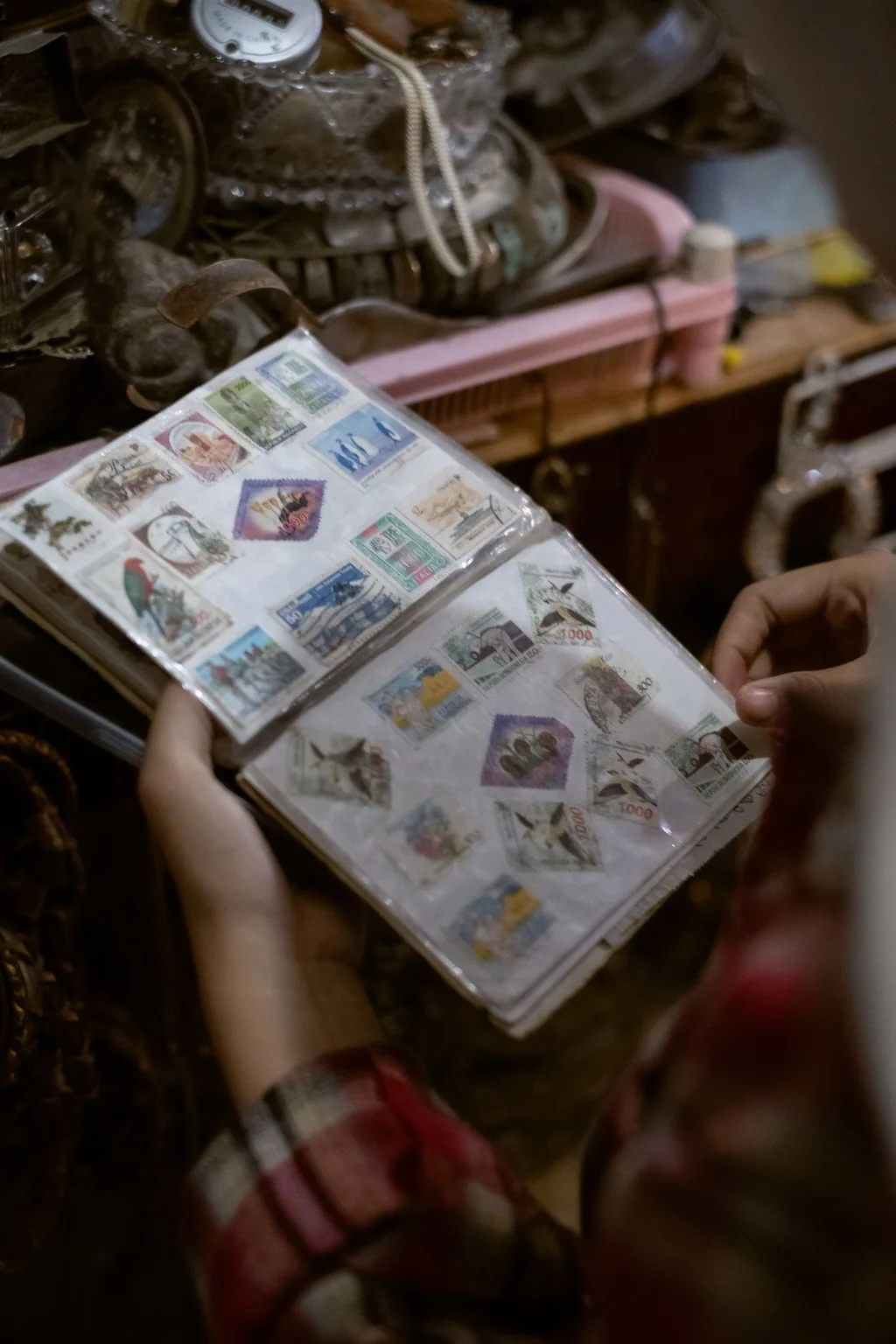
For a group from an inherited album, sort by these visible design groups before pricing it. Keep pairs, strips and covers together. You can then spend time on unusual plate readings or condition instead of repeating the same general internet search for every red stamp.
Compare a like-for-like price
Use the catalog identity, format and condition together when looking for a comparable. A single, pair, booklet pane and complete cover belong in different searches. A catalog number without its suffix can leave out the very feature that explains the price. Keep the catalog publisher and edition in your notes so another collector can reproduce the identification.
Our old stamps price list gives a broader set of dealer offers to compare after identification. Make two lists: currently offered examples and completed sales. In the first, record the asking price and whether postage is extra; in the second, record the date, currency, lot contents and any buyer’s premium. Keep the original currency until you have made the comparison.
An expensive listing can be an optimistic seller, a different variety or a much better specimen. Read the description and examine the photographs before adding it to your comparison. If three apparent matches disagree widely, investigate their differences rather than averaging their prices. A small bundle of ordinary stamps also needs a bundle comparison, because selling costs can exceed the value of a single.
Inspect the front, back and edges
Begin with the item as you found it. Photograph the front and reverse under neutral light and keep every edge visible. Look for tears, thin spots, creases, missing perforation teeth, staining and repairs. Describe a fault by its location, such as a short tooth at the upper right, so it can be checked against the image.
For an unused stamp, record whether gum is present and whether a hinge mark or residue remains. For a cancelled stamp, note how much of the design is covered and whether a place or date can be read. The stamp condition guide explains the vocabulary for a useful description. Do this before comparing a sharp, centered dealer example with your own copy.
Keep a stamp on its complete envelope or card while researching it. The address, date, rate and other postal markings can explain how it was used. A loose-stamp price will not describe that combination. Avoid cleaning the paper, tracing a faint mark or trimming an edge to make the item look tidier; each would change evidence you are trying to read.
Check your stamp from a photo
Place one stamp on a plain background and photograph it straight on. Include the full outline and focus on the printed design, not the album page behind it. Use the free checker below for a first identification and value estimate, then compare its suggested issue with the specific features in this guide.
Add collector notes with observations that the picture does not show clearly: a measured perforation, a legible inscription, original gum, an attached envelope or a catalog reference already written in the album. Write observations rather than the rare variety you hope to find. Save the original photograph so you can compare it with a later close-up.
See the photo identification workflow for lighting and focus. If several stamps are attached as a pair or block, keep them connected and describe that format in your notes. For a whole album, take individual photographs of representative issues before working through duplicates.
Drop a stamp photo here
Show the full stamp, every perforation, and as much front detail as possible in even light.
Research your Penny Reds in the app
Install Stamp Value Identifier & Scan for free on iOS or Android. Scan your stamps one by one, save their results together and return to the issues you want to research next.
Build a useful collection record
Assign the item a simple reference and keep its photographs, candidate catalog number, measurements, condition notes and price comparisons together. Separate what you have observed from what still needs checking. For example, a visible numeral is an observation; a catalog identity that depends on a watermark is a candidate until that watermark is established.
When asking a specialist for help, send the full front and back, a close-up of the disputed feature, the measurements you took and the reference you used. Ask one concrete question: which issue fits these features, is the plate reading correct, or does this format match the catalog description? That makes a response easier to assess than a photograph accompanied only by a large price.
If you have several similar stamps, keep the ordinary examples for comparison. Differences are easier to see when the specimens are side by side under the same light. Store each securely without adhesive touching its surface, and keep any certificate with the corresponding item. Revisit the record when you obtain better evidence rather than giving every duplicate the most expensive identity.
Frequently asked questions
Are all Penny Red stamps valuable?
No. Common used plate-number examples are inexpensive. The exact issue, plate, margins, cancellation and condition determine which prices are relevant.
Where is the Penny Red plate number?
On the later plate-number design, tiny numbers appear in the decorative bands on both sides. Earlier issues require specialist plating rather than reading a printed number.
How do I distinguish Plate 77 from 177?
Look for a faint leading 1 and compare both side readings. A cancellation can obscure a digit, so keep the original photograph and seek a specialist reading of any serious candidate.
Is an 1841 Penny Red worth more than a later one?
It belongs in a different comparison. Identify the imperforate issue and its margins, condition and cancellation before comparing it with later perforated stamps.
Should I remove a Penny Red from a letter?
Keep the complete letter together during research. Date, postal markings, destination and the stamp’s position can be part of the collectible item.
Sources and further reading
Primary references and specialist resources used to prepare this guide.