Quick answer
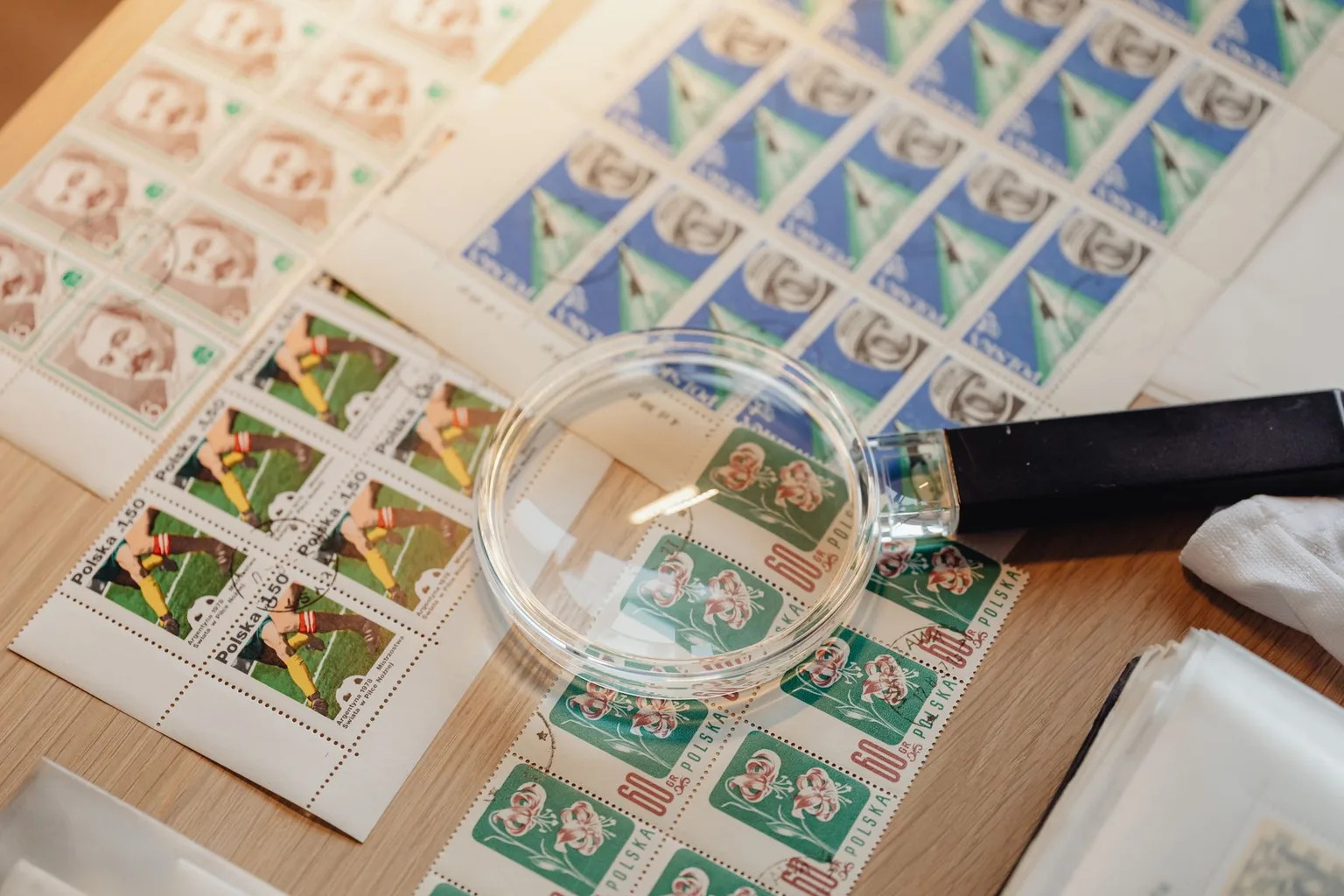
To estimate a stamp collection’s value, first preserve its original order and separate albums, loose stamps, covers, unused postage and specialist material. Identify a small sample from each group, inspect condition, then compare completed sales for genuinely similar items. Catalog totals and asking prices are not cash offers. Seek an in-person specialist opinion when the collection may contain scarce or consequential material.
Start with the valuation question
“What is my stamp collection worth?” has several legitimate answers. A catalog figure is a retail reference for a correctly identified item in a stated condition. A dealer’s offer is what that dealer will pay for the material, with sorting and resale costs in mind. An auction result is a past transaction, not a promise about the next sale. An insurance replacement figure answers a different question again.
The Smithsonian National Postal Museum explains that Scott catalog values reflect what a buyer might pay a dealer for a comparable stamp, not what the owner would receive for selling a collection to a dealer. The American Philatelic Society also distinguishes fair market and replacement value in its appraisal guidance. Set the purpose before adding numbers: are you deciding whether to keep, sell, insure, donate or distribute the collection?
For a first estimate, think in ranges and confidence levels rather than one precise total. A few potentially better items can account for much of a collection’s market value, while many common stamps may contribute little individually. You need enough evidence to find those stronger groups without assuming every full page is valuable.
Keep the collection safe before sorting it
Photograph the albums, boxes and labels as you found them. Note who assembled the collection and whether an inventory, old purchase invoice, certificate or insurance document exists. Those records do not establish today’s value, but they can point to better material and prevent an accidental loss of context.
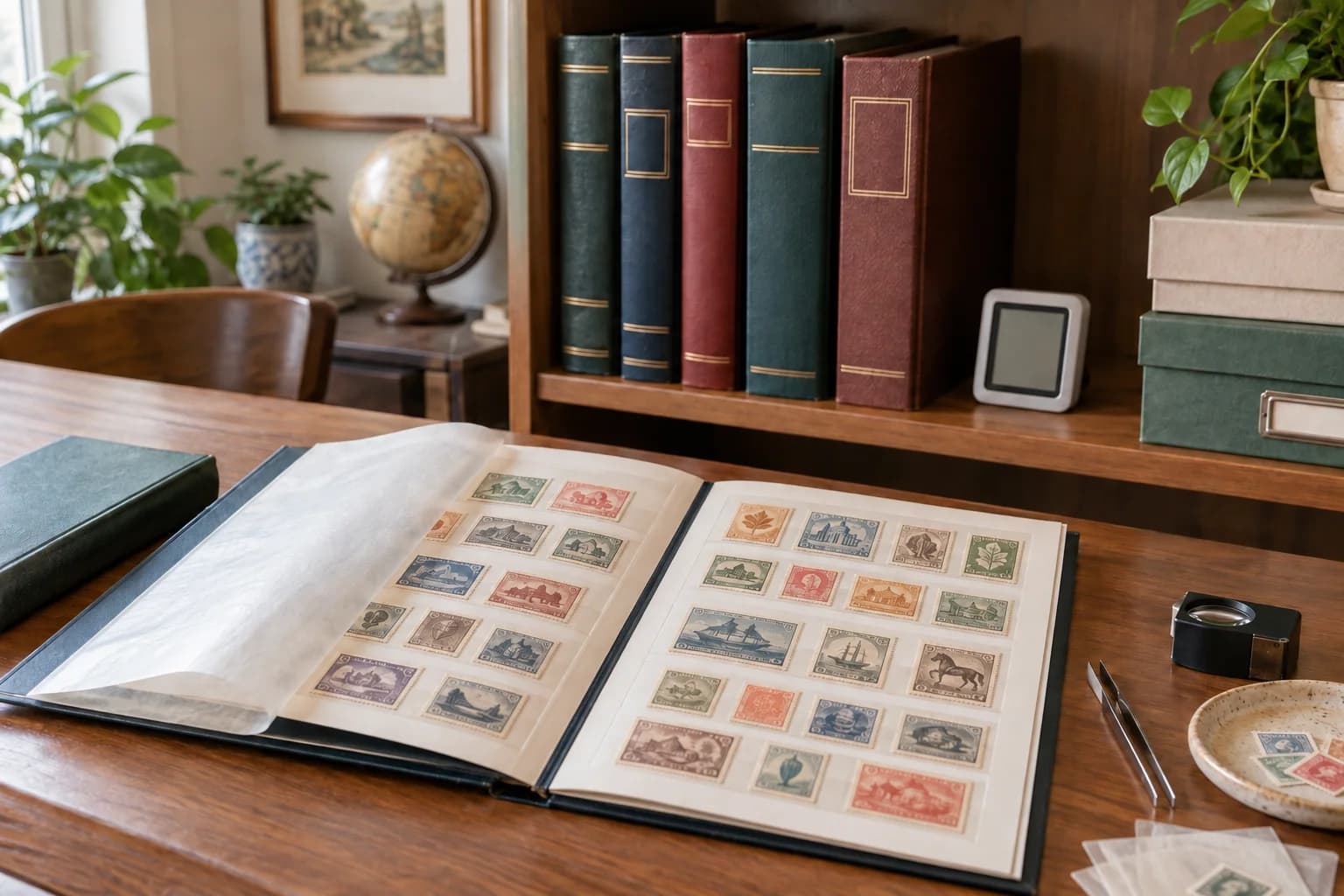
Keep albums upright in a cool, dry room. The American Philatelic Society warns against attic and basement storage because moisture can damage stamps and pressure can make them stick to pages. Do not peel a stamp from an album, soak a cover, flatten a fold or separate an attached pair just to make it easier to photograph. Such changes can remove useful evidence or cause irreversible damage.
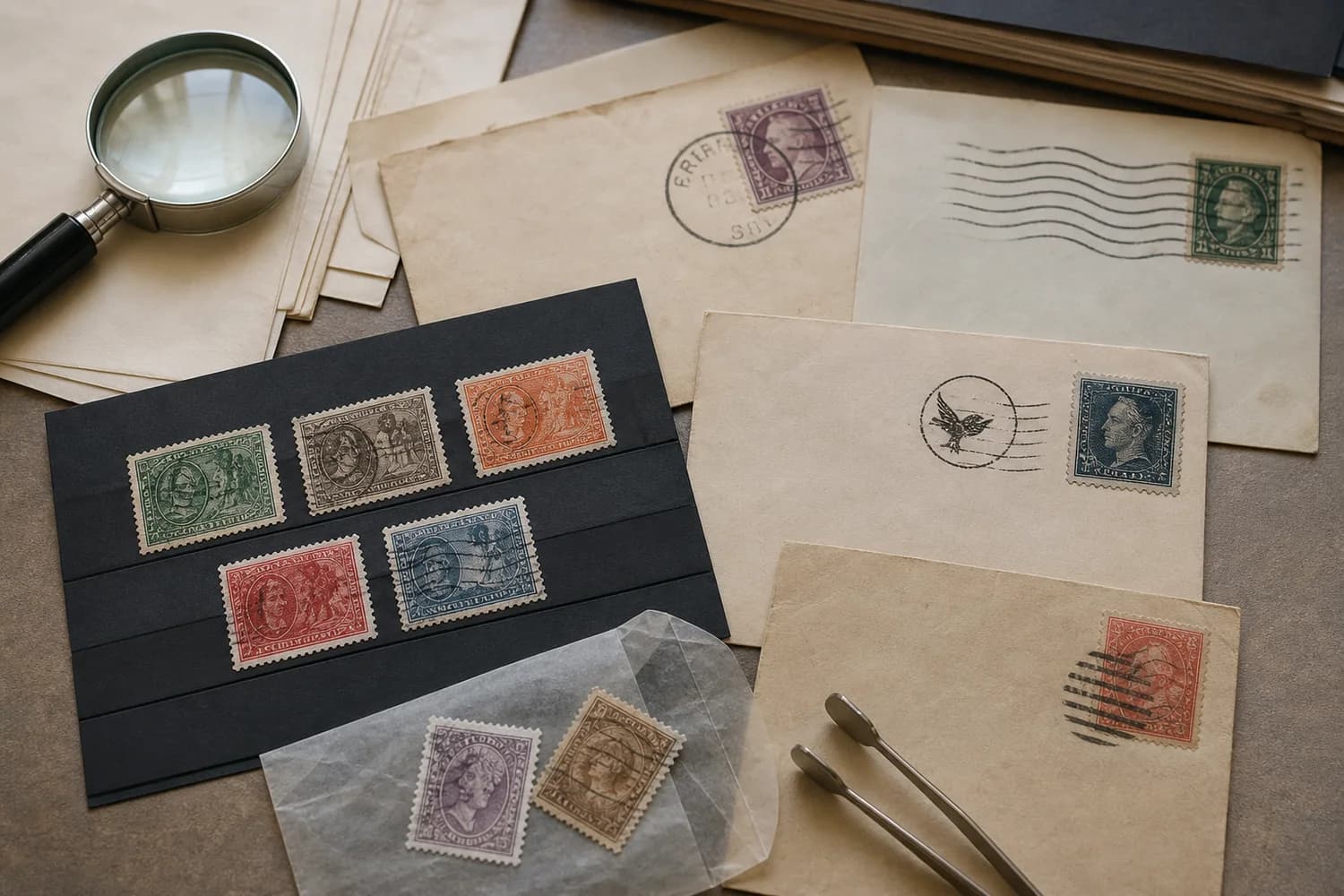
If a box contains loose stamps, use clean envelopes or archival sleeves to keep each existing group together. Label where each group came from. Keep complete envelopes, first-day covers, blocks, sheets and margins intact. A cancellation, route, attached neighbor or original margin may matter more than the loose stamp it resembles. The collection storage guide explains safer handling in more detail.
Build an inventory that reflects the collection
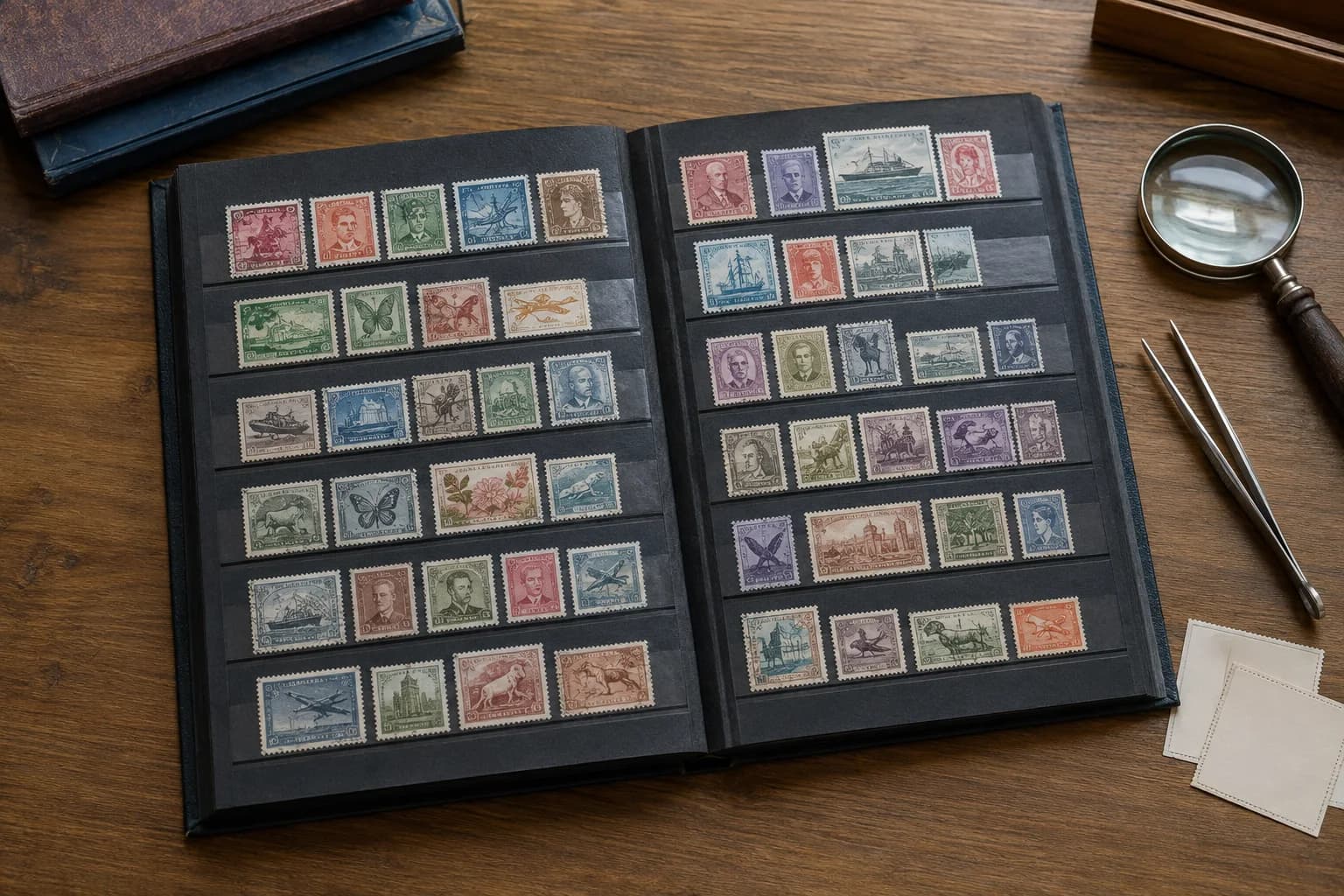
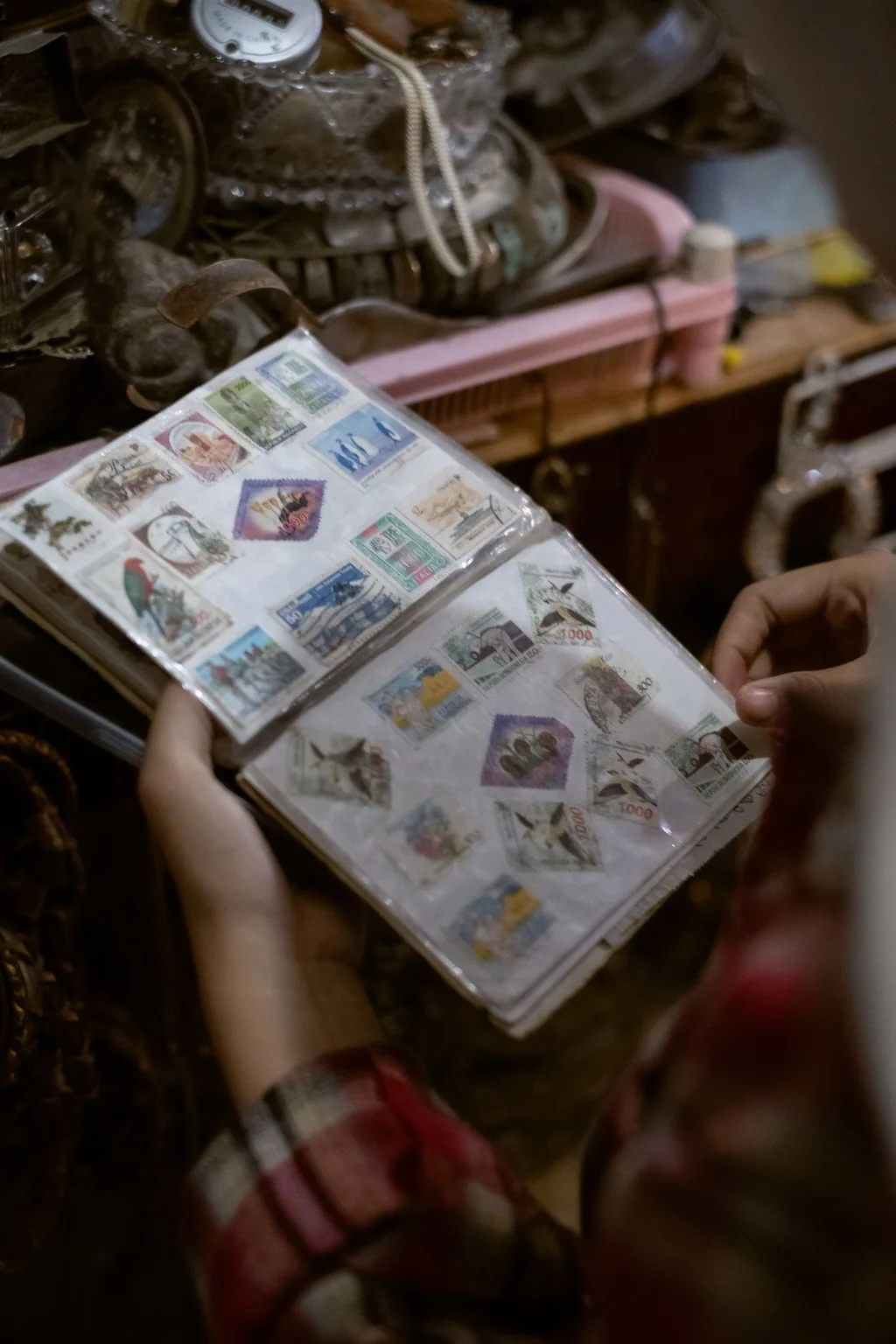
Count containers and describe groups before counting individual stamps. Record albums by title and country, stockbooks by theme or period, loose material by envelope, and covers separately. For each group, note approximate quantity, apparent date range, used or unused condition, duplicates and any attached certificates. A rough inventory is more useful than an unsupported grand total.
Use four broad piles only when the material is already loose: common or duplicated material, identifiable singles and sets, covers and postal history, and uncertain pieces requiring closer study. Do not reorganize a carefully arranged album. If the collection was inherited, follow the inherited collection checklist before discussing a sale with anyone.
Sample each group intelligently. Look at a few early pages and a few later pages, but also investigate handwritten notes, unusually sparse pages, certificates, complete sets, high denominations, covers and items stored apart. A page of many similar modern definitives should not get the same research time as a single item accompanied by a certificate. The aim is to find where the value might be concentrated.
| Group | Record | What to check next |
|---|---|---|
| Albums and stockbooks | Country, period, pages and notes | Early issues, complete sets and unusual gaps |
| Loose singles and duplicates | Envelope label, approximate count and condition | Identify representative issues and better-looking items |
| Covers and postal history | Full envelope, date, route and markings | Preserve intact and compare complete covers |
| Unused postage | Country, denominations and whether valid | Separate face value from collector value |
| Certificates or invoices | Issuer, date, item and catalog reference | Match each document to the actual item |
Identify the exact stamps before pricing them
Country, design and age narrow the search, but they rarely identify an exact catalog listing. Similar-looking issues may differ in perforations, watermark, paper, overprint, shade, gum or cancellation. Find the catalog number only after you have checked the relevant variety. Record the catalog and edition because numbers and descriptions belong to a specific reference system.
Use the free stamp value checker on one promising stamp for a preliminary identification and value context. For a larger collection, Stamp Value Identifier & Scan can help you scan individual stamps and keep their findings together as a visual collection. Work through representative items and anything that appears unusual. The saved collection can show a running estimated total as you scan pieces. It cannot turn one album photo into a dependable collection appraisal, and the total still needs physical and market checks.
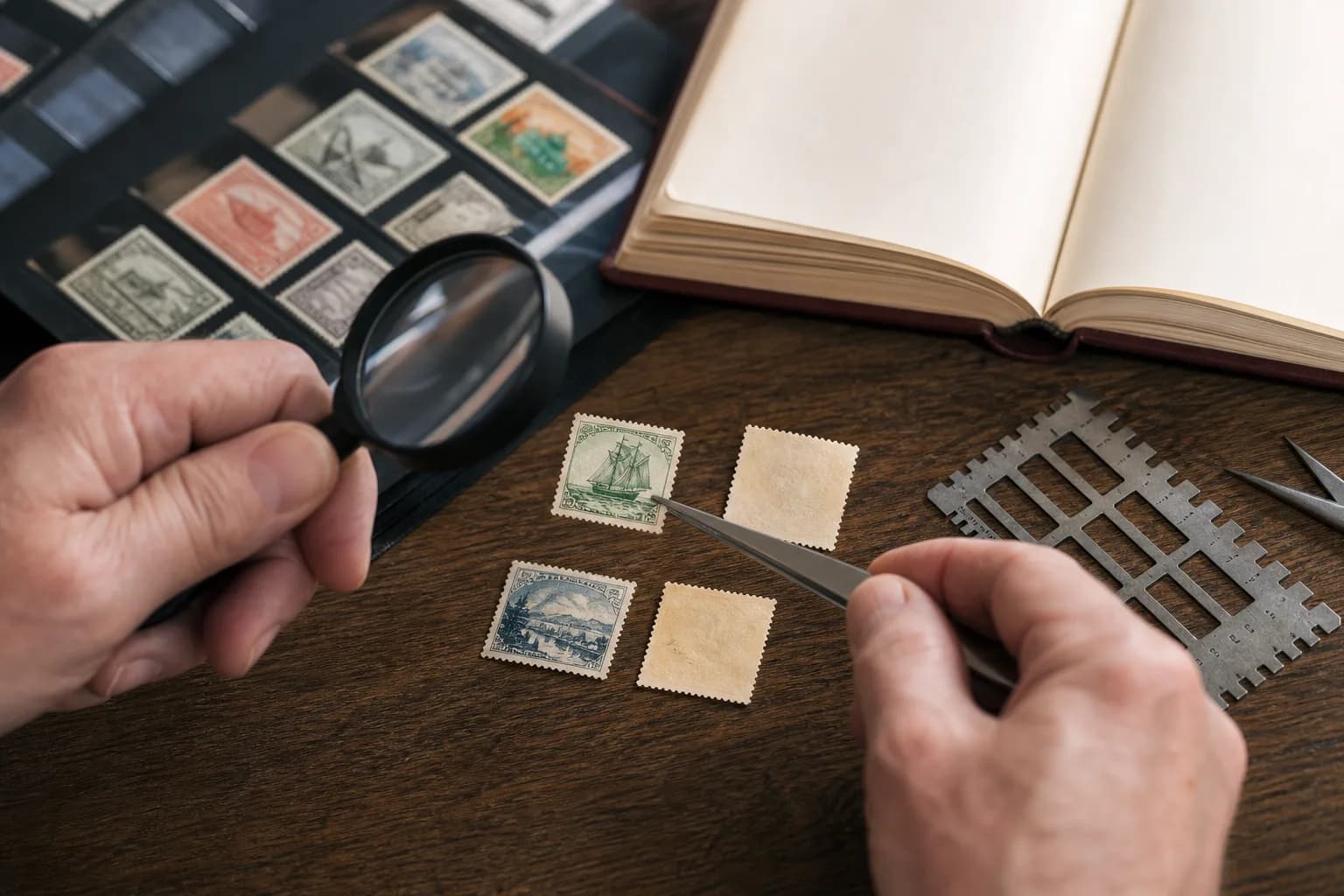
When a stamp appears to match an expensive variety, do not price it from a low-resolution front image. Inspect the reverse, gauge perforations when relevant and compare the correct printing. The Smithsonian notes that slight physical differences can separate rare stamps from common ones and recommends professional expertizing for potentially rare items. Treat a photo match as a research lead, not proof.
Condition changes the comparison
Two stamps with the same catalog identity can sell for very different amounts. Centering, complete perforations, tears, creases, thins, stains, repairs, gum, hinges and cancellation all matter. A cover also needs its full envelope, postal markings and context assessed. Use the condition grading checklist when making notes.
Inspect both sides under gentle light, without rubbing or testing the paper. Photograph defects as clearly as attractive features. A hidden thin or altered gum may be invisible in a page image. Describe what you actually see: “small crease at upper right” is more useful than “excellent” or “rare.”
Do not compare a damaged used stamp with a pristine unused catalog illustration and assume the same price. The closest market comparison matches the issue and its meaningful variety, condition, gum or cancellation state, and certificate status. If the condition is uncertain, keep a wider range and say why.
Use sold comparables, not attractive asking prices
Search completed auction records and dealer sale archives for the same issue or the closest available lot. Capture the sale date, venue, description, images, condition, certificate information and whether the price includes buyer fees. One spectacular result is not a market. Compare several sales and discard examples that differ materially in condition or identity.
Collection lots need collection-level comparables. A single valuable stamp might be sold individually, but a mixed box usually trades as a lot because a buyer must identify, sort, photograph and resell it. Neither a list of optimistic online asking prices nor a sum of catalog entries predicts a bulk offer. The APS says most collections consist largely of common material and that value can be concentrated in a small portion.
Write a range for each meaningful group, alongside the evidence and your uncertainty. Avoid adding postage face value to collectible market value without checking whether the stamps remain valid for postal use. If sales evidence is thin, mark the group “specialist review” rather than inventing a number. A transparent worksheet lets a dealer, auction house or family member see how you reached your preliminary view.
| Figure | Useful for | Limitation |
|---|---|---|
| Catalog value | Identifying a retail reference for a specific listing | Not a guaranteed sale price or whole-collection offer |
| Completed sale | Seeing what comparable material previously realized | Dates, fees and condition may differ |
| Dealer offer | Knowing an available sale route now | Includes the dealer’s costs and margin |
| Formal appraisal | Documenting a stated valuation purpose | Basis, scope and fee must be agreed first |
Know when a specialist should take over
Ask for an in-person opinion if the collection contains certificates, classic issues, unusual postal history, intact sheets, scarce countries or varieties, or material whose identity you cannot settle safely. A local philatelic club or APS dealer can help determine whether a paid appraisal is justified. Be clear whether you want informal triage, a purchase offer or a written appraisal.
A formal appraisal may be appropriate for an estate, insurance, donation or legal need. Ask what valuation basis the appraiser will use, which material will be examined, what the fee covers and what documentation you will receive. The APS notes that an appraiser may focus on stronger items rather than cataloging every common stamp.
For a sale, get more than one offer and compare the terms, not only the headline price. A specialist in the country or format represented may recognize material that a general buyer overlooks. The guide to selling a stamp collection explains the trade-offs among dealers, auctions and private sales. Preserve time to decide; the APS specifically advises against pressure to sell immediately.
A sensible first week with a large collection
Day one is preservation and photos, not pricing. Move the collection to stable storage, record its current arrangement and set aside paperwork. On day two, inventory albums, loose groups and covers. On the next few days, identify representative items from each group and flag anything accompanied by a certificate or specialist note.
Research only the flagged material first. Record exact identity and visible condition, then find several completed comparables if available. This sequence prevents hours of work on repeated common stamps while a better cover remains unnoticed. It also gives a specialist a clear starting inventory if you need one.
At the end of the week, choose the next question: keep and organize, seek an informal opinion, pay for an appraisal, or compare sale routes. Your initial estimate is a decision aid, not a certification. If you need to understand one particular item in more depth, use the old-stamp value guide. For concrete dealer offers, search the old stamps price list and then check each listing’s condition.
Frequently asked questions
How do I find out what my stamp collection is worth?
Keep the collection intact, inventory its main groups, identify representative stamps and better-looking pieces, record condition, and compare completed sales of matching material. A dealer or specialist society can help decide whether a formal appraisal is worthwhile.
Is a stamp collection worth its total catalog value?
Usually not. Catalog figures are generally retail reference values for individual stamps in specified condition. A buyer of a whole collection considers duplicates, faults, time to sort and sell, and their own costs. The relevant valuation also changes with the purpose of the appraisal.
Are old stamp albums automatically valuable?
No. Age and a full album show collecting history, but value depends on the exact issues, condition, scarcity, demand and whether the material is genuine. Modern common stamps and damaged examples can dominate an old album.
Should I remove stamps from an inherited album?
Avoid removing or soaking stamps before identification. Keep covers, blocks, margins and original notes together because they may carry useful evidence. Store the material dry and upright while you seek advice.
Can an app value my entire collection from one photo?
No. A photo of one page cannot reveal the exact identity and condition of every stamp. The app can help identify and save individual scans as a visual collection, while the free web checker offers a preliminary result for one stamp at a time. Neither provides a formal appraisal.
When should I pay for a professional appraisal?
Consider one when a valuation is needed for an estate, insurance, donation or legal purpose, or when a specialist identifies potentially important material. Agree on the purpose, valuation basis, fee and scope before commissioning the work.
Sources and further reading
Primary references and specialist resources used to prepare this guide.