Quick answer
Store a stamp collection in a cool, clean, stable room away from direct light, water, exterior walls, attics, basements, and floor level. Keep sound albums upright with light support, use clearly identified preservation-quality enclosures, monitor temperature and relative-humidity trends, and inspect regularly for sticking, odor, pests, stains, or active mold.
Audit the collection before moving anything
Begin with the collection as it exists. Photograph shelves, boxes, album spines, page order, loose packets, labels, certificates, and notes before you rehouse or reorganize anything. Record which items are loose stamps, mint stamps with gum, used stamps, blocks, sheets, booklets, covers, postcards, or bound albums. Each format carries different pressure, bending, adhesive, and handling risks.
Look for urgent conditions rather than individual value. A wet box, active leak, musty odor, fuzzy growth, insects, warm exterior wall, sticky gum, or stamps adhering to interleaving needs attention before cataloging. Keep affected material apart from sound albums, but do not pull stuck stamps free or dismantle a cover. The inherited collection checklist explains why original order and documentation can be evidence.
Mark three groups: stable enough to leave alone, safe to rehouse with reversible materials, and uncertain enough to stop. A cracked mount, brittle page, stained glassine, unknown soft plastic, or old pressure-sensitive tape belongs in the uncertain group. Photograph the problem and seek specialist advice when an intervention could alter gum, paper, ink, perforations, or postal context.
This first audit prevents the common mistake of buying new albums before understanding the collection. A sound old stockbook in a stable room may be safer than a rushed transfer. Preservation starts by reducing active risk, not by making every page look new.
Choose a stable room before choosing an album
Paper reacts to its environment. Heat speeds chemical change, moisture supports mold and can soften gum, very dry air can make some materials brittle, and repeated swings make paper and bindings expand and contract. Light can fade inks and darken or yellow paper. No album can compensate for a damp basement, hot attic, sunlit shelf, leaking pipe, or radiator.
Use an interior living space that stays reasonably cool, clean, and stable through the year. Keep shelving away from direct sunlight, exterior walls, plumbing, vents, heaters, kitchens, and bathrooms. Raise the lowest shelf above floor level so a small leak does not immediately reach the collection. Allow air to circulate behind cabinets and do not push albums into a cold, stagnant corner.
Place a basic digital hygrometer near the albums and log readings at different times for several weeks, including a humid spell. The number is useful as a trend, not as proof of safety. Different institutions publish different targets for paper and mixed collections, so focus first on avoiding persistent high humidity, condensation, and rapid fluctuations. If control requires a dehumidifier or air conditioner, confirm that it can run safely and that water collection or drainage cannot leak onto the collection.
A sealed box can slow outside changes, but it can also trap moisture, acidic vapors, or active mold. Never seal damp albums. If you use a protective cabinet or box, monitor inside it as well as the room and open it periodically in a safe environment for inspection.
| Signal | What it may mean | Next step |
|---|---|---|
| Readings climb during humid weather | Room control is weak or air is stagnant | Improve room control and circulation; inspect gum and album gutters |
| Albums feel cool or smell musty | Hidden dampness or poor air exchange | Isolate, measure the area, and seek advice before cleaning |
| Condensation appears on a wall or cabinet | Surface temperature is below the room dew point | Move the collection and correct the building moisture source |
| Pages curl or mounts lift after seasonal changes | Repeated temperature or humidity swings | Log conditions and stabilize the room before remounting |
| One box changes while others remain sound | Local enclosure, leak, or material problem | Quarantine the box and inspect adjacent items |
Match the enclosure to the philatelic object
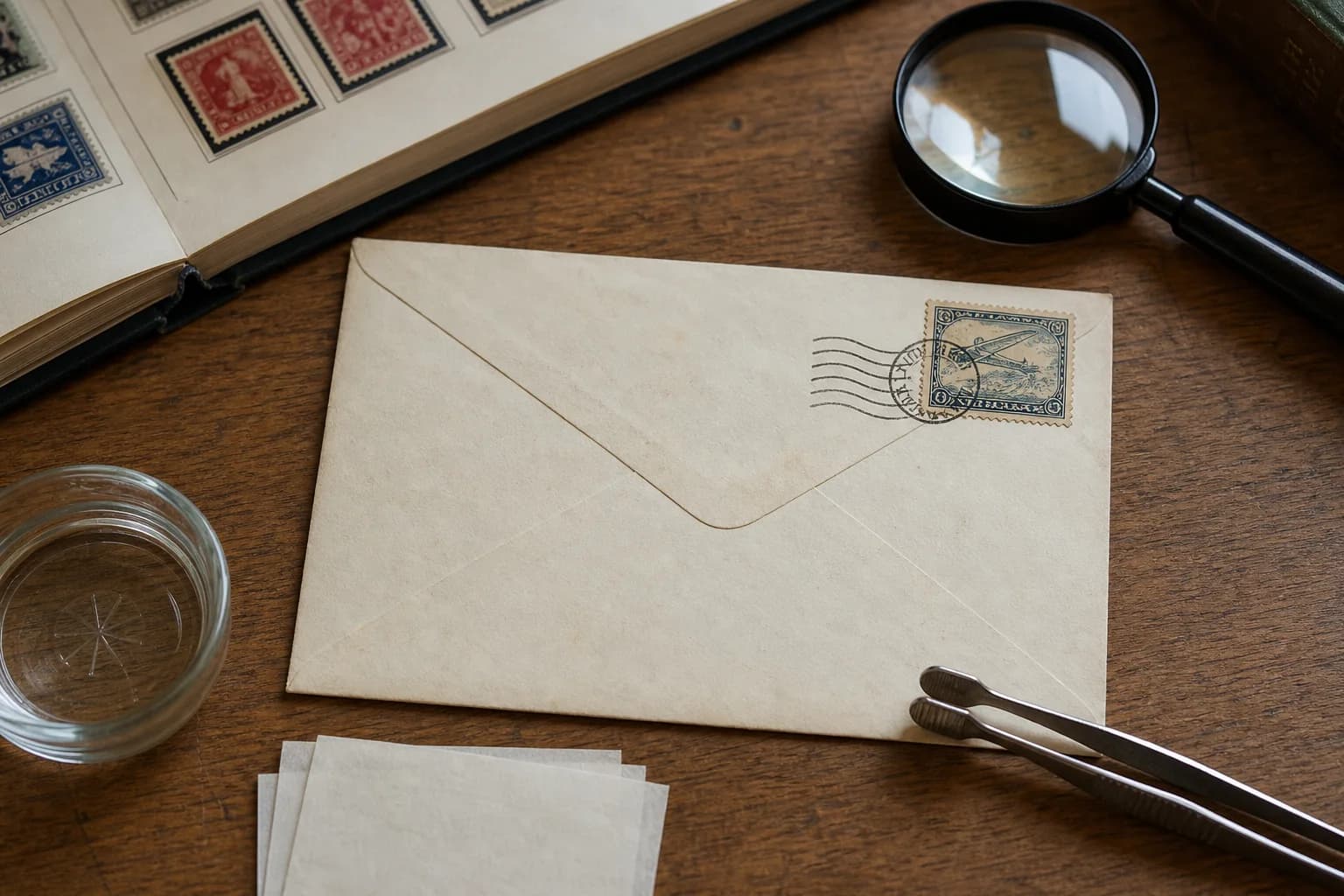
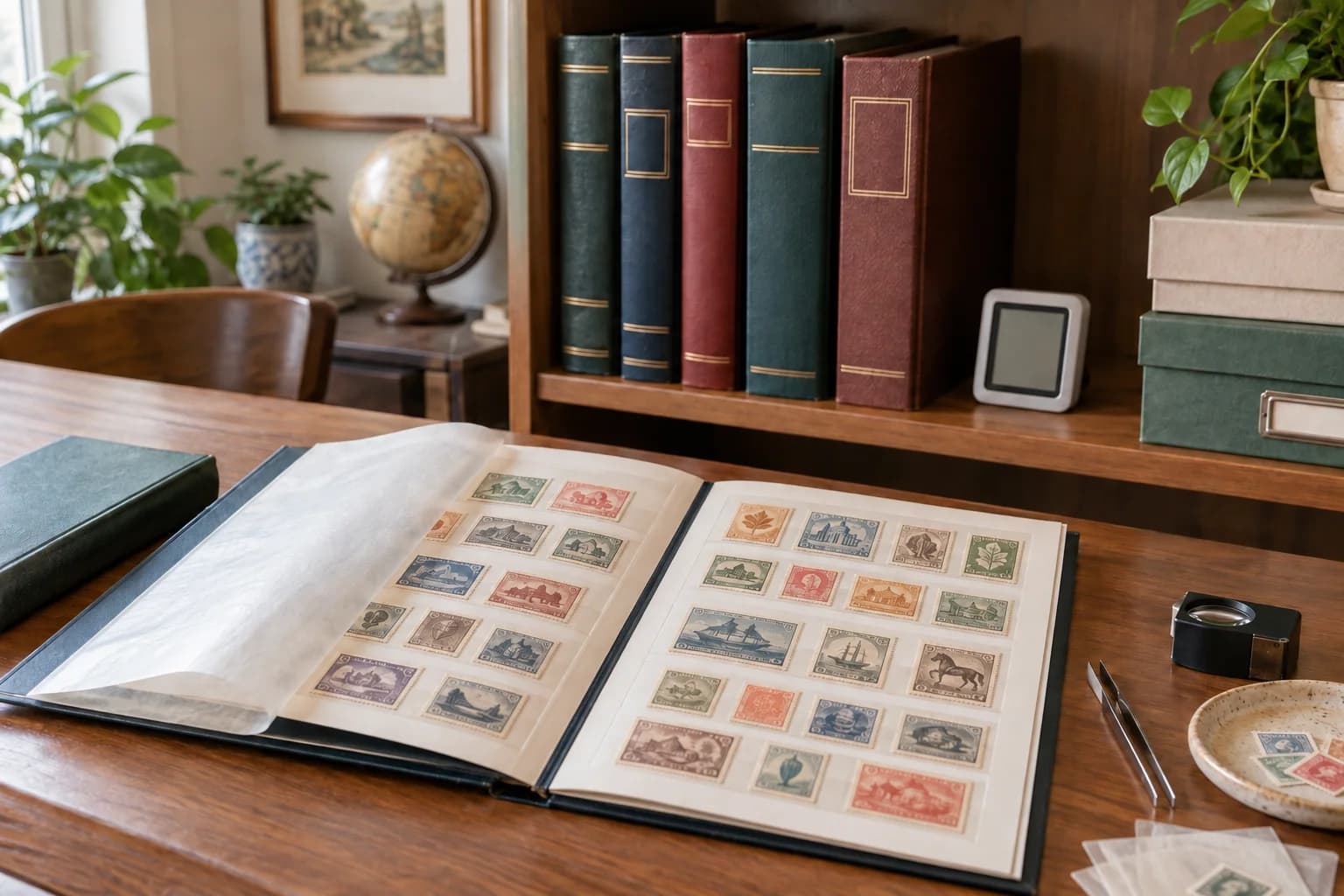
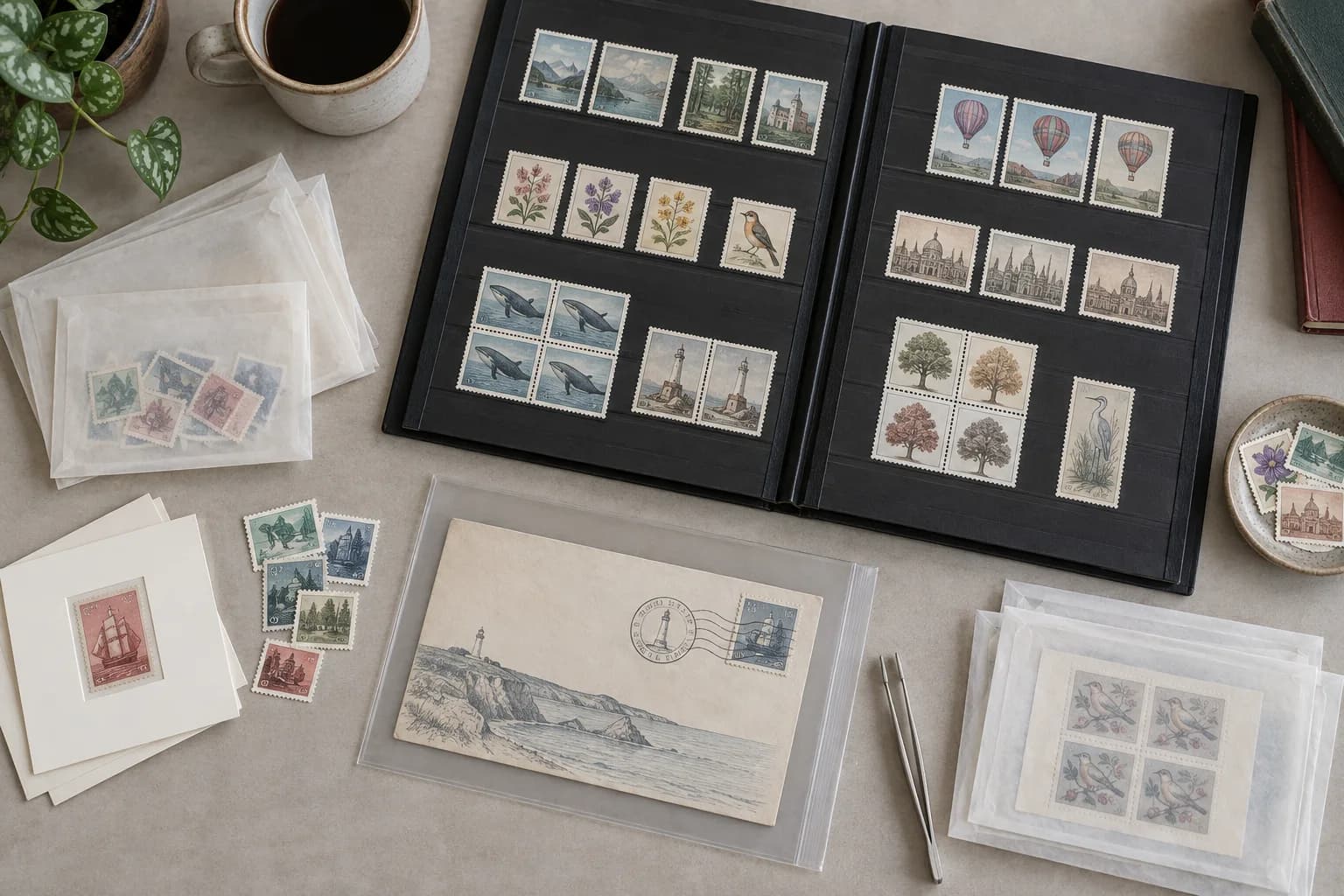
Housing should support the item without adhesive contact, crowding, or forced bending. A stockbook works well for rearrangeable loose stamps when its strips, interleaving, and binding are sound. Properly sized mounts can isolate a stamp on an album page. Acid-free, lignin-free folders or boxes and stable clear sleeves can support covers and postal stationery when the dimensions fit.
Material names matter more than marketing words. Preservation guidance commonly accepts appropriate polyester film, polyethylene, and polypropylene for many paper uses. Avoid PVC, unknown soft plastic, self-adhesive photo pages, lamination, rubber bands, ordinary tape, and envelopes that release color or fibers. Ask a supplier for the plastic or paper specification when archival-safe appears without detail.
Do not force blocks, panes, booklet covers, or margins into a pocket designed for a single stamp. Support large pieces across their full area. Store covers with enough space that seals, wax, enclosures, or thick contents do not press into neighboring paper. Keep certificates and acquisition records associated with the item without laying acidic receipts directly against it.
The choice between stamp hinges and mounts is only one part of storage. If gum, identity, condition, or significance is uncertain, a reversible stockbook or correctly sized holder is safer than attaching the stamp to a final page.
| Material | Practical housing | Main caution |
|---|---|---|
| Loose used stamps | Sound stockbook, stock card, or labeled glassine for short-term sorting | Do not overcrowd or let perforations catch |
| Mint stamps with gum | Individual mount or suitable stockbook with space | Avoid pressure, humidity, and adhesive contact |
| Blocks and sheets | Full-support stock page, folder, or fitted sleeve | Do not fold margins or let weight bow the sheet |
| Covers and postal stationery | Fitted preservation sleeve or acid-free folder and box | Keep postal markings and contents together |
| Booklets and fragile pieces | Supportive fitted enclosure | Do not flatten bindings, tabs, or raised elements |
| Albums with provenance | Original order plus a protective box if needed | Do not transfer merely for appearance |
Shelve albums without pressure, water, or stagnant air
Store sound albums upright like books. Use bookends or shelf dividers so each volume stands vertically without leaning, but leave enough room to remove it without scraping the spine. Do not pack a shelf so tightly that pages or mounts remain compressed. Avoid high stacks of albums because weight can press gum or mounts against facing pages.
Very large, weak, or damaged volumes may need flat support in a fitted preservation box. If flat storage is necessary, keep the stack small and put the largest, strongest volume at the bottom. A conservator can advise on unusual bindings or pages that already distort under their own weight.
Keep collections off the floor and away from water pipes, windows, exterior masonry, heating equipment, and household chemicals. Use shelves deep and strong enough to support the entire album. Dust covers or slipcases can reduce light and dust, but they must not trap dampness or conceal a developing problem for years.
Label shelves and boxes with a neutral location code, then keep the detailed inventory separately. This makes periodic checks faster and supports insurance or evacuation planning without advertising contents on every spine.
Handle and document without changing the stamp
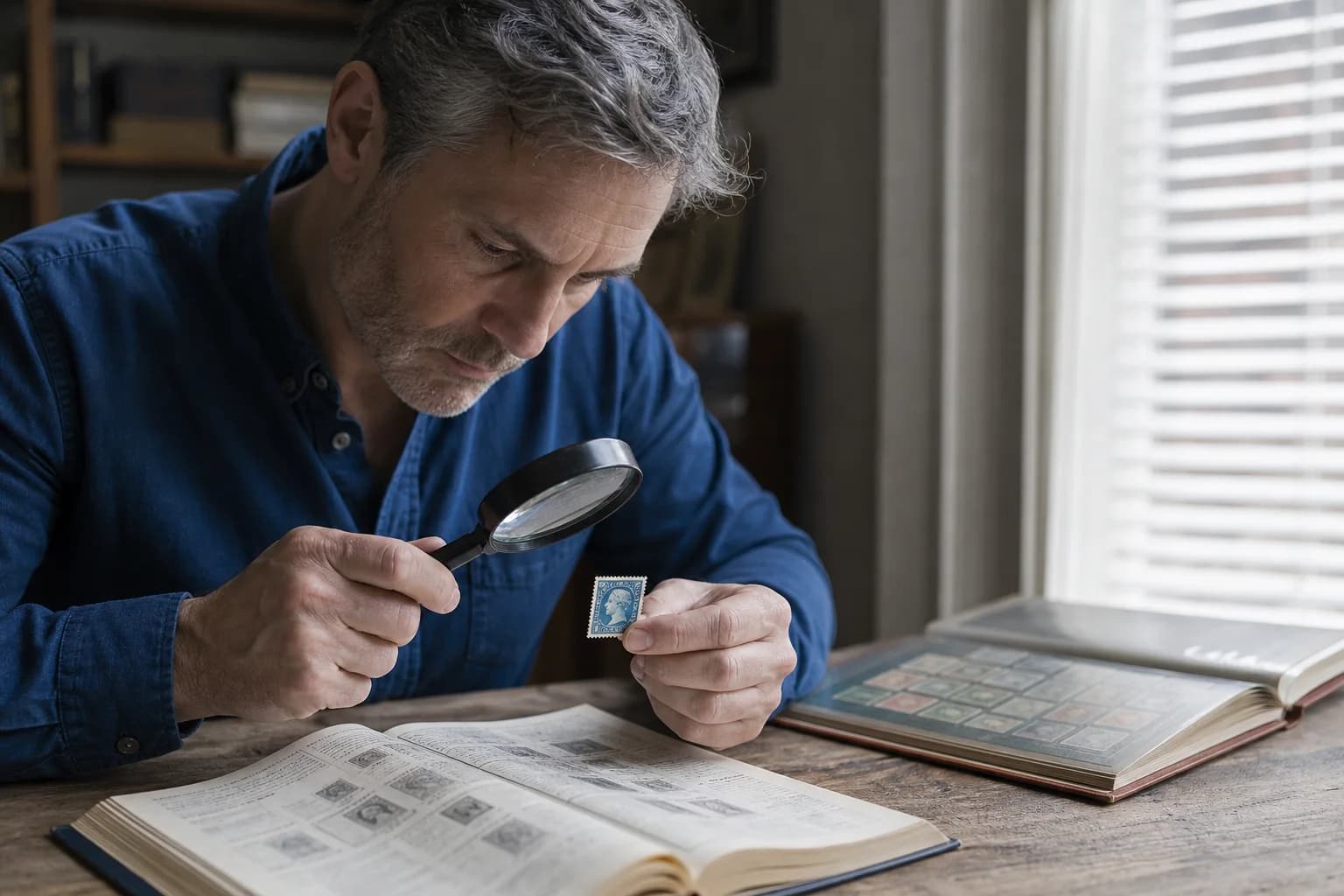
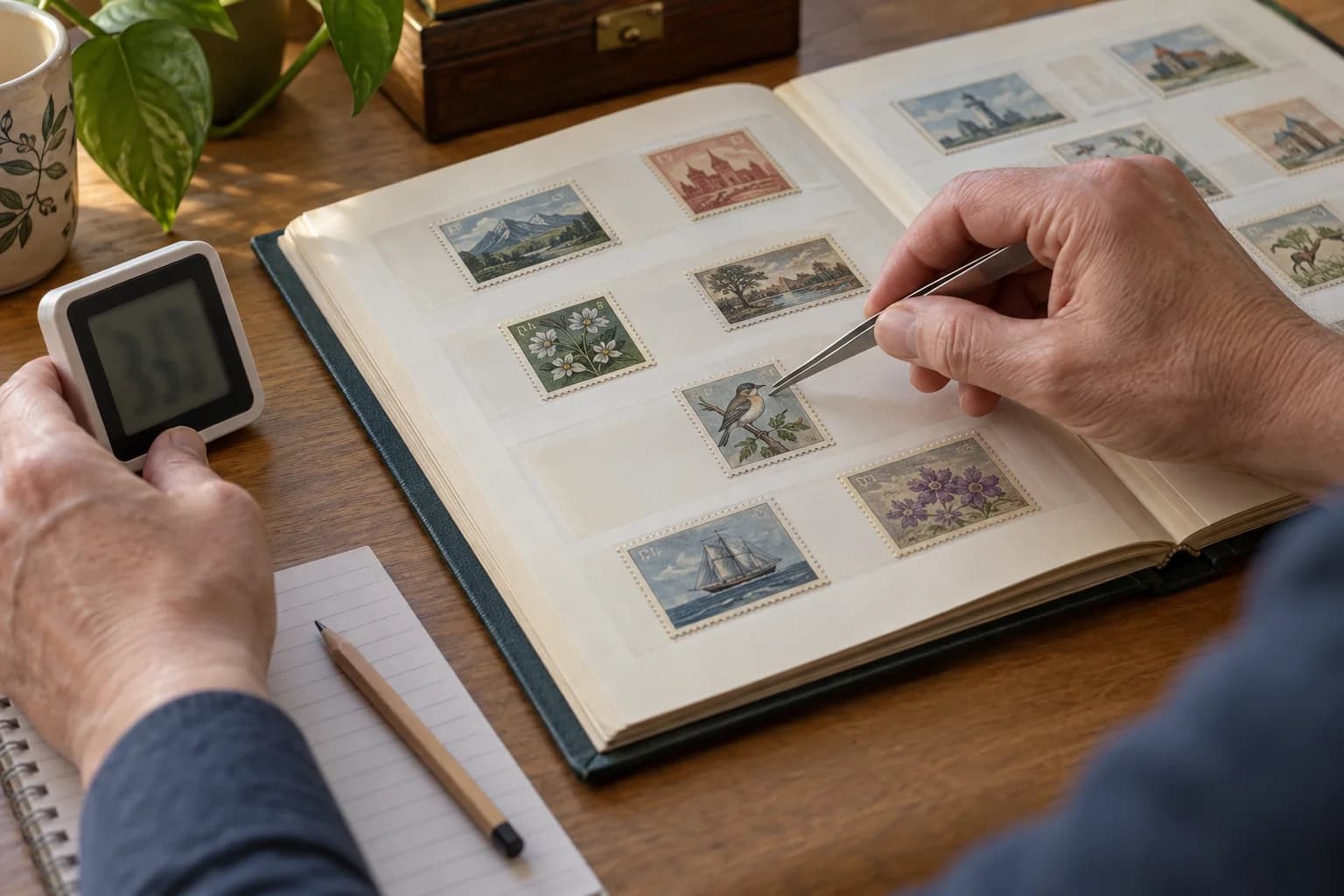
Work at a clean, dry table with food, drink, pens, glue, and open liquids elsewhere. Use smooth stamp tongs for dry loose stamps and support covers or sheets with both hands. Clean, dry hands are appropriate for many paper supports, while gloves can reduce dexterity and catch fragile edges. Follow a conservator’s instructions for contaminated or hazardous material.
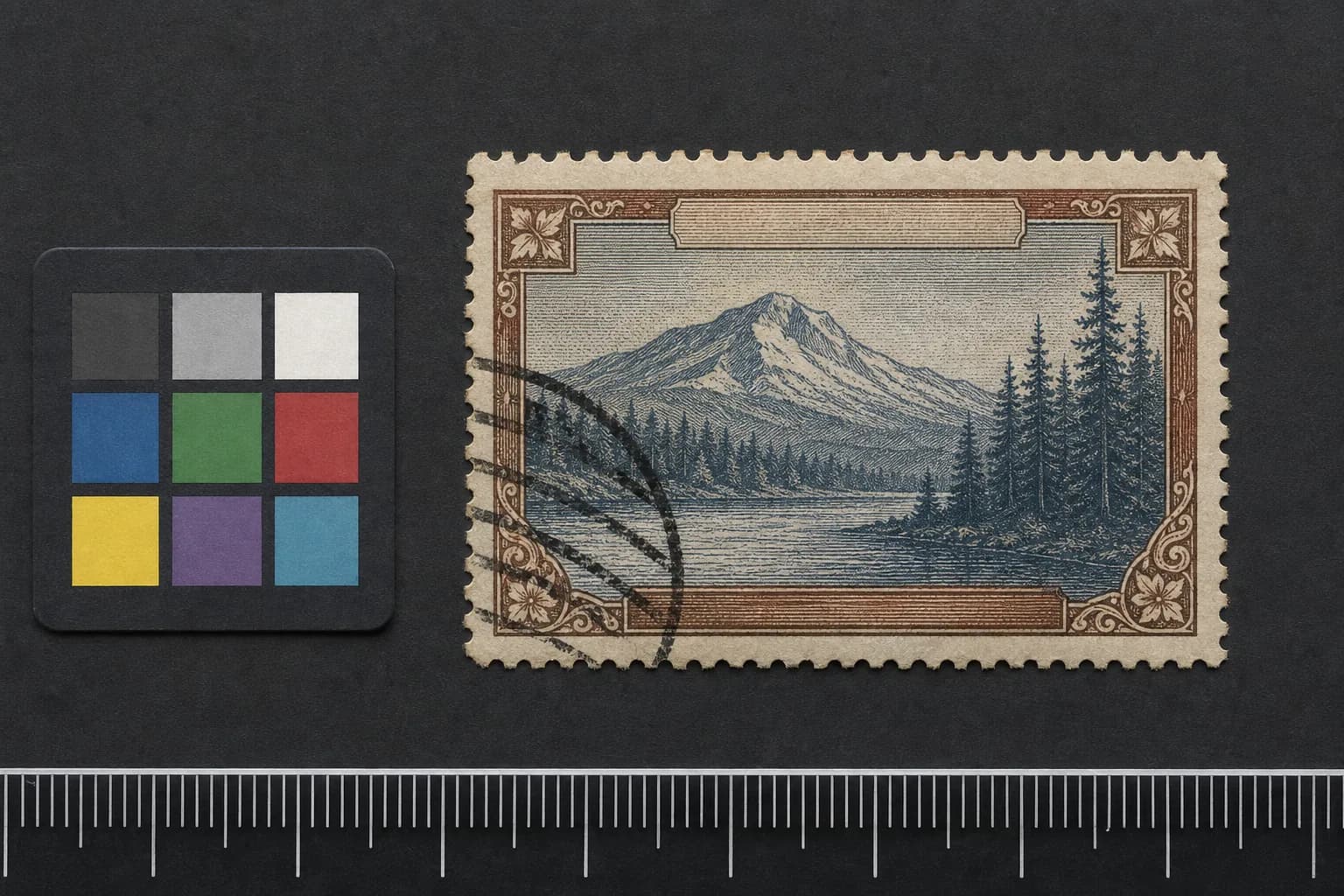
Before moving a stamp, photograph the front, back, current page, label, and any associated cover or certificate. Give it a location code and keep the former location in the record. If the stamp is stuck, brittle, moldy, or attached by an unfamiliar material, stop rather than testing force, water, solvent, heat, or household cleaner.
A clear photo in Stamp Value Identifier & Scan can help organize visible identification clues and keep a likely issue with saved discoveries. Use that record to decide which reference or physical check is needed. The app is not an official authentication, certification, grading, or appraisal service, and it cannot determine whether storage material is chemically safe.
If a loose stamp still needs identification, follow the photo identification guide, then confirm details with the catalog-number workflow. Knowing the issue can reveal whether original gum, a watermark, attached selvage, or postal context needs special protection.
- Record the item and its current location before moving it.
- Keep acquisition notes, certificates, and related covers associated.
- Use pencil on separate labels, never on the stamp or cover.
- Do not clean, bleach, press, laminate, tape, or reglue material.
- Change one storage variable at a time so new problems can be traced.
Inspect on a schedule and act on early warning signs
A closed cabinet is not a set-and-forget solution. Check the room monthly for leaks, condensation, pests, dust, blocked vents, direct sun, and abnormal readings. Every few months, open representative albums from different shelves and examine page gutters, interleaving, gum, mounts, and box corners. Inspect immediately after a storm, plumbing issue, prolonged outage, heat wave, or unusually humid period.
Compare against photographs and notes. New brown spotting, tide lines, waviness, sticking, softened gum, crystalline deposits, insect debris, powdery residue, or a musty odor deserves isolation and investigation. The condition grading guide helps separate observations from a broad grade, but an environmental problem should be fixed before condition is reassessed.
Quarantine means physical separation in a clean dry area, not sealing active mold into an ordinary bag. Do not brush or vacuum active growth near the rest of the collection. People can be sensitive to mold, and some species present health risks. For extensive or valuable affected material, contact a paper conservator or preservation service.
Record the date, room readings, shelf, items checked, and any change. A short repeated log is more useful than one precise reading because it reveals seasonal drift and whether a corrective step actually worked.
Prepare for water, mold, outages, and evacuation
Write a one-page response plan before an emergency. List the safest temporary room, who can help, where clean boxes and absorbent paper are kept, how to shut off nearby water, and which albums contain irreplaceable family, research, or high-value material. Keep the plan and inventory somewhere accessible if the storage room cannot be entered.
If water reaches the collection, protect people first and stop the source when safe. Paper is weak when wet, inks may run, glossy surfaces may block together, and mold can develop quickly. Do not aim hot air at stamps, peel stuck pages, or return damp albums to a closed cabinet. Photograph the scene and contact a conservator, insurer, or disaster-recovery service for significant material.
National Archives and NEDCC guidance describes air drying or freezing for some paper emergencies, but the correct choice depends on the material, scale, coatings, inks, and available time. A philatelic album combines paper, gum, mounts, plastics, bindings, and sometimes photographs, so generic book advice cannot be applied blindly.
During a power outage or humid-weather failure, monitor rather than repeatedly opening every enclosure. Move the collection to a safer conditioned room if that can be done without heat, rain, or handling damage. After conditions recover, inspect before returning anything to long-term storage.
Complete a 30-minute stamp storage audit
Spend the first five minutes checking the room: light, water sources, floor clearance, exterior walls, vents, temperature, and relative humidity. Use the next five to photograph shelf order and identify any album that leans, bows, smells unusual, or touches a risky surface.
For ten minutes, sample material from the top, middle, and lowest shelves. Check one mint page, one used-stamp page, one cover or sheet, and one enclosure made of plastic or glassine. Do not remove stuck items. Note only what changed or remains uncertain.
Use five minutes to correct simple reversible problems: move drinks and chemicals, raise a box from the floor, add a bookend, reduce direct light, or separate a suspect album. Spend the final five minutes writing the next action, owner, and review date. Rehousing, mold treatment, and building repairs belong on a planned task list, not in a rushed audit.
Connect storage to the rest of the collecting workflow. Review removal from envelopes before soaking anything, and use the beginner collecting plan when a disorganized accumulation needs a reversible first system. Good storage keeps future identification, research, and enjoyment possible.
| Minutes | Check | Output |
|---|---|---|
| 0 to 5 | Room, light, water, floor and readings | One environmental risk list |
| 5 to 10 | Shelf position and album support | Shelf photographs and priority volumes |
| 10 to 20 | Representative stamps, covers and enclosures | A short condition comparison |
| 20 to 25 | Immediate reversible corrections | Reduced active risk |
| 25 to 30 | Owner, next action and review date | A documented follow-up |
Frequently asked questions
What temperature and humidity are best for storing stamps?
A stable, moderate indoor environment matters more than chasing one perfect number. Library of Congress guidance for paper favors cool conditions and roughly 35 percent relative humidity, while other institutions use broader ranges for mixed collections. In a home, monitor trends, avoid prolonged dampness and abrupt swings, and seek conservation advice before creating a very dry sealed microclimate for valuable material.
Should stamp albums be stored upright or flat?
Store sound, normally sized albums upright like books, with enough support to keep them vertical but without squeezing them tightly. Heavy, damaged, unusually large, or weakly bound volumes may need a fitted box or flat support. Never build a heavy stack that presses stamps against pages, and keep every album off the floor.
Are plastic sleeves safe for stamp storage?
Only when the material and use are known. Preservation suppliers commonly use stable polyester, polyethylene, or polypropylene products for appropriate paper objects. Avoid unidentified soft plastic, PVC, sticky photo pages, lamination, and sleeves that are too small or create pressure. A label that only says archival is not enough; check the material specification.
Can silica gel protect stamps from humidity?
Conditioned silica gel can help buffer a small enclosure, but it is not a substitute for a stable room or regular measurement. Unmonitored packets can become saturated, and very dry conditions may also stress gum and paper. Use an indicator or maintenance schedule, keep packets from touching stamps, and never seal damp material in a box.
What should I do if stamps smell musty or show mold?
Isolate the affected album or packet from the rest of the collection and move it to a dry, ventilated area without spreading spores through brushing or fans. Active fuzzy or slimy growth can be a health hazard. Do not seal it in ordinary plastic, apply household chemicals, or experiment on valuable material. Contact a paper conservator or preservation service.
How often should I inspect a stored stamp collection?
Check the room and shelves monthly, then examine representative albums and known-risk material at least every few months and after leaks, outages, storms, or long humid periods. Record temperature and humidity, odor, sticking, new stains, insects, warped pages, and enclosure changes so a trend is visible before damage spreads.
Sources and further reading
Primary references and specialist resources used to prepare this guide.
- Library of Congress: Care, Handling and Storage of Works on Paper
- Canadian Conservation Institute: General Precautions for Storage Areas
- American Philatelic Society: A Guide to Heirs on an Inherited Collection
- National Archives: Emergency Salvage of Flood Damaged Family Papers
- NEDCC: Storage and Handling for Books and Artifacts on Paper
- NEDCC: Emergency Salvage of Moldy Books and Paper