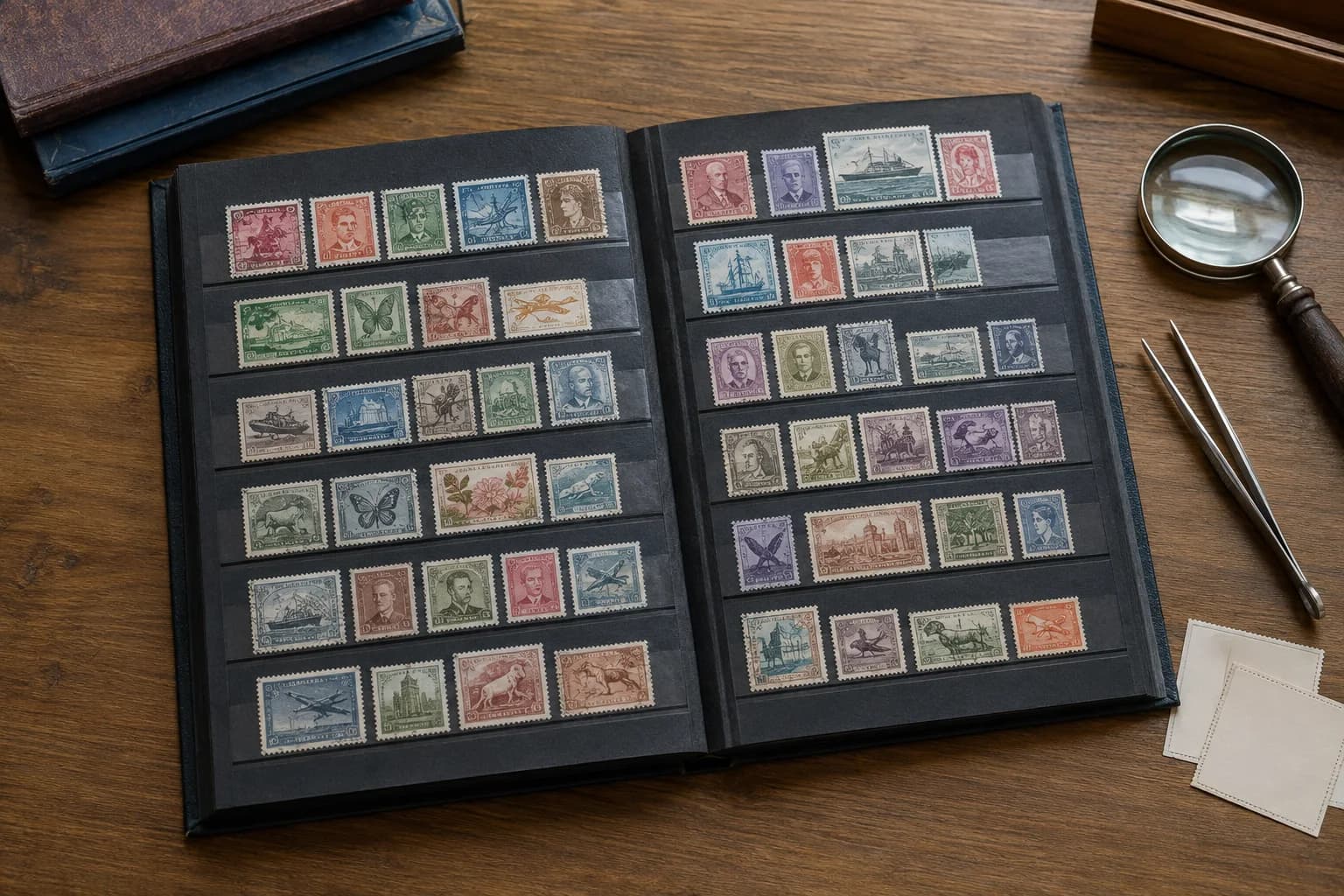
Quick answer
To start stamp collecting, choose one small theme, country, period, or mail-related question and build a trial group of about 20 inexpensive items. Use a stockbook, smooth stamp tongs, a magnifier, and a simple record; identify each item before soaking, mounting, discarding, or paying more for it. Expand only after the first page shows what you enjoy collecting.
Begin with one collecting rule, not a shopping list
A useful first collection is small enough to understand. Write one sentence that defines it, such as “used bird stamps from any country,” “mail from my grandparents’ hometown,” or “one stamp from each country I have visited.” This is a trial rule, not a lifetime commitment. It keeps the first purchases, swaps, and research questions connected.
Aim for about 20 items during the first month. That is enough to practice handling, sorting, identification, and record keeping without turning every new object into an obligation. A packet of hundreds may look economical, but an unexplained pile can hide duplicates, damaged pieces, and material outside your interest.
Decide what counts before you acquire more. Will you include mint and used stamps, complete envelopes, souvenir sheets, booklets, or only single stamps? The American Philatelic Society notes that philately can include covers and other material related to carrying the mail, so “stamp collecting” does not have to mean detached stamps alone.
Keep enjoyment separate from an investment claim. A coherent beginner collection can be worthwhile even when every item is common. If resale value is central to a purchase, pause and use the same evidence you would expect from any collectible: exact identification, condition, provenance, and relevant market results.
Choose a focus that leaves room to learn
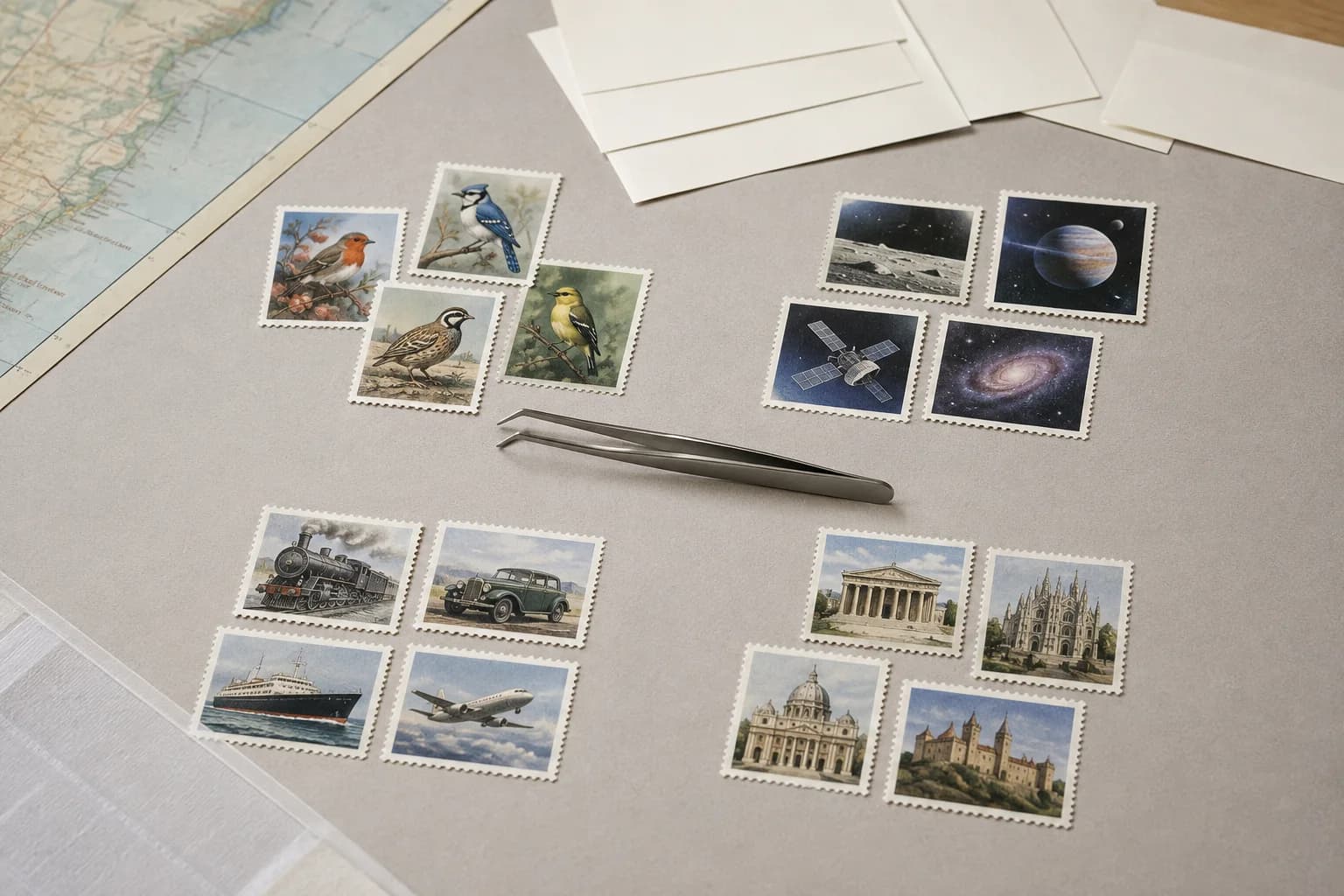
Country collecting gives you a defined issuing authority and a catalog sequence. A period, such as one decade, keeps the volume manageable. Topical collecting follows subjects pictured on stamps, while postal history follows how mail moved, including rates, routes, postmarks, and covers. Each choice trains a different kind of observation.
A good beginner focus passes three tests. You can find common examples without paying a premium, you can name a reference that helps identify them, and you remain curious after sorting the first ten. If one test fails, narrow or change the rule before spending more.
The American Topical Association suggests listing subjects you already enjoy. That approach works because the collection has a question before it has gaps. A train collection might become “electric locomotives on European stamps,” while a broad country collection might become one definitive series studied by paper, perforation, and postmark.
Do not separate blocks, panes, attached selvage, or covers merely to make them fit a new scope. Preserve the object until you understand whether the joined format or postal context carries information. You can always change the collection rule without physically changing the material.
Buy only the tools that solve a first-month job
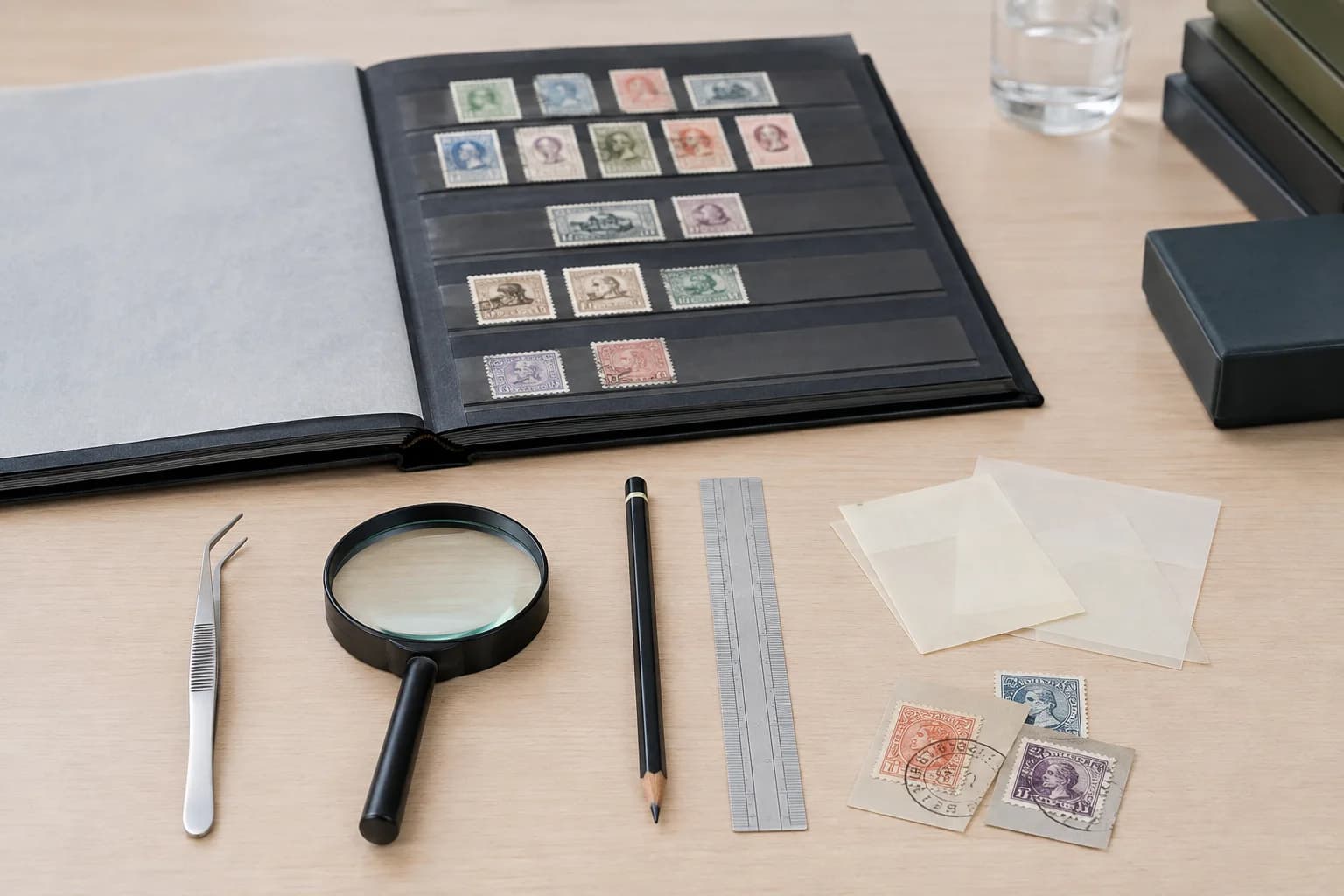
No special tool grants collector status. The minimum setup protects paper and makes small details visible: smooth stamp tongs, a clear magnifier, a stockbook or suitable temporary holders, a pencil, and a record sheet. Work on a clean, dry table with food, drink, tape, glue, and loose liquids kept away.
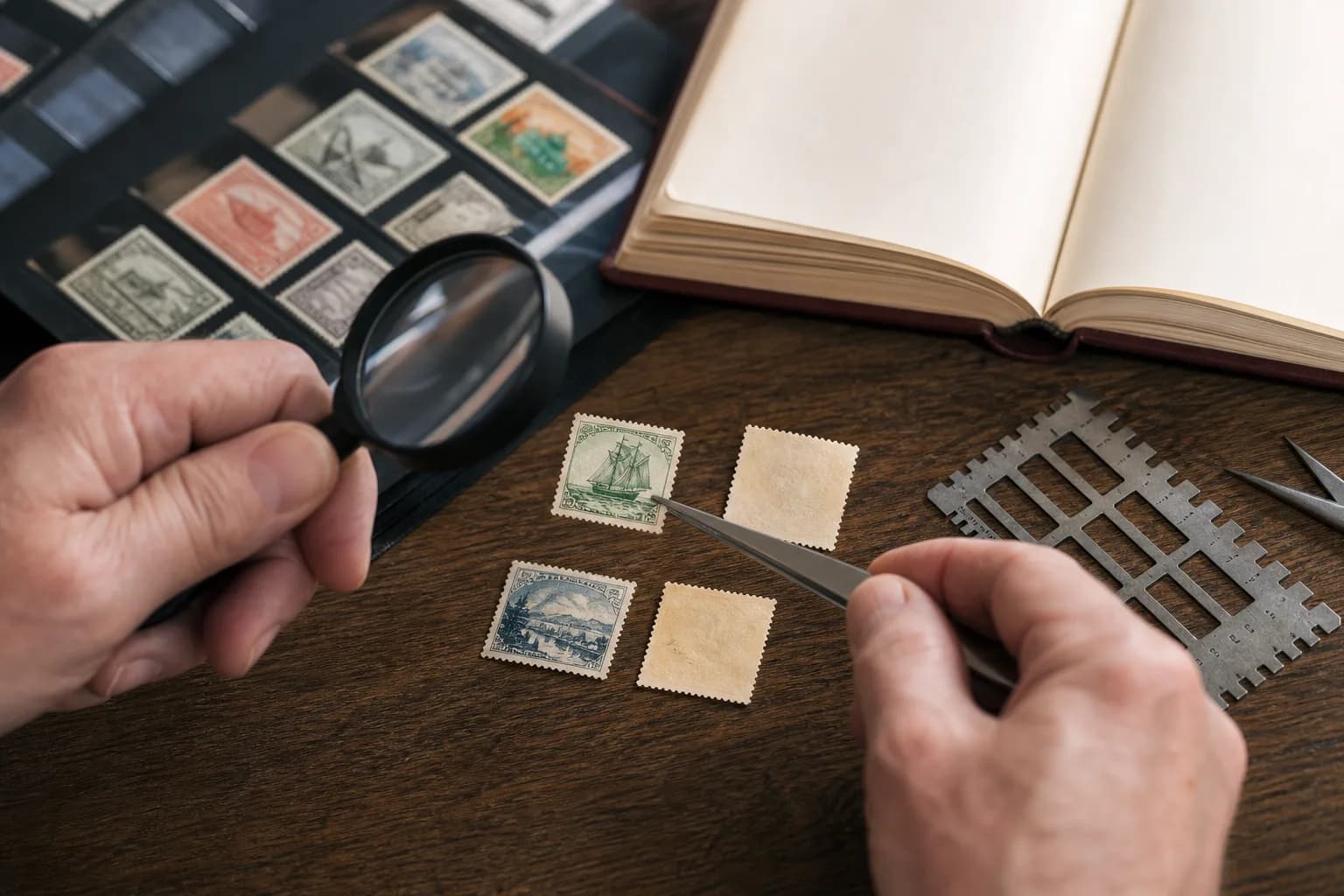
Choose stamp tongs with smooth gripping surfaces rather than household tweezers with sharp or ridged tips. Practice on a damaged common duplicate. Slide one tip under the stamp, support it with the other tip, and use only enough pressure to keep it from slipping.
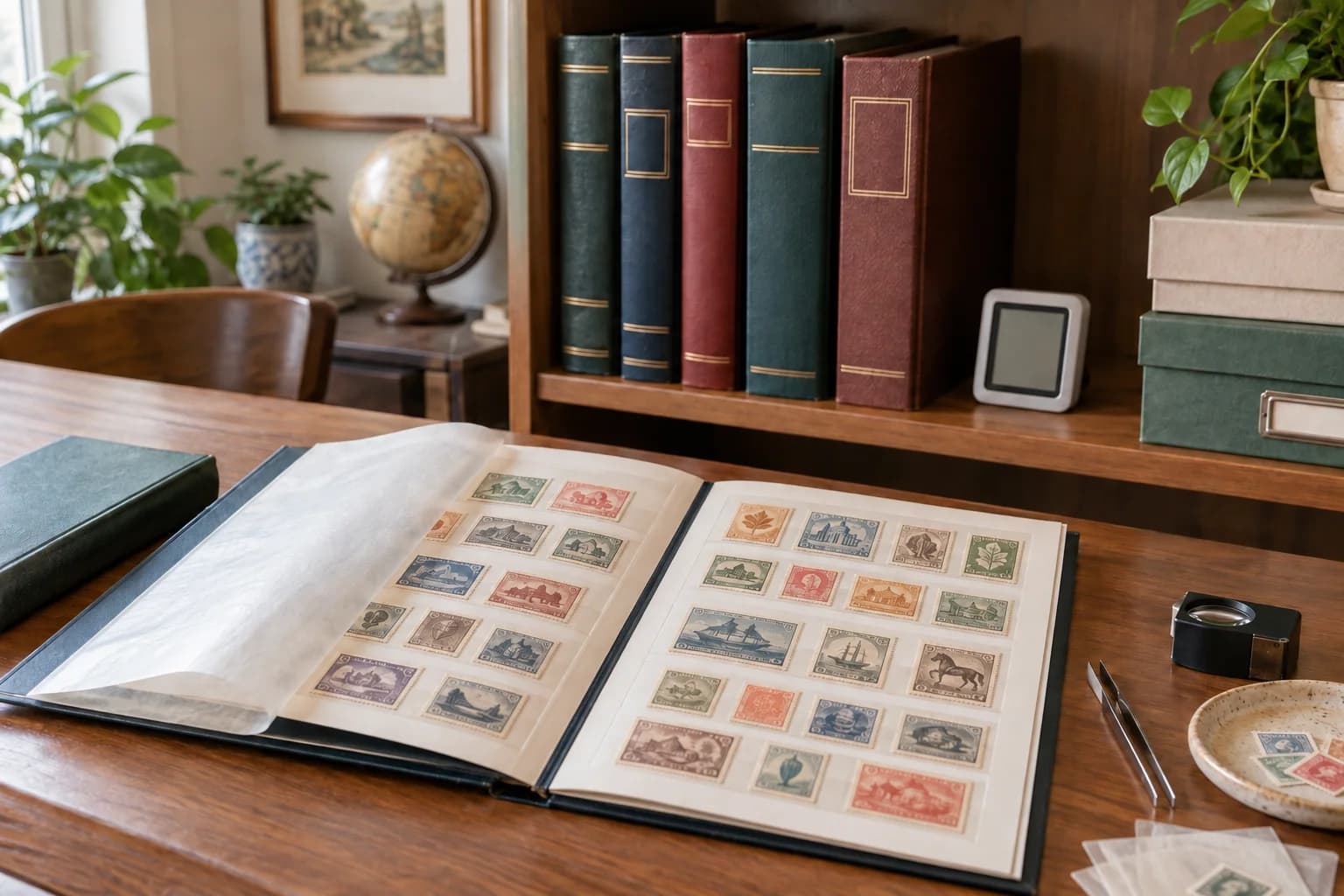
A stockbook lets you rearrange the first collection without attaching anything to a page. Avoid sticky photo albums and unidentified plastic. When your layout becomes stable, compare stamp hinges and mounts by gum, fragility, album space, and the need to view the back.
Borrow before buying specialist references or equipment. A local club or library may provide current catalogs, and a simple printed perforation gauge can answer a real identification question before you consider advanced lighting or watermark equipment.
| Job | Start with | Wait until needed |
|---|---|---|
| Handle dry stamps | Smooth stamp tongs | Several tip shapes or premium sets |
| See design and condition | Clear 5x to 10x magnifier | Microscope or ultraviolet lamp |
| Store and rearrange | Sound stockbook or archival holders | Large printed album system |
| Record identity | Pencil and simple inventory | Specialized collection software |
| Compare perforations | Printed or basic perforation gauge | Digital measurement equipment |
| Research listings | Library, club, or focused catalog | Full worldwide catalog set |
Acquire the first stamps without buying a mystery
Start with mail you are allowed to keep, duplicates from another collector, a postal administration, a club packet, or a small clearly described dealer lot. Ask what is included, whether stamps are mint, used, on paper, or on complete covers, and whether the image shows the actual lot. Keep the seller’s description and receipt with your notes.
Mixed packets and kiloware can be useful for learning, but the quantity is not a quality measure. Check for moisture, mold odor, insects, stuck layers, brittle paper, and undisclosed clipping. Isolate questionable material from the stockbook until you know whether it is safe.
At a club or show, explain your theme and ask to see common examples rather than requesting “valuable stamps.” A focused question helps a dealer or collector show relevant material, and comparing several sound common examples teaches more about normal color and printing than one uncertain bargain.
Set two limits for the first month: a total budget and a maximum for any single item. Include shipping, albums, and supplies. Do not raise either limit because a countdown, scarcity claim, catalog value, or dramatic story creates urgency. If you cannot identify an item well enough to explain the price, leave it for later.
- Prefer actual-item images for individual purchases.
- Ask whether gum, faults, repairs, and cancellations are visible and described.
- Keep complete covers intact until their postal context is understood.
- Quarantine damp, moldy, insect-affected, or sticky material.
- Record the source and acquisition date before mixing an item into the collection.
Handle, sort, and clean nothing until you identify the risk
Sort on a clean surface into broad, reversible groups: loose dry stamps, stamps on paper, complete covers, mint items with gum, and material needing isolation. Use tongs for dry loose stamps. Support covers and larger pieces with both hands instead of lifting them by the stamp.
Do not wash, erase, flatten aggressively, trim perforations, peel hinges, repair tears, or add tape. A cancellation, pencil note, margin, backing paper, or old mounting can be evidence even when it looks untidy. Photograph the front and back before any justified change.
Soaking is a method for suitable water-soluble adhesives, not a default cleaning step. The guide to removing stamps from envelopes explains when to preserve a cover, how to test a small batch, and why self-adhesive stamps and fugitive colors need different decisions.
If you inherited the starting material, preserve album order and notes. The inherited stamp collection checklist begins at collection level because moving every stamp immediately can destroy provenance and make later review harder.
Identify one stamp with a repeatable evidence card
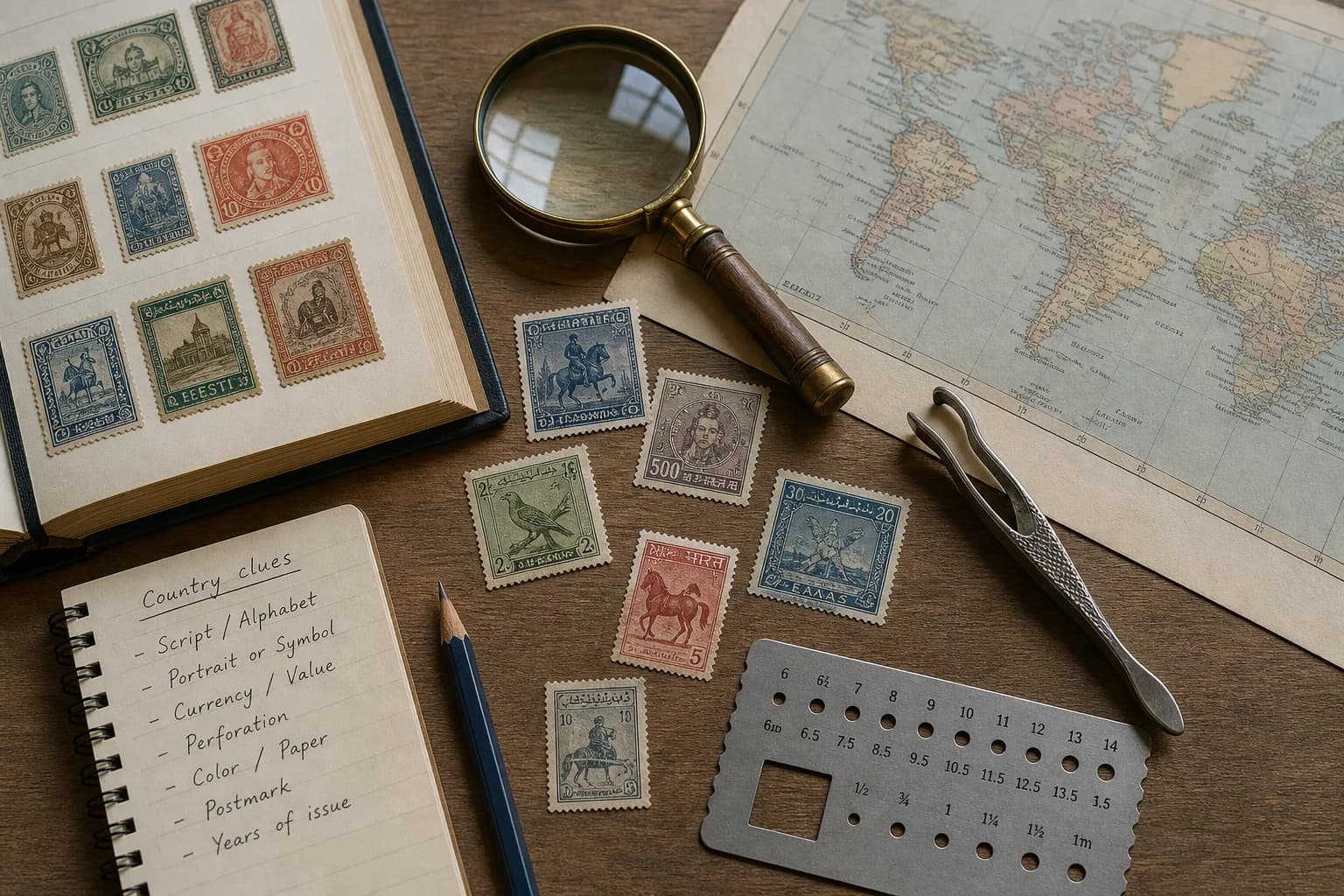
Choose one clear, inexpensive stamp and write what you can observe without guessing: inscription, country or issuing authority, denomination, color, design, cancellation, gum status, paper, dimensions, and perforations. Use the foreign-stamp identification workflow when the script or country name is unfamiliar.
Next, match the issue family in an appropriate reference. Compare the details that separate similar listings rather than choosing the first picture that looks close. The catalog-number guide explains why a number belongs to a named publisher and edition, not to one universal numbering system.
Measure only when the result can change the identification. A perforation gauge and a cautious watermark check can separate look-alikes, but both observations should be recorded with uncertainty when edges are damaged or the mark is incomplete.
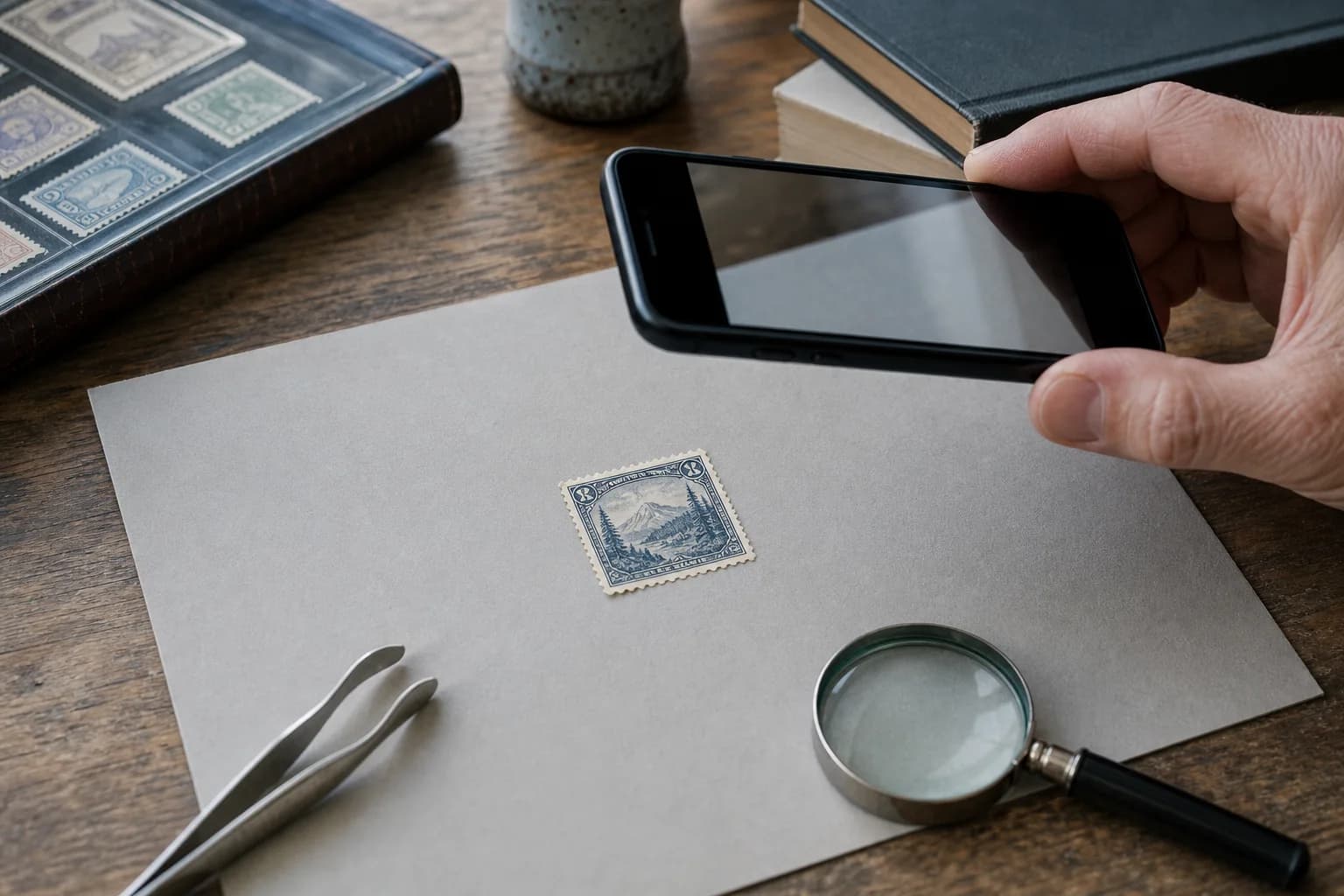
A clear photo in Stamp Value Identifier & Scan can help organize visible clues and keep a likely identification with saved discoveries. Treat the result as a research lead. The app does not authenticate, certify, grade, appraise, or prove a catalog variety; physical measurements, references, and specialist examination still matter.
Finish the card with a confidence label: confirmed by matching decisive features, likely but missing one check, or unresolved. An honest unresolved record is more useful than a precise number built on an assumption.
- Front and back photographs, plus the complete cover when present.
- Observed inscription, denomination, design, color, and postmark.
- Dimensions, perforation result, watermark observation, and condition notes when relevant.
- Reference title, publisher, edition, page, and catalog number.
- Source, acquisition date, album location, and confidence level.
Build a first page that can change without damage
Arrange the trial group in a stockbook before designing an album page. Put items in an order you can explain: chronology, geography, design development, postal rate, or a simple story within the theme. Leave room for labels and for discoveries that may change the sequence.
Write labels from the evidence card, not from a seller’s title alone. A useful label can include country, issue or series, date, denomination, used or mint status, and one feature relevant to the collection. Put uncertain text in pencil or in a separate record rather than presenting it as fact.
Review stamp condition as separate observations such as centering, perforations, paper faults, gum, and cancellation. Do not turn a beginner page into a price board. If value affects a purchase or insurance decision, research the exact item through current comparable evidence rather than copying catalog figures.
At the end of the month, photograph the page and note what you would change. Keep duplicates that teach a visible difference; exchange or move the rest only after identification. The goal is a page whose logic another collector can follow, not a page filled as quickly as possible.
Use a 30-day plan before expanding the collection
During week one, choose the trial rule, clear a dry storage space, and obtain tongs, a magnifier, and flexible housing. Sort existing material without cleaning or detaching it. During week two, identify five examples and improve the evidence card when the same missing detail appears twice.
During week three, visit a library, club, show, postal source, or reputable dealer and ask one focused question. Compare your references and acquire only material that fits the written rule and budget. During week four, arrange the first page, check every label, photograph it, and decide whether to continue, narrow, broaden, or change the theme.
Upgrade a tool only when it removes a repeated bottleneck. Buy a specialized catalog when the general reference repeatedly stops at the issue family. Add mounts when original gum or fragile paper needs separation. Seek a society or expertizing service when identity, alteration, or authenticity would materially change a decision.
Keep a short next-step list rather than a long want list. One catalog question, one missing common stamp, one storage improvement, and one person or institution to ask are enough. That rhythm turns acquisition into research and makes the collection easier to preserve, explain, and enjoy.
| Week | Main task | Finished result |
|---|---|---|
| 1 | Choose scope and set up safe handling | One written rule and reversible storage |
| 2 | Identify five inexpensive examples | Five evidence cards with confidence labels |
| 3 | Use one external reference or collector resource | One resolved question and controlled acquisition |
| 4 | Arrange and review the trial group | One photographed page and a decision about the next month |
Frequently asked questions
How much does it cost to start stamp collecting?
You can begin with stamps from mail or a small inexpensive packet, plus tongs and a stockbook. Set a modest trial budget and postpone specialist equipment until a recurring identification problem justifies it. Prices vary by country and seller, so compare the condition and contents rather than relying on a starter set label.
Should a beginner collect mint or used stamps?
Either is valid. Used stamps can be inexpensive and add postal-history interest through their cancellations. Mint stamps preserve original gum and require careful housing. A mixed trial collection is useful if you label each item accurately and avoid hinging original-gum stamps.
Is a stockbook better than a printed album at first?
A stockbook is usually more flexible during the first months because stamps can be rearranged without adhesive and there are no empty printed spaces to fill. A printed album becomes useful when your scope is stable and you want a structured checklist.
Can I remove every used stamp from its envelope?
No. Keep the whole envelope when the postmark, route, rate, address, cachet, or history matters, and be cautious with self-adhesive or fugitive inks. Identify the material before deciding whether a water soak is appropriate.
Do I need a stamp catalog immediately?
You need a reliable reference, but you do not always need to buy a full catalog set on day one. A library, club, postal administration, or specialist online reference may cover your trial scope. Record the catalog publisher and edition whenever you assign a number.
How do I know what stamps are worth collecting?
Collect the material that supports your chosen theme or question and that you can house safely. Personal interest makes a coherent collection; market value is a separate issue. Do not buy or discard a stamp solely because it looks old, rare, damaged, or common.
Sources and further reading
Primary references and specialist resources used to prepare this guide.