Quick answer
A true stamp error is a complete, unintended production mistake such as a fully missing color, an inverted printing stage or completely omitted perforations. Partial shifts and one-off mishaps are often classed as freaks, while repeatable plate, paper, watermark or perforation differences may be varieties. Identify the normal issue first, compare physical evidence, preserve pairs and sheet margins, and seek expertization before buying or selling a costly claim.
Identify the normal stamp before naming the anomaly
Begin with the ordinary issue. Record the issuing authority, denomination, design, format, approximate date, printing method if known, perforation or die-cut pattern, watermark, paper, gum and any overprint. A difference has no meaning until you know which normal stamp should be beside it. Use the photo identification workflow for a first lead, then confirm the issue in a current catalog or specialist reference.
Keep design mistakes separate from production mistakes. A wrong name, date, map or portrait approved in the artwork is a design error that can affect an entire issue. A missing color, inverted printing stage, wrong paper, doubled impression or omitted perforation arose while material was produced. Both can be collectible, but they need different evidence.
Do not start with price. Starting with value encourages a search for whatever rare label resembles the stamp. Start with identification, then describe the visible difference without assigning a cause: “blue layer displaced about one millimeter” is more useful than “valuable color error.”
Use error, freak, oddity and variety as working terms
Philatelic terminology is not perfectly uniform. The American Philatelic Society describes a true error as a complete and consistent missing or botched production step. Random or partial production problems, including color shifts, smears and many misperforations, are often called freaks. Oddity is a broad home for unusual material that does not fit neatly elsewhere.
Variety is broader still. Depending on the catalog and collecting tradition, it can include a repeatable plate flaw, a paper or watermark difference, a perforation change, a shade, an overprint position or another recognized departure from the main type. German collectors may distinguish Abart, Plattenfehler and Druckzufälligkeit; French and Iberian catalogs use their own boundaries. Use the terminology of the catalog that identifies the issue.
The label should follow the evidence, not the appearance. One dramatic paper fold can be a unique freak. A tiny recurring break in the same design line can be a constant plate variety. A completely missing color across a legitimate pane may be a major error.
| Working term | Typical evidence | Common mistake |
|---|---|---|
| Error | A complete unintended design or production failure | Calling every off-center or stained stamp an error |
| Freak | A random, partial or non-repeatable production mishap | Assuming a spectacular appearance proves rarity |
| Oddity | Unusual collectible feature outside a neat error category | Using the term as proof of catalog status |
| Variety | A recognized or repeatable difference from the main type | Ignoring which catalog and edition defines it |
| Damage or alteration | A change after production or an intentional modification | Mistaking fading, trimming or added ink for production evidence |
Build an evidence set without changing the stamp
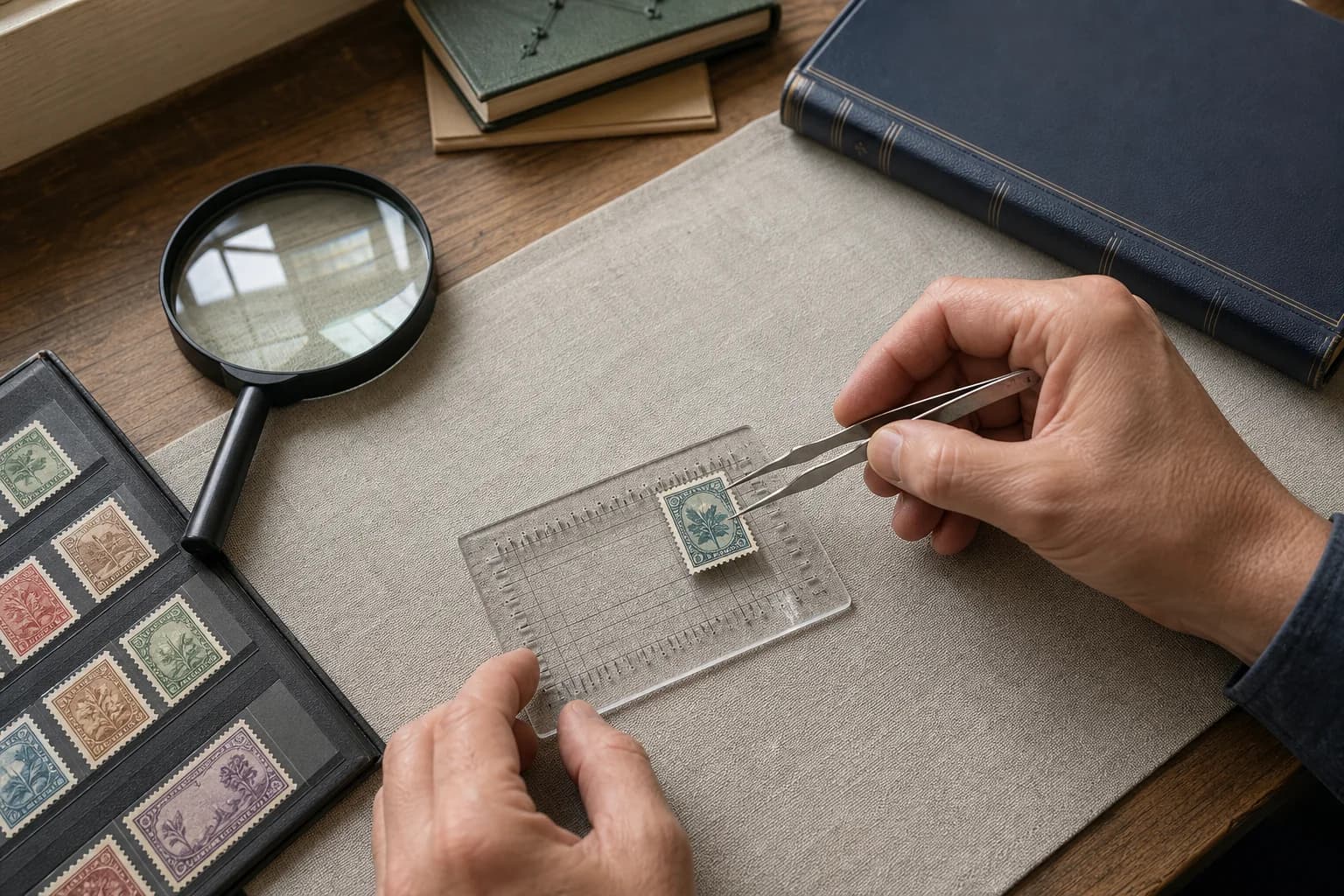
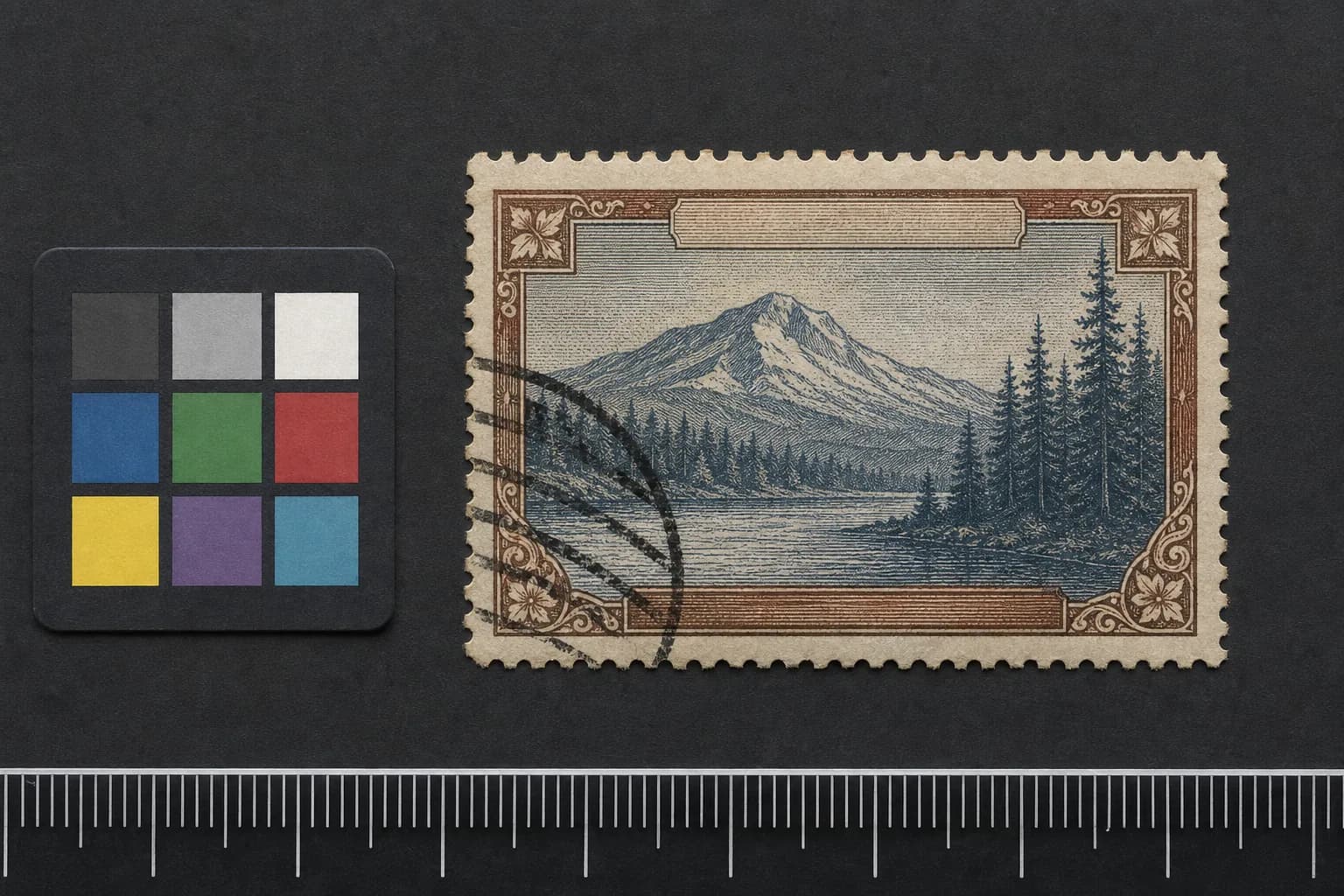
Photograph the front and back straight on in diffuse light. Add a ruler or calibrated scale outside the stamp, then make close views of the suspected area, perforations, gum, watermark clues and any sheet margin. Do not increase saturation or erase the background. Keep the original files so later comparisons do not depend on an edited image.
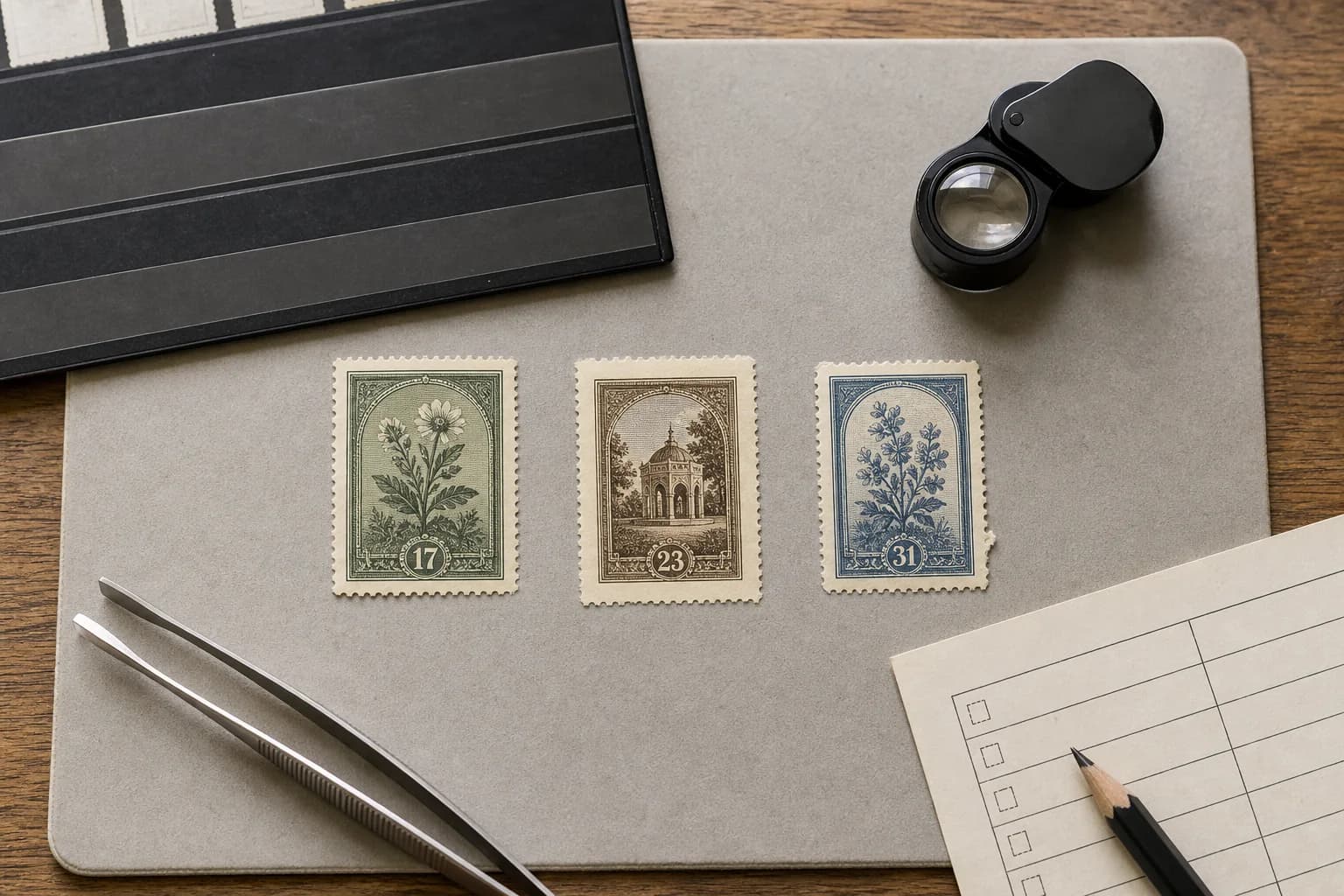
Find a normal example from the same issue, denomination, printing and format. Similar designs can have intentional color, paper, perforation or die-cut differences. A catalog image, postal archive or specialist reference can establish the intended state; an online marketplace listing cannot do that by itself.
Stamp Value Identifier & Scan can help organize visible clues and save a likely identification from a photograph. It cannot prove that a color is chemically original, identify hidden repairs, authenticate an overprint or certify a production error. Treat the result as a research lead and retain the physical evidence.
- Keep pairs, blocks, booklet panes and sheet margins intact.
- Record where the item came from and who described the anomaly.
- Photograph both sides before handling or testing.
- Use a normal example from the same issue and format.
- Write observations separately from conclusions.
Check the five main production clues
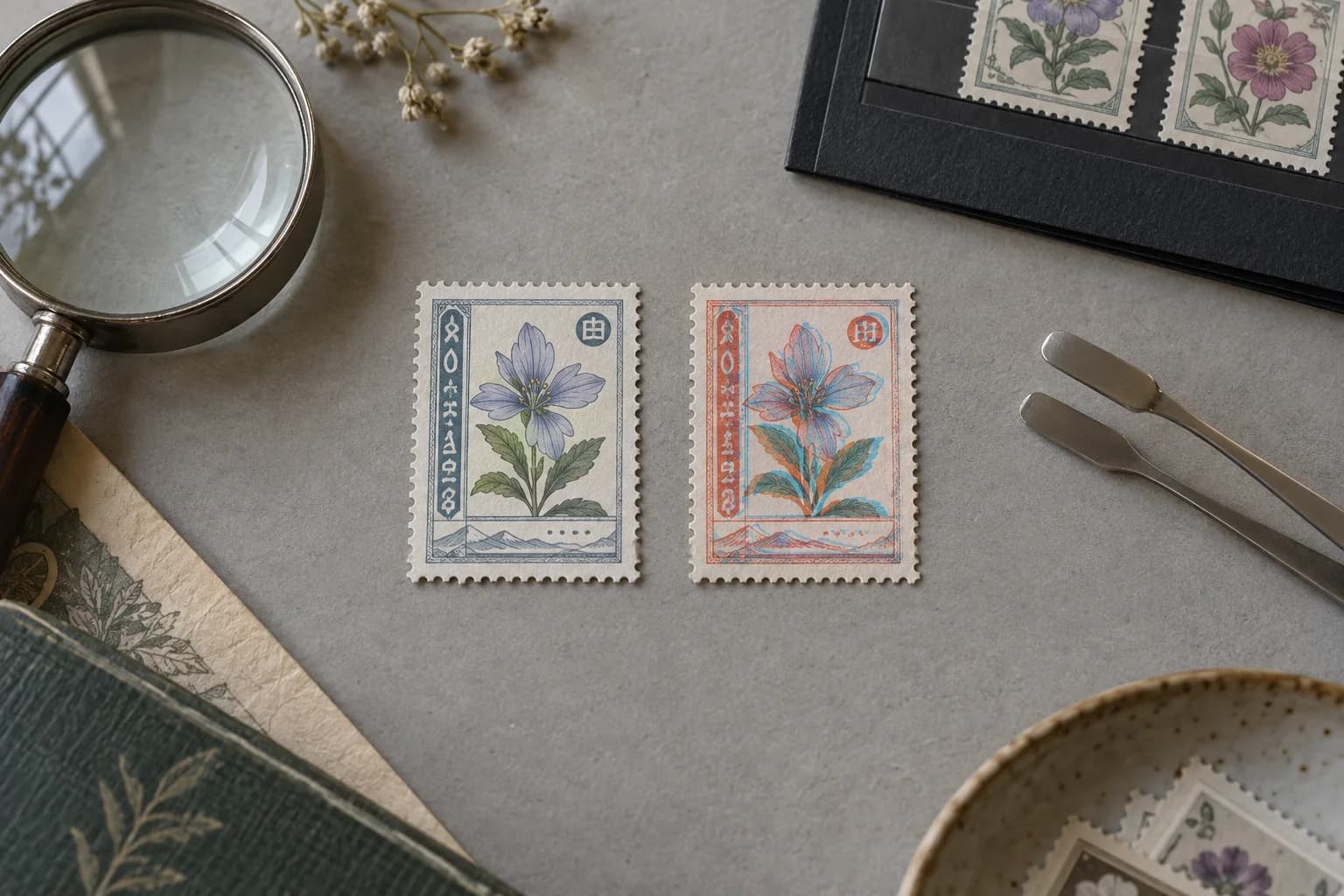
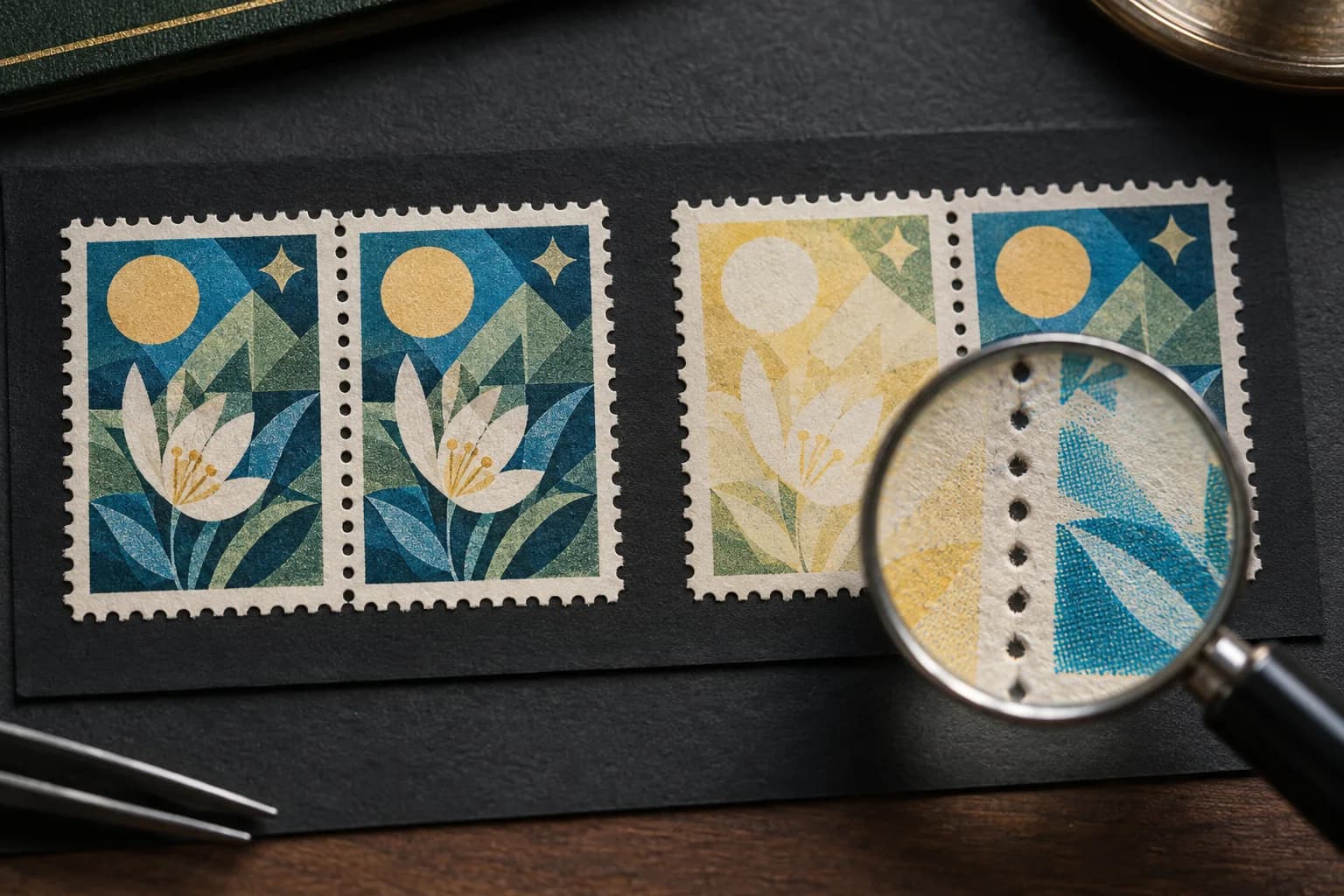
Color and ink claims need controlled comparison. Look for a completely absent printing layer, a wrong ink, a clearly inverted layer, doubled printing, set-off on the back, or registration that moved one color relative to another. Ordinary shade variation, uneven inking, fading and scanner color are not enough. Compare under the same neutral light and inspect whether the paper changed with the color.
Perforation and cutting claims depend on the intended format. Measure both directions with the stamp perforation guide. Completely omitted perforations, imperforate-between pairs and a documented wrong gauge can be important. One blind hole, rough separation, trimmed teeth or a design that merely sits off-center usually needs a different description.
Paper, watermark and gum can distinguish printings or reveal a wrong production material. Start with dry, non-invasive viewing and follow the safe watermark workflow. Never apply untested solvent, ultraviolet light or heat to chase a possible variety. Overprints and surcharges require another comparison layer: letter shape, ink, pressure, position, spacing and whether the mark belongs to the correct base stamp.
| Suspected feature | Compare first | Preserve |
|---|---|---|
| Missing or wrong color | Normal issue under the same light; remaining ink and paper | Unedited front and back photos |
| Invert or double impression | Printing sequence and fixed design elements | Pairs, blocks and sheet position |
| Missing or shifted perforation | Correct format and gauge | Attached neighbor and margin |
| Paper, watermark or gum difference | Catalog specification and orientation | Back, selvage and original gum |
| Overprint or surcharge difference | Correct base stamp and known genuine mark | Full stamp, cover and provenance |
Rule out damage, fading and deliberate alteration
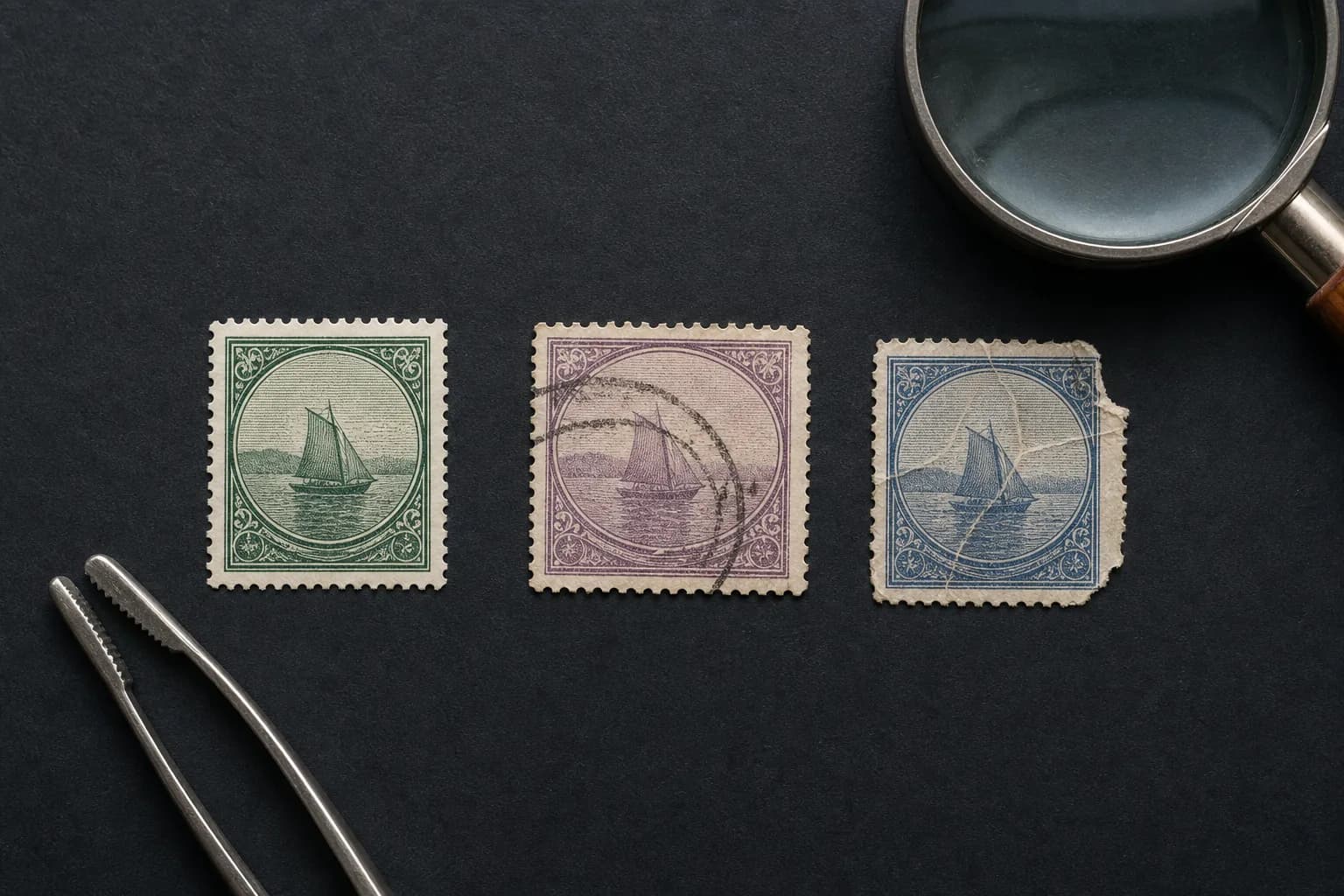
Many supposed errors happened after the stamp left the press. Sunlight can weaken one ink faster than another. Water can move fugitive color. Chemicals can produce a changeling. Adhesive, album paper, rust, mold, abrasion and a heavy cancellation can hide or change printed detail. Review the condition grading checklist before treating any missing area as production evidence.
Inspect boundaries. Production omissions often follow a printing layer or an area shielded by a paper fold. Abrasion disturbs fibers and surface sheen. Trimming changes the edge and may remove perforations. Reperforation can create unnatural holes or tips. Added ink, forged overprints and repairs may differ in texture, pressure, fluorescence or penetration through the paper.
A phone photo cannot settle these questions. Color management, compression, sharpening and automatic white balance can create false shifts or hide weak ink. If the alleged error carries a large premium, avoid destructive tests and move to an expertizing service with reference material and analytical equipment.
Look for repeatability, position and catalog support
A recurring flaw in the same place on the design can point to a plate or cylinder variety. Compare more than one copy and, when possible, identify the sheet position from neighboring stamps, selvage, plate numbers or layout. A random dust spot may vanish on the next sheet; a constant plate flaw should repeat in a recognizable form.
Use the catalog-number workflow to record the publisher, full number, suffix, edition and exact description. A suffix can identify a major error or a minor variety, but catalog systems differ. “Unlisted” does not mean newly discovered, valuable or genuine. It means the selected reference does not list it.
Search specialist society articles, plating studies, postal archives and certificate databases for matching evidence. Keep screenshots only as finding aids and cite the durable source. If examples disagree, record the disagreement rather than choosing the most valuable interpretation.
Preserve the context that can prove the claim
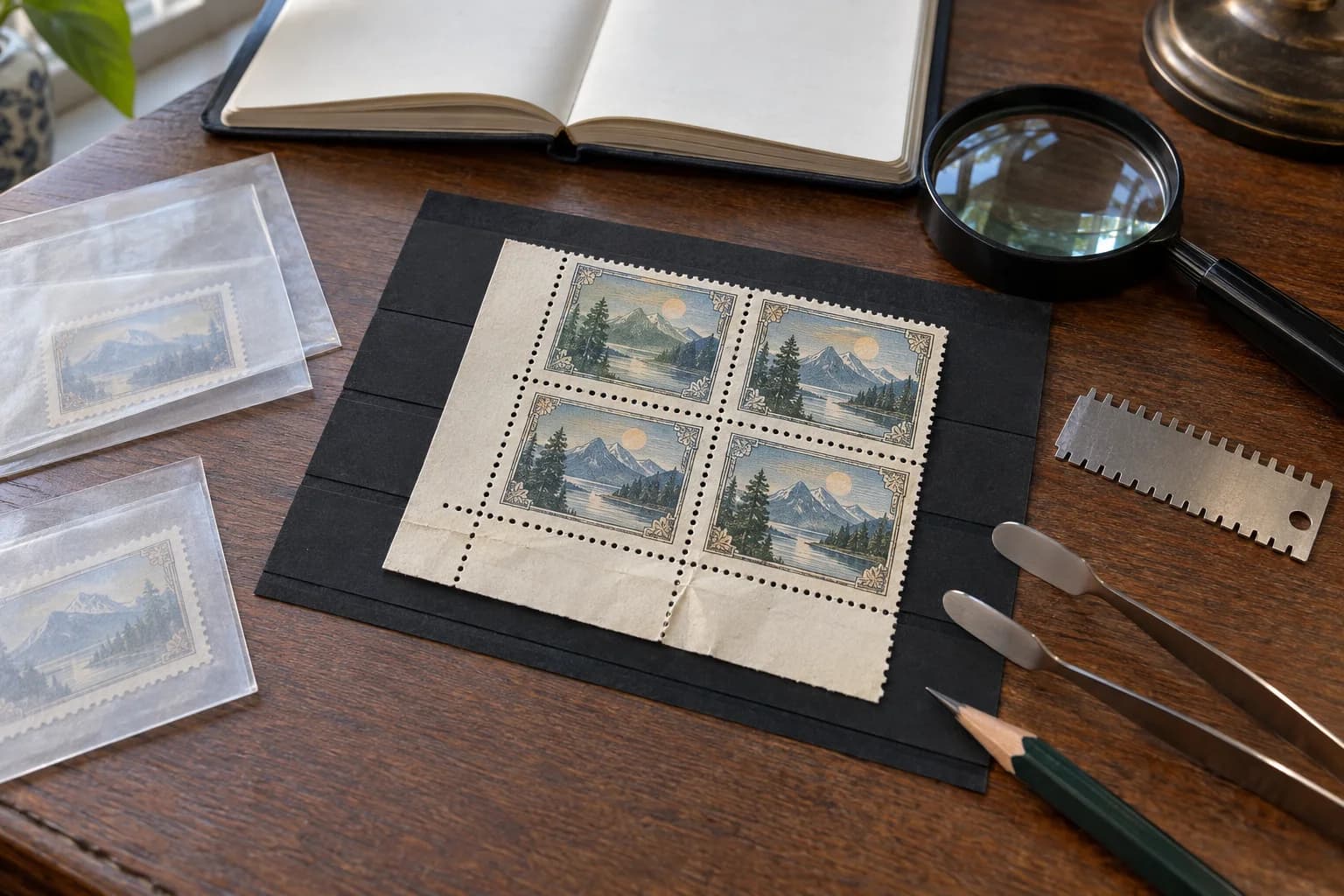
Do not separate a pair to fit an album space. Do not trim a margin, soak a stamp from a cover, flatten a production fold, clean a stain, erase a note or replace a hinge until the anomaly is understood. The neighboring stamp, fold, gutter, selvage, postmark or original mount may be the strongest evidence that the item was produced and distributed in that form.
Place loose material in a correctly sized, chemically stable holder without pressure on raised ink, folds or fragile perforations. Keep the normal comparison and research note nearby but in separate sleeves. The collection storage guide explains safer room and enclosure choices.
Create a short record: source, acquisition date, normal catalog identity, visible difference, measurements, attached context, reference matches, unresolved questions and every test performed. If you later request a certificate, this record helps the examiner understand the claim without turning your guess into a fact.
Separate identification from value and expertization
An unusual stamp is not automatically scarce, legitimate or valuable. Market value depends on exact identity, how many examples were legitimately distributed, condition, visual importance, catalog recognition, specialist demand and confidence in authenticity. Some major-looking anomalies are common freaks; some subtle plate varieties are sought because specialists can plate them precisely.
Follow the old stamp value workflow only after the classification is stable. Compare completed sales for the same error or variety in similar condition and certificate status. Do not compare a random color shift with a famous invert, and do not treat an asking price as a sale.
Expertization is most useful when a correct opinion changes a material decision. The American Philatelic Expertizing Service specifically lists alleged errors and oddities among reasons to seek authentication. A certificate is an expert opinion on the submitted item, not a promise of price. Choose a service whose specialists and reference material match the country and issue.
Use a ten-minute suspect-error checklist
First, stop handling the stamp and photograph both sides. Identify the normal issue and find a same-format comparison. Describe the difference in neutral words. Check color, impression, perforation, paper, watermark, gum and overprint without cleaning or separating anything.
Next, ask whether the feature is complete or partial, repeatable or random, produced or acquired later, and supported by a catalog or specialist reference. Preserve all attached context. If the claim remains plausible and affects a purchase, sale or insurance decision, send the complete item for qualified expertization.
- Normal issue and format confirmed?
- Difference described without a value claim?
- Same-issue comparison photographed?
- Damage, fading and alteration considered?
- Pair, block, cover or margin left intact?
- Catalog or specialist match recorded?
- Expert opinion justified by the decision at stake?
Frequently asked questions
What counts as a true stamp error?
Collectors usually reserve error for a complete, unintended failure in design or production, such as a fully omitted color, an inverted printing stage, a wrong paper or a completely missing perforation operation. Usage varies by country and catalog, so identify the issue and check the relevant specialist reference before applying the label.
Is an off-center stamp a printing error?
Ordinary off-centering is usually a condition or production-quality issue, not a major error. A dramatic, accidental misperforation may be collected as a freak or production anomaly. Compare it with the normal sheet layout and keep any attached margins or neighboring stamps.
Can fading make a stamp look like a missing-color error?
Yes. Light, water, chemicals and some storage materials can alter or remove ink unevenly. A genuine omitted-color claim needs comparison with the correct issue, inspection of the paper and remaining inks, and sometimes specialist analysis.
Why are pairs and blocks useful when checking errors?
A pair, block or sheet margin can show whether perforations, colors or paper folds continue across neighboring positions. That production context is much harder to reconstruct from one trimmed or detached stamp.
Does every stamp error have extra value?
No. Value depends on what the item is, how the anomaly arose, how many legitimate examples exist, condition, catalog recognition, collector demand and confidence in authenticity. A striking but common freak may sell for less than a subtle documented variety.
When should a suspected stamp error be expertized?
Consider expertization when the claim creates a meaningful price difference, the catalog warns about alterations, a normal stamp could be modified to resemble the error, or you plan to buy, insure or sell the item as genuine. Send the whole pair, block, cover or margin when it carries evidence.
Sources and further reading
Primary references and specialist resources used to prepare this guide.
- American Philatelic Society: errors, freaks and oddities
- Smithsonian National Postal Museum: U.S. postal stamps and production errors
- Errors, Freaks & Oddities Collectors’ Club: introductory definitions
- Smithsonian National Postal Museum: Errors and Missteps
- American Philatelic Expertizing Service: when to authenticate a stamp
- The Philatelic Foundation: expertizing process