Quick answer
Canada Admiral stamp value depends on format, printing and condition. On 8 October 2026, B.W. Davis asked USD 12.50 for a mint never-hinged 1c green single, USD 7.50 for a dry-printed 2c green single and USD 6.00 for a mint-hinged 7c red-brown single. These are dealer asks, not completed sales.[4][5]
Start with the uniform, country and face value
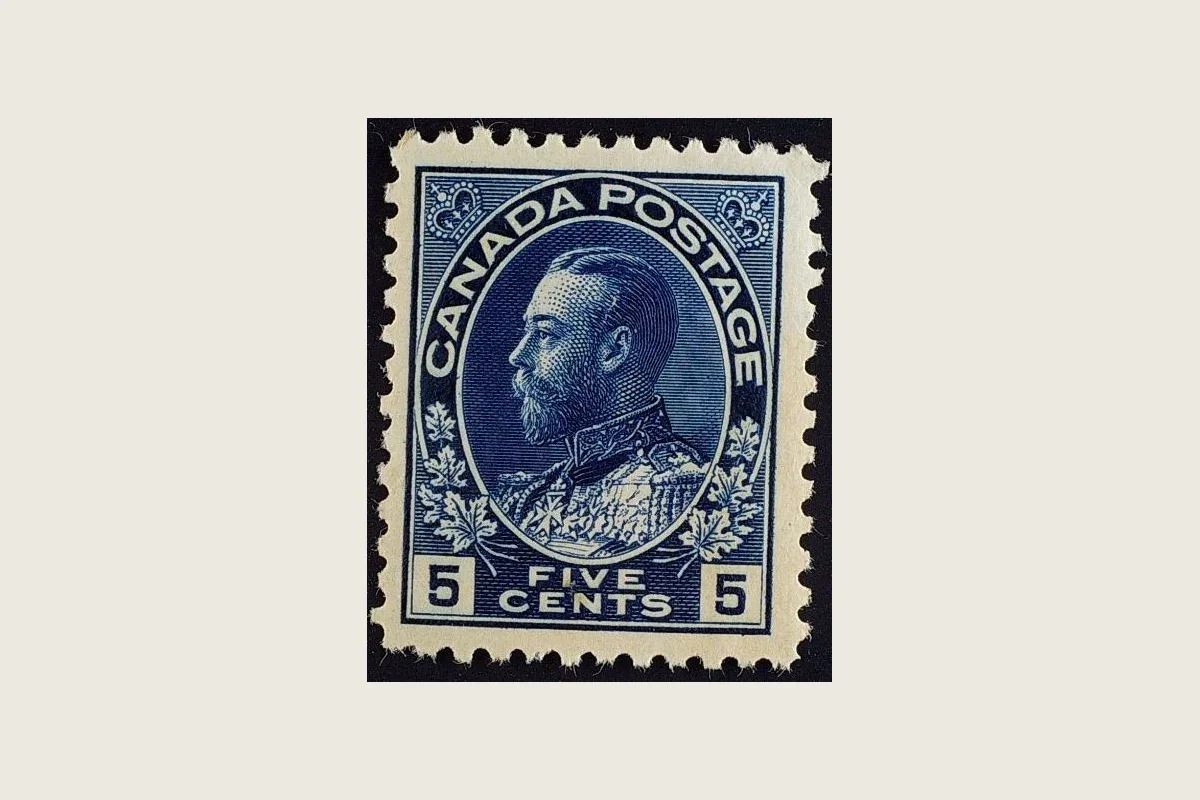
Canada Admiral stamp value starts with the exact stamp, not a portrait match. George V appears in naval uniform beneath CANADA POSTAGE, with the denomination at the foot. BNAPS dates the family's beginning to December 1911 and explains the Admiral nickname through that uniform.[1] Copy the printed value and color before looking for a catalog entry. A five-cent stamp is not the same issue as a one-cent stamp that happens to show the same king.
This guide covers the Canadian Admiral definitive family, with enough format and printing detail to sort candidates before pricing. It does not treat every Canadian George V portrait as an Admiral. The 1897 Maple Leaf issue has Victoria's portrait, while the 1929 Bluenose is a different design and issue. Keep those families in separate searches.
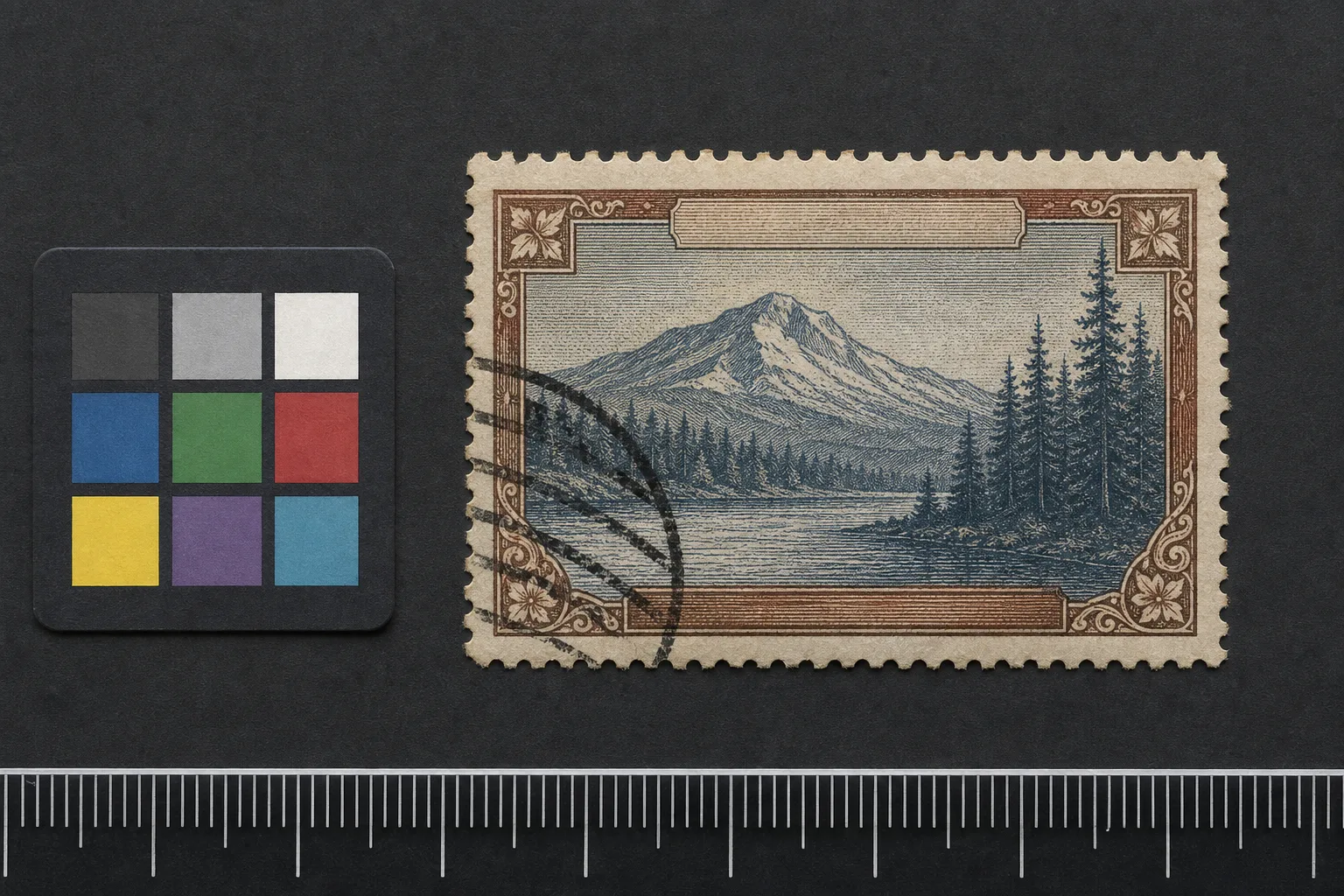
Photograph the full front before enlarging the uniform or lettering. Include every tooth and any attached margin. If an album label says 1911, retain it as a previous attribution, not a proven date for every denomination. A family starting date does not mean that all its colors, values and formats appeared together. Save an uncertain attribution without filling the missing facts from the nearest online picture.
A straight side does not prove a coil
BNAPS records regular sheets, coils and booklet panes within the Admiral family. Sheet stamps can have one straight edge or two adjacent straight edges. Booklet singles can also have one or two straight edges.[2] That overlap matters when an inherited album contains a detached stamp with a smooth side. Its edge alone does not name its original format.
Inspect which sides are perforated and which remain smooth. Preserve joined stamps, a booklet margin or a surviving cover rather than separating them to fit an album space. A joined multiple can answer a question that a loose single cannot. Write down the orientation of the surviving edges before you turn the stamp around for a photograph.
Do not price an unexplained straight-edge stamp as a scarce coil. Start with the design, denomination and measured perforations, then test its format against a specialist listing. If the surviving evidence allows both sheet and booklet origins, record that uncertainty. A precise statement of what remains unknown is better than a confident catalog number chosen because its picture looks similar.
| Observed object | Useful evidence | Do not infer |
|---|---|---|
| Loose single with a straight edge | Every surviving side and measured gauge | Booklet or coil origin from that edge alone |
| Joined pair or pane | Direction of joining, margins and perforations | A single's price for the whole object |
| Apparently imperforate single | Full margins, edge detail and type examination | Genuine imperforate status from cut sides |
Measure both directions before assigning a format
The BNAPS format tables separate ordinary sheet stamps perforated 12 from endwise coils perforated 8 or 12 horizontally and sidewise coils perforated 8 vertically. They also list compound 12 by 8 material issued in sheet format.[2] These are different arrangements, not alternative names for any stamp with two straight sides.
Use the perforation guide and keep horizontal and vertical readings separately. Align the gauge with several intact holes. A missing corner tooth is a condition fault, not a new perforation measurement. If damage leaves too little edge to measure, say so and retain the strongest reading you can actually support.
Do not estimate the gauge from the size of an enlarged web photograph. Image scaling changes apparent spacing, and a crop may hide the original edge. Record measurements beside the full image of your own item. If a proposed listing conflicts with one direction, stop and check the format rather than dropping the awkward measurement to make the number fit.
Wet and dry printings need a controlled comparison
BNAPS explains that wet printing dampened the paper before printing; dry printing used pre-gummed dry paper. With the usual vertical paper grain, the wet-printed design became narrower as the paper dried.[3] The relevant measurement is the printed design, not the distance between damaged perforation tips. A broad margin does not by itself prove a dry printing.
Use a measured image or a safely handled reference, not a screen thumbnail. Compare the same design area at the same scale and keep the result with the photograph. Gum, paper and format may provide other context, but do not assign a method solely because a seller called a stamp dark green or carmine.
BNAPS offers fully perforated 2c carmine and 3c carmine sheet stamps as wet and dry references respectively. Its warning about booklet material is specific: 3c carmine booklet stamps are wet-printed.[3] A later red three-cent portrait is therefore not automatically a dry-printing reference when its original format remains unresolved. The RPSC's 3c carmine sheet page is another useful reference for that sheet identity.[9]
Keep die, shade and stock descriptions distinct
A catalog number, a die attribution and a dealer stock code answer different questions. The number locates an entry in a named catalog, the die describes design detail, and the stock code locates one seller's item. Keep suffixes in the saved record. If the seller does not name the catalog publisher, preserve that limitation rather than guessing the system.
The offers below reproduce the dealer's references 104, 107e and 114 as stated. The page does not name the catalog publisher in those listing lines, so this guide does not convert them into a certified catalog identification.[4] They remain usable as exact stock comparisons with denomination, color, printing claim and gum condition attached.
Shade labels need controlled light and a reliable reference. A phone's automatic white balance can make neighboring scans look more different than the paper does. Keep the seller's wording separate from your own observation. The catalog-number guide explains how to record a candidate without turning an inherited pencil label into evidence.
Three exact dealer asks checked on 8 October 2026
B.W. Davis displayed the three offers below on 8 October 2026. Its delivery page explicitly states US dollars, so USD is the pricing currency even though the stamps are Canadian.[4][5] These are item asking prices. The page does not disclose exact stock quantities or a checkout inventory count; each selected line describes a single stamp and is not marked SOLD. The unexplained Pg10all notation is not treated as a verified perforation reading.[4]
The amount is attached to that described offer, not every Admiral of the same face value. No completed transaction, sale date or buyer's premium is documented for these rows. Shipping is separate under the dealer's delivery terms.[5] Refresh the source before acting on an offer, since a visible listing does not guarantee it remains available.
The green two-cent offer is described as dry-printed and mint never hinged, while the seven-cent offer is mint hinged.[4] Compare those conditions explicitly. Do not turn three observations into an average price for the family, or describe the lowest and highest amounts as a reliable range for an unidentified stamp. None values a common used single without a matching used comparison.
| Identity and dealer stock reference | Dealer's condition description | Ask and listing status |
|---|---|---|
| 1c dark green; reference 104; p458S83 | Mint never hinged; printing unspecified | USD 12.50; not marked SOLD; stock count not disclosed |
| 2c green; reference 107e; p458S86 | Mint never hinged; dry printing | USD 7.50; not marked SOLD; stock count not disclosed |
| 7c red brown; reference 114; P442BS01 | Mint hinged; dry printing | USD 6.00; not marked SOLD; stock count not disclosed |
Read gum condition before reading the amount
MNH denotes mint never hinged and MH denotes mint hinged. The selected offers use those abbreviations.[4] They concern the back. A clear frontal portrait does not establish either status. Examine the reverse only when you can handle the stamp safely; do not pull it from a hinge or lift a mounted corner for a cleaner photograph.
Record a hinge remnant, gum disturbance, thinning, crease or missing tooth separately from centering. A stamp can be well centered and still have a fault on the back. For a comparison, both the front and gum description matter. The condition guide gives a practical record format without promising a universal grade.
If the reverse is inaccessible, write gum unexamined and leave the mint condition unresolved. Do not borrow the never-hinged claim from a dealer's different specimen. For used stamps, keep the cancellation visible in the full photograph. A heavy mark may obscure the design detail needed for identification even when its date or town is interesting for a separate postal-history question.
Check trimmed edges before chasing an imperforate rarity
BNAPS documents ordinary Admirals trimmed to resemble coils or imperforates.[12] Look for residual perforation hollows, uneven smooth edges and margins that become unusually tight opposite generous adjacent sides. These are reasons to investigate, not permission to certify authenticity from a photograph. Do not trim the stamp further to tidy it for comparison.
For the 2c green endwise coil perforated 12 horizontally, BNAPS describes a weak point in the left frame and breaks around the portrait at the shoulder, as well as wet-printing characteristics.[12] A candidate needs the correct combination, not merely green ink and two smooth edges. Ask a specialist to compare the details if that exact attribution would change a purchase or sale decision.
A joined pair with a genuinely unperforated space between stamps gives different evidence from a loose single with four cut sides. Keep it intact. Save prior certificates and seller descriptions with the object, but do not assume an old envelope proves the attribution. The next useful step is targeted examination of the questioned edge or type, not another broad search for the highest Admiral price.
Keep overprints and covers in their own comparisons
The BNAPS format reference separates ordinary postage, War Tax material and provisional surcharges within this design family.[2] Copy every extra word or changed denomination before choosing a comparator. A small added inscription can move the item outside the ordinary single-stamp offers in this article. This guide supplies no price for an overprint whose identity has not been checked.
Keep a stamp on its original envelope while you research it. Photograph the complete cover, address, postmarks and reverse. Those details can establish the postal object you actually own; removing the stamp replaces that question with the value of a loose single. Do not use an unused stamp ask as a cover valuation, even if the denomination matches.
When comparing a cover, require a similar postal use, destination, date context and condition. If the cancellation conceals a die feature, state that the die remains unresolved. For an album group, keep ordinary loose postage separate from covers and uncertain overprints so a retail price for one identified single does not become an unsupported total for everything on the page.
Use the free checker with the missing facts in your notes
Upload a complete, evenly lit front photograph to the existing free checker below. Include the country inscription, denomination, color, which sides are straight and any measured perforations in the notes. For an Admiral, add whether the item is a sheet candidate, a joined coil pair or a booklet fragment. Say when the original format is unknown instead of selecting one from the nearest picture.
A useful question is whether the visible design fits the Canadian Admiral family and which facts still prevent a precise listing. The checker cannot establish original gum, a printing method or a disputed trimmed-coil attribution from an ordinary frontal image alone. Keep its proposed identification separate from your measurements and any specialist opinion.
Return to the exact listing only after the suggested identity agrees with the physical evidence. If the result calls a three-cent carmine stamp dry-printed, check whether it means a sheet stamp and whether that format is established. That small follow-up prevents a valid sheet reference from becoming an invalid rule for a booklet single.
Drop a stamp photo here
Show the full stamp, every perforation, and as much front detail as possible in even light.
Keep your Admiral comparisons together
Install Stamp Value Identifier & Scan for free on iOS or Android. Scan stamps individually, save results and organize your Admiral candidates while you check their format and gum.
Save each Admiral candidate with its own evidence
Keep the one-cent green, two-cent green and red three-cent candidates as separate records while you resolve their formats. A saved result is a research starting point, not a certificate or a guaranteed selling price.
Use one note for the observed facts and another for the proposed attribution. Attach the original photo, any reverse image and the relevant listing reference. That distinction makes a later correction easy to follow. It also prevents an uncertain wet-printing comparison from becoming a fixed collection label through repeated copying.
For duplicates, compare physical evidence before researching every stamp. Set aside joined pieces, readable covers and questionable smooth edges for their own checks. Date any retail offer you save so a past display does not become today's alleged sale value.
Choose the next comparison from what you actually have
A fully perforated used sheet candidate needs used sheet comparisons. A mint single with its gum inspected needs a mint comparison with the same printing and gum status. A surviving booklet pane needs a pane comparison with the same arrangement and number of stamps. The offers here help with three described mint singles; they cannot price those other formats by division or substitution.
If a potentially scarce format remains unresolved, first spend effort on the disputed physical feature. Asking a specialist whether a smooth edge is original is more useful than collecting more high-value advertisements for a coil you have not identified. Keep the question narrow and send the full object photograph alongside the close-up.
For a larger inherited album, use the collection-value guide to distinguish individual retail asks from a whole-collection estimate. Do not multiply one amount by the number of similar portraits. Finish the Admiral record with a checked identity, known condition, actual quantity and dated comparison. Preserve missing fields rather than filling them with the most attractive price.
Frequently asked questions
Is every Canadian George V stamp an Admiral?
No. Check the uniform, CANADA POSTAGE inscription and full design before choosing this family. The Admiral issue began in December 1911.[1] A date written in an album is not proof that every later George V portrait belongs to the same issue.
Does a straight edge make an Admiral stamp a coil?
No. Both sheet and booklet stamps can have straight edges.[2] Record the sides, measure the perforated directions and preserve joined material. Do not price an unidentified straight-edge single against a scarce coil listing.
Are all 3c carmine Admirals dry-printed?
No. BNAPS distinguishes dry-printed 3c carmine sheet stamps from wet-printed booklet material.[3] Establish the format before using a three-cent carmine stamp as a printing reference.
Are the amounts in Canadian dollars?
No. The three selected B.W. Davis asks are in USD because the dealer's delivery page explicitly states US dollars.[5] The stamps' Canadian origin does not determine the currency of a seller's offer.
Can these mint asks value my used Admiral?
Not directly. The three offers concern mint singles with the described gum status.[4] A used comparison needs the same identity, format and relevant condition. Keep a cancellation and any original cover visible while researching them.
Sources and further reading
Primary references and specialist resources used to prepare this guide.
- BNAPS: introduction to the Admiral issue
- BNAPS: sheet, coil and booklet formats
- BNAPS: wet and dry printing identification
- B.W. Davis: described Admiral stock offers
- B.W. Davis: explicit US-dollar pricing terms
- Wikimedia Commons: public-domain 5c blue specimen
- App Store: Stamp Value Identifier & Scan
- Google Play: Stamp Value Identifier & Scan
- RPSC: the 3c carmine sheet stamp
- Ottawa Philatelic Society: Admiral overview
- Canadian Philately: Admiral booklet study
- BNAPS: trimmed coils and imperforate fakes