Quick answer
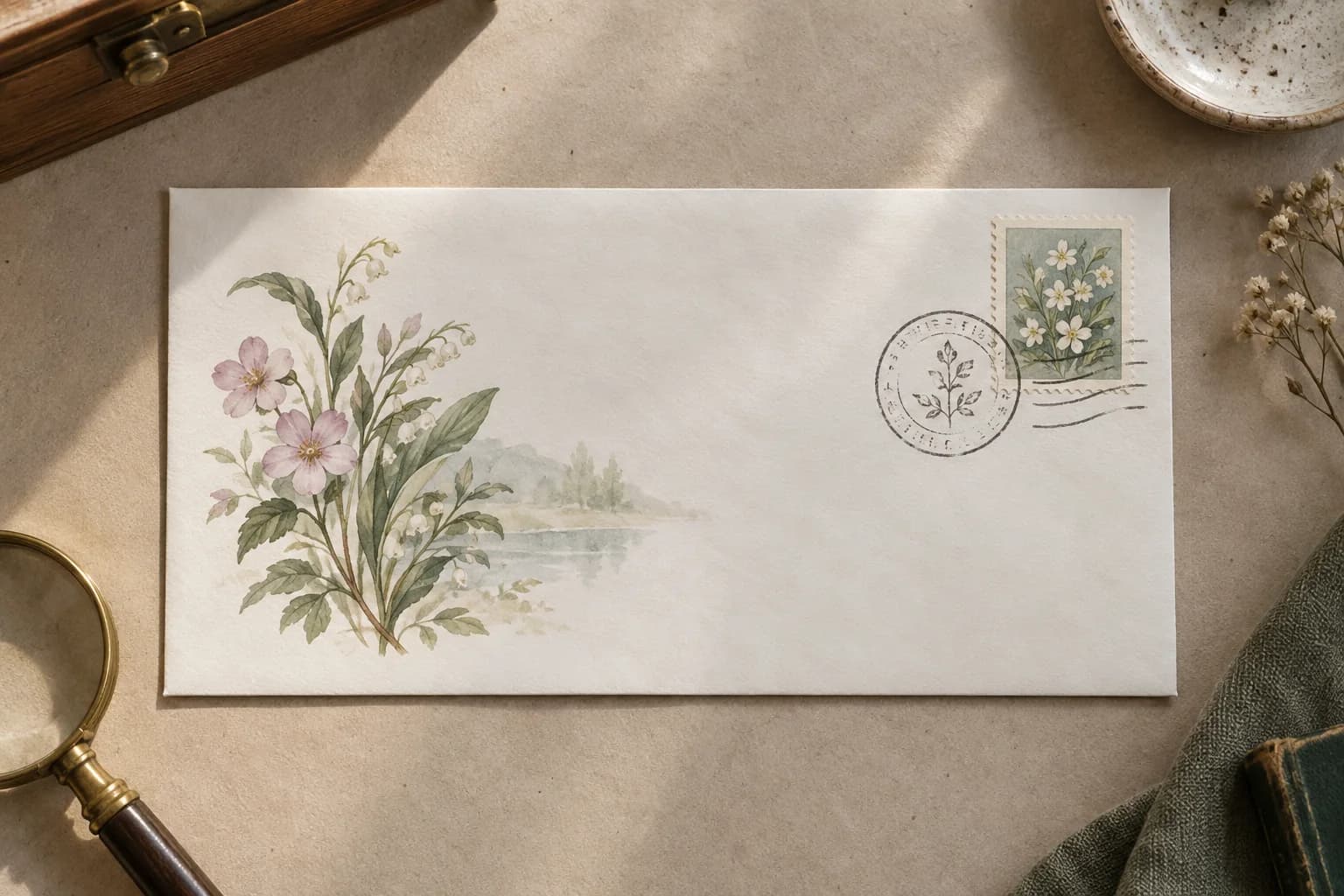
A first day cover is an envelope or card bearing a stamp canceled on that stamp’s first day of issue. Confirm the stamp and its official issue date, then read the dated postmark separately from any decorative cachet. Keep the entire cover intact: the date, place, artwork, address and back can all carry evidence that a loose stamp loses.
Identify the four parts of a first day cover
Start with the whole envelope. A first day cover, often shortened to FDC, normally combines a newly issued postage stamp, a postal cancellation dated to its first day, and the envelope or card carrying them. Many also have a cachet, an illustration or inscription related to the issue. The cachet is optional. An address, insert, return mark, or note on the back may add useful context.
The American Philatelic Society defines a first day cover through the stamp and first-day cancellation. The American First Day Cover Society also recognizes imprinted postage on some covers. That distinction matters when a printed design looks like a stamp but is actually postal stationery. Do not decide from the artwork alone.
A quick first check has three questions: which stamp is attached, what date was it officially issued, and what date does the postal mark actually show? The answer is provisional if a digit, year, or part of the stamp is hidden. Keep the cover intact while you research. Removing stamps from envelopes can erase the evidence that makes this object a cover.
Separate the stamp, cancellation and cachet
The stamp pays or represents postage. It identifies the issuing authority, design and denomination, but the same design may appear in several formats or printings. Read the inscription and denomination, then use a catalog-number workflow if the exact issue is uncertain. Do not assume a familiar subject identifies the release date.
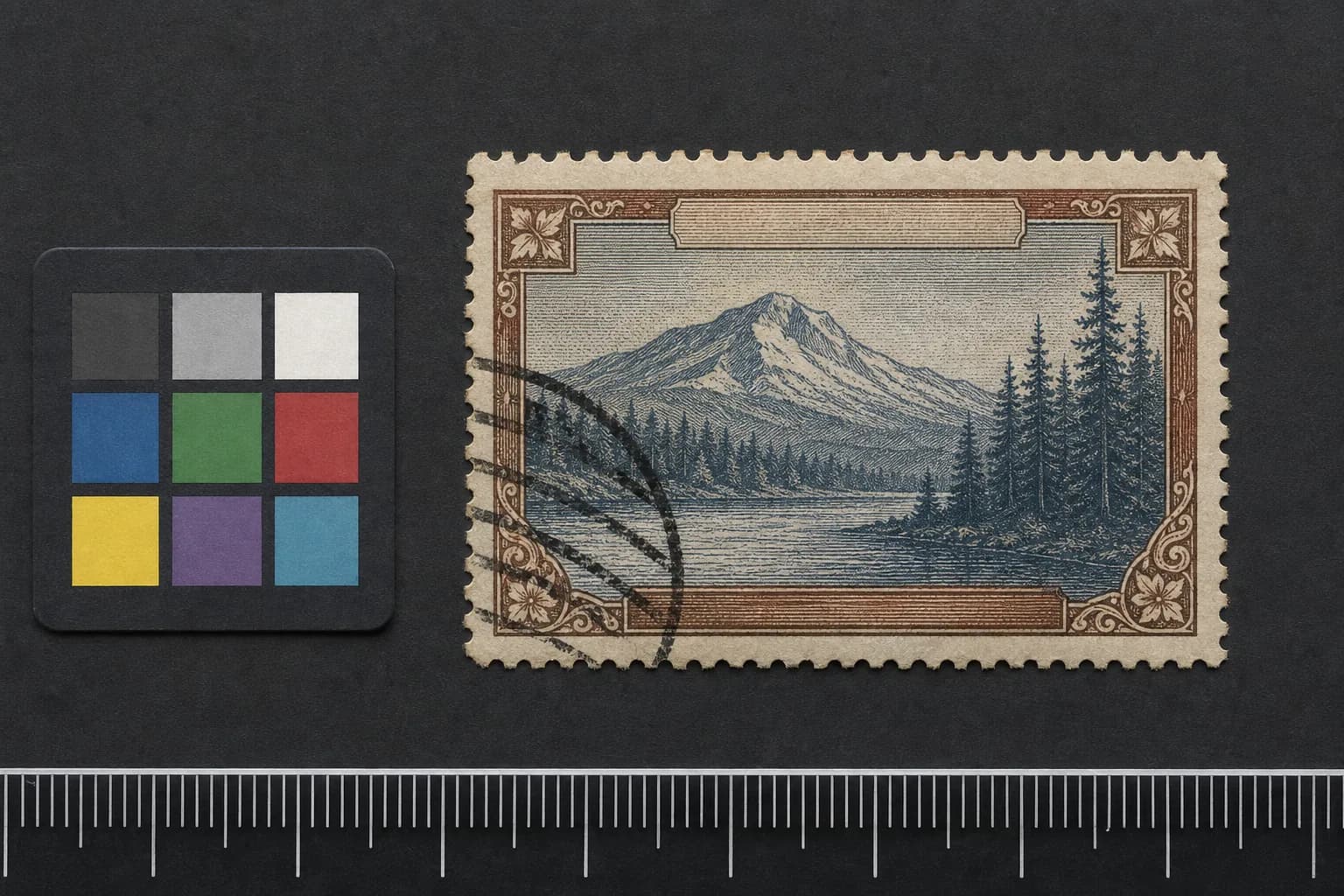
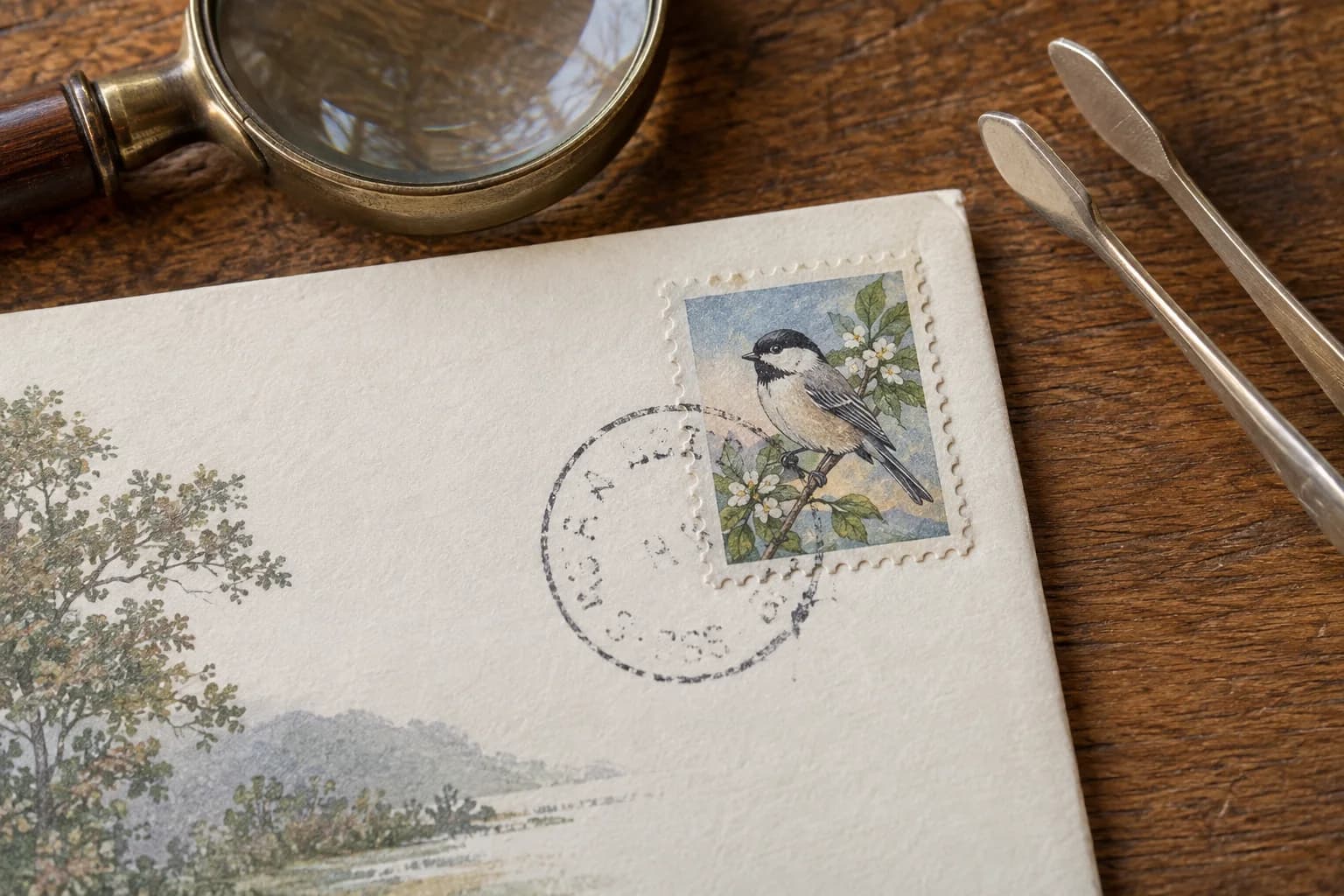
A cancellation invalidates the postage; the dated part of a postmark can show the place and day of processing. On a first day cover, the mark may be a plain datestamp, a pictorial first-day design, or another authorized service. If the cancel only partly strikes the stamp, examine the whole mark without rubbing the paper. The cancellation guide explains why a postmark and an illustrated envelope are different evidence.
The cachet is the image or text usually placed to the left of the address area. It may be produced by a postal administration, society, commercial maker or individual artist. It can enrich a cover and help identify its producer, but it is not a postal cancellation. Printed “first day” words in the cachet do not verify the postmark date.
Check the issue date without guessing from the artwork
First identify the postal authority and exact stamp issue. Search its release announcement, philatelic bulletin, or catalog entry for the official first day. Compare the stamp design, denomination, format and any inscription with the cover. A similar stamp from a later issue can make a plausible-looking envelope fail this check.
Next read the actual postmark. Write down the visible date and place, and mark any uncertain character with a question mark in your notes. A matching day is necessary, but a date alone does not settle authenticity or postal use. The ink may be weak, a cover may have multiple marks, and a stamp can be attached to an older or later envelope.
Postal procedures differ by country and period. USPS instructions for a 2024 first-day service allowed collectors to submit properly prepared covers after release for an official first-day postmark. A returned souvenir therefore need not have traveled through the ordinary mail on the printed date. Use the issuing administration’s rules for that issue rather than a blanket rule about every country.
If the issue date and cancellation disagree, classify the item as an ordinary cover, commemorative cover, later use, or unresolved candidate until evidence improves. A decorative first-day theme cannot repair a nonmatching date.
- Record the issuing country or territory and exact stamp issue.
- Find the official first-day date from the postal administration or a specialist catalog.
- Transcribe the cancellation date and place as seen, including uncertainty.
- Compare the stamp, mark, and cover together; keep photographs of front and back.
Distinguish an FDC from similar postal souvenirs
Collectors use “cover” for an envelope or other mailed wrapper with postal evidence. First-day, first-flight, event and ordinary commercial covers can look similar because all may carry stamps, dated marks and artwork. Classify by the event the postal evidence records, not by a colorful design.
A first flight cover concerns an inaugural air route. A special event cover marks an occasion that may have no relation to the stamp’s release. A maximum card places a related stamp and cancellation on the picture side of a postcard. A first-day-of-issue ceremony program can include a first-day cancel but is a different physical format. Some pieces fit more than one description, so record each supported feature separately.
The comparison below is a sorting aid, not an authenticity test. An envelope made for collectors can still be a legitimate FDC; one found in ordinary correspondence can be important for different postal-history reasons.
| Object | Main evidence | Common confusion |
|---|---|---|
| First day cover | Stamp and cancellation match the stamp’s issue date | Cachet is mistaken for the date proof |
| First flight cover | Postal marks and route evidence connect to an inaugural flight | A plane illustration is treated as route proof |
| Special event cover | Mark commemorates an event | Event date is assumed to be the stamp’s release |
| Ordinary used cover | Stamp and postal marks document a mailing | An early use is labeled first day without checking issue date |
| Maximum card | Related picture postcard with stamp and cancellation on its picture face | Called an envelope even though it is a card |
Judge the whole cover before asking about value
First-day status is one attribute, not a price tag. The American First Day Cover Society cautions that many common, recent, addressed or uncacheted covers have low market value, with exceptions. Some collectors seek particular cachet artists, uncommon stamp formats, unusual first-day locations, or documented postal uses. The exact combination matters more than a broad rule based on age.
Inspect condition without trying to improve it. Note tears, clipped corners, stains, fading, heavy writing, missing inserts, detached stamps, smudged cancellations, and repairs. An address may affect one buyer’s preference while preserving provenance or route evidence for another. Do not erase it. Signatures and handwritten cachets need attribution rather than automatic premiums.
For a realistic comparison, search completed sales of the same issue and similar cachet, cancellation, address status and condition. Separate asking prices from realized prices, and include selling costs. The old stamp value guide explains the difference between catalog references and a sale result; its logic applies to covers only after the whole cover has been described.
If a cover seems unusually early, scarce, altered or historically significant, photograph both sides and ask a specialist in first-day covers or postal history before paying for an appraisal or breaking a collection into single items.
Make a useful record of an individual cover
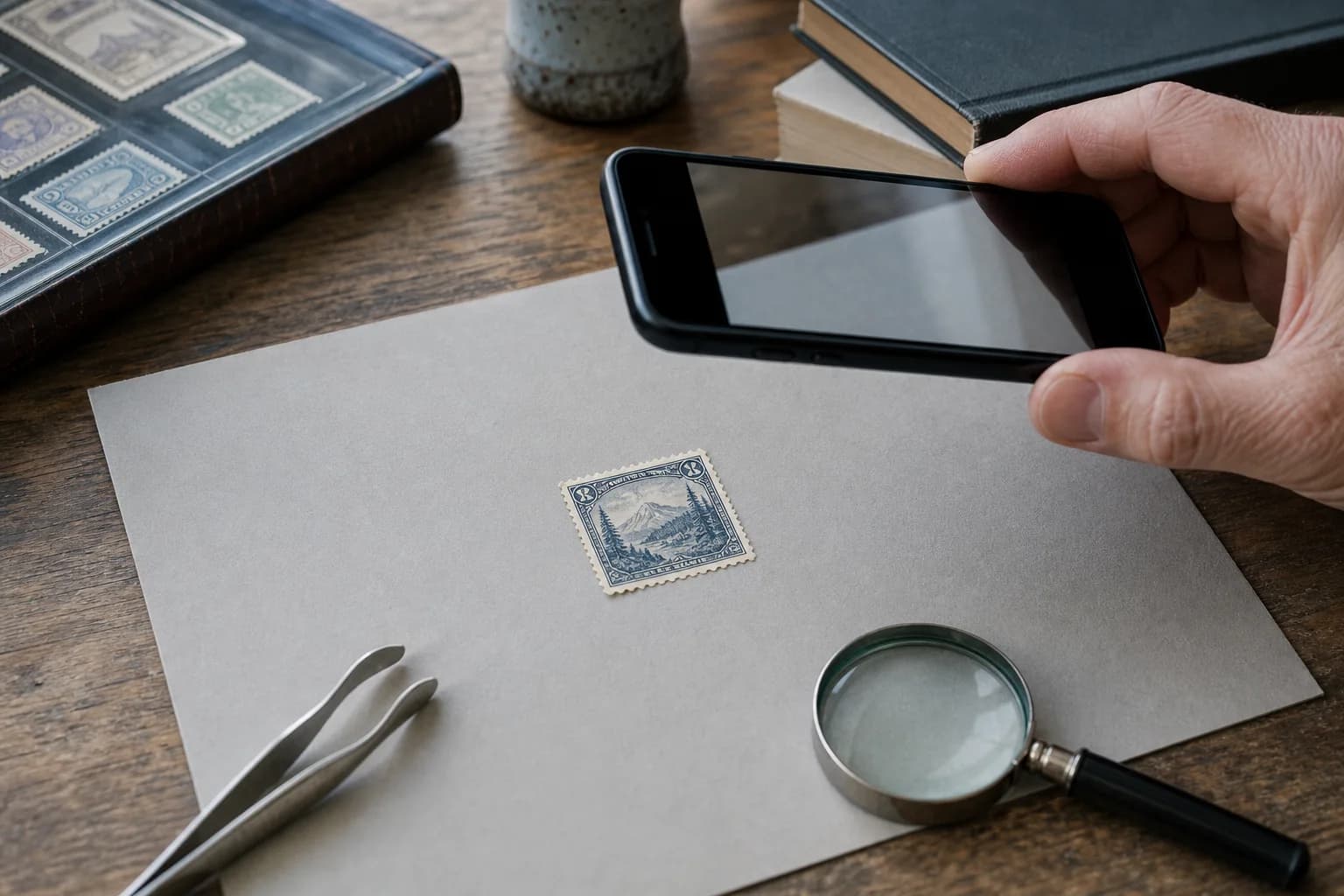
Use one record per cover, then group records by country, issue, date, maker or subject. Photograph the front square on, followed by the back, insert, close view of the cancel and any maker mark. Do not crop out an address in your private research copy; make a separate redacted sharing image when privacy requires it.
Record the stamp issue and catalog reference only when confirmed. Add the cancellation type, date and town as legibly printed, the cachet description and maker if known, whether it is addressed, any transit or arrival marks, condition faults and where it is stored. Use “unknown” where needed. A file name can join the cover ID and date without asserting a catalog variety.
Stamp Value Identifier & Scan may help identify visible stamp clues from a photograph and keep a saved record. It cannot verify the physical cancellation, certify a cachet maker, or appraise the entire cover. Use its likely identification as a lead, then check postal release records and the envelope itself.
| Field | What to enter |
|---|---|
| Stamp | Issuing authority, issue, denomination and confirmed reference |
| Postal mark | Visible date, place, type and uncertain characters |
| Cachet | Subject, medium, maker or “unknown” |
| Cover | Size, address status, back marks, insert and condition |
| Evidence | Release source, comparison references and image IDs |
Keep the envelope and its contents together
Do not soak the stamp off, trim the margins, erase an address, repaint a cachet, press a crease or attach tape. Those changes remove evidence and can make a later identification or sale harder. Keep inserts, certificates, acquisition notes and matching cards with the cover, but do not let acidic slips or adhesive touch its face.
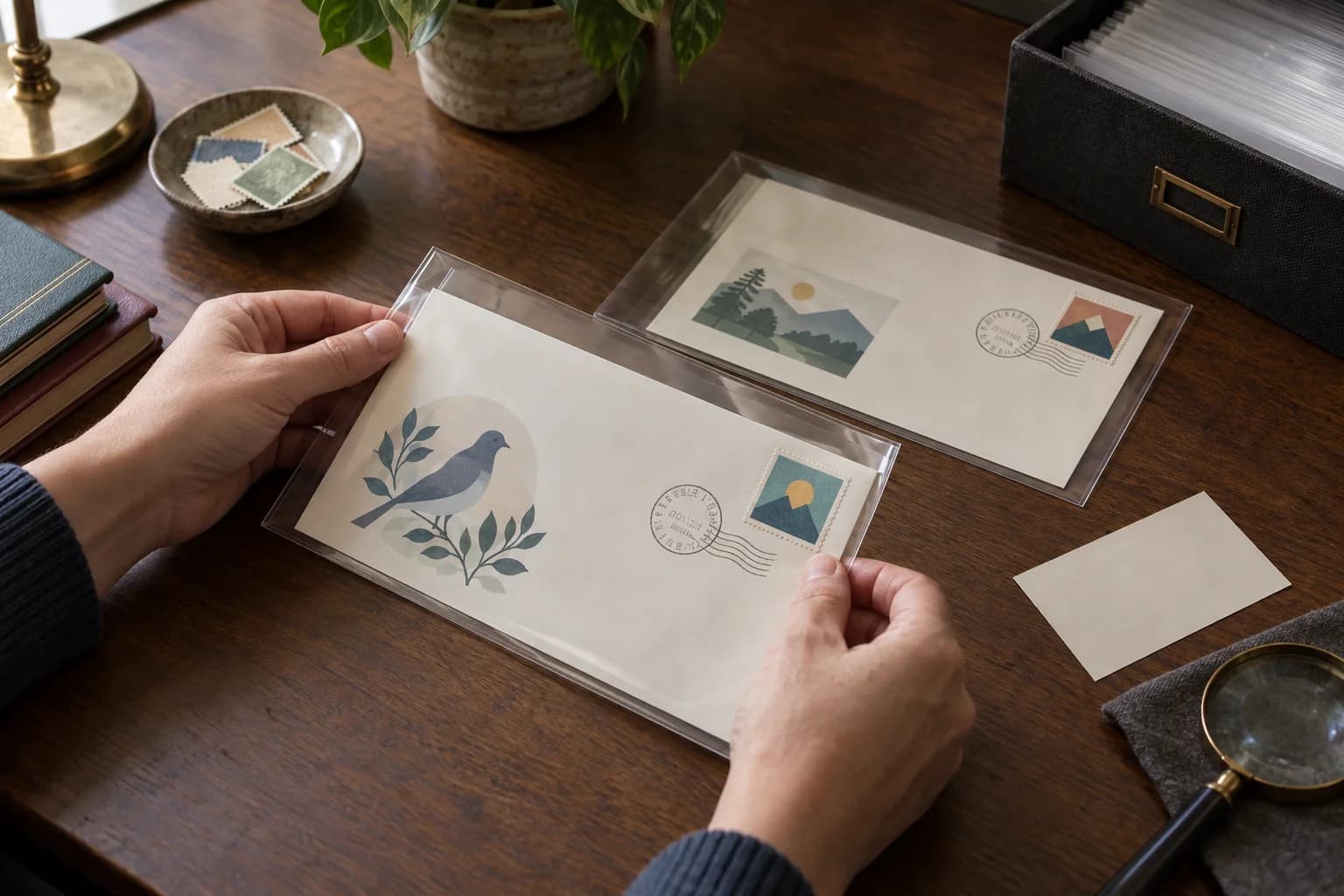
Place a dry, sound cover in a correctly sized preservation sleeve or acid-free folder that supports the whole envelope without bending. Check the sleeve material and avoid unknown soft plastic or PVC. Store covers flat or upright in a supportive box according to their size and condition, in a stable low-light room away from leaks and floor level. The collection storage guide gives the material and room checks in more detail.
If the cover is stuck, wet, moldy or unusually fragile, isolate the risk and seek paper-conservation advice. Do not pull it from an old album or force it into a smaller sleeve. Photograph its current position first, especially when it comes from an inherited collection whose original order may explain the owner’s choices.
Collect first day covers with a clear scope
Choose a focus small enough to compare examples: one country, one issue year, a cachet maker, a theme, a postmark type or a first-day town. Collecting every new issue can quickly create a large subscription archive without teaching you which versions differ. A focused group reveals variation in designs, cancellations, addresses and postal handling.
Start with one inexpensive cover and document it fully. Then compare a second cover of the same stamp with a different cachet or postmark. Ask which difference is visible, which is verified, and which is merely claimed by a seller. This makes your next purchase a research decision rather than a reaction to a printed “first day” label.
If you want to prepare your own cover for a current issue, read the issuing postal administration’s latest servicing instructions before buying supplies or mailing anything. Deadlines, accepted envelopes, postage and cancellation methods change. Keep the returned cover and the instructions used to request it as part of the record.
Use a five-minute first-day cover checklist
Lay the cover on a clean table and photograph both sides. Identify the stamp, then look up its issue date. Read the cancellation date and place rather than trusting an illustrated label. Note the cachet separately, including any maker mark, and check the back for additional postal evidence.
If the date matches, describe it as a first day cover with the level of certainty the evidence supports. If the date is incomplete or the issue uncertain, keep it as a candidate and record what remains to be checked. Preserve the whole envelope either way. Research value only after you can compare like with like, and leave a suspected alteration to a specialist.
- Stamp and official issue date identified?
- Cancellation date and town legible?
- Cachet separated from postal evidence?
- Front, back and inserts photographed?
- Condition and storage location recorded?
Frequently asked questions
Does a first day cover need a cachet?
No. A cachet is artwork or wording added to the cover, often at the left. The defining evidence is a stamp canceled on its first day of issue. An uncacheted cover may still be a first day cover, although collectors also study who made a cachet and how common it is.
Does a first day cover have to be mailed?
No. Postal authorities and collectors can prepare and cancel covers as souvenirs without sending them through ordinary mail. A traveled cover may preserve additional route or delivery evidence; neither status alone proves a premium.
Are first day covers valuable?
Some are, but the first-day date alone does not establish value. Identify the exact stamp, issue, postmark, cachet maker, condition and any unusual postal history. Compare completed sales for closely matching covers, and seek specialist advice for a plausible scarce or altered item.
Can I remove the stamp from a first day cover?
Physically, it may be possible, but doing so destroys the intact relationship among stamp, cancellation, envelope and cachet. Keep the cover whole, including its back and inserts, until a knowledgeable specialist has assessed it.
How can I check whether the date is truly the first day?
Identify the stamp issue first, then compare the postmark date with an issuing postal administration’s release notice or a reliable specialist reference. Read the actual cancel, not a date printed in the cachet. If the year or town is unclear, record that uncertainty rather than guessing.
Is a first day cover the same as a first flight cover?
No. A first day cover marks a stamp’s issue date; a first flight cover records an inaugural flight or route. One envelope can qualify as both only when the evidence for both events is present. A commemorative illustration by itself proves neither.
Sources and further reading
Primary references and specialist resources used to prepare this guide.
- American Philatelic Society: Stamp Vocabulary
- American First Day Cover Society: Learning about FDCs
- American First Day Cover Society: Valuing and Selling Your Collection
- USPS Postal Bulletin: Ordering First-Day-of-Issue Postmarks
- Smithsonian National Postal Museum: Owney First Day Cover Art
- Correos: Sobres de Primer Día